
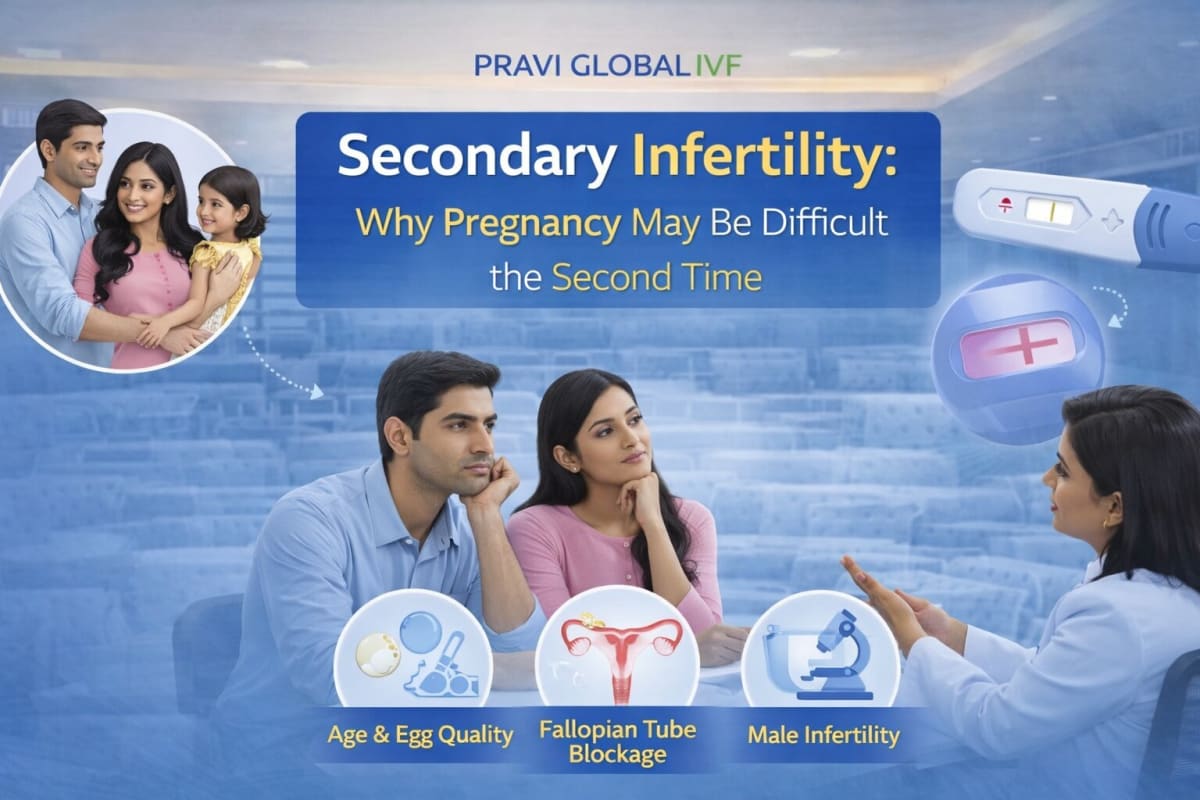
Secondary Infertility: Why Pregnancy May Be Difficult the Second Time
Many couples assume that once they have had a successful pregnancy, conceiving again will happen easily. However, some couples experience difficulty becoming pregnant after already having one child. This condition is known as secondary infertility.
Secondary infertility can be confusing and emotionally challenging because couples may not expect fertility problems after a previous successful pregnancy.
Understanding the causes of secondary infertility and the available treatment options can help couples move forward with clarity and appropriate medical support.
What Is Secondary Infertility?
Secondary infertility refers to the inability to conceive or carry a pregnancy after previously giving birth.
Doctors may consider evaluating couples for secondary infertility if:
-
Pregnancy has not occurred after 12 months of trying
-
The female partner is over 35 and pregnancy has not occurred after 6 months
Even though a couple has conceived before, several factors may influence fertility over time.
Possible Causes of Secondary Infertility
Secondary infertility may occur for many reasons affecting either partner.
Age-Related Fertility Changes
As time passes, fertility naturally changes. Egg quantity and quality may decline as women grow older, which can make pregnancy more difficult.
Similarly, sperm quality in men may also change with age.
Ovulation Disorders
Ovulation problems may develop after the first pregnancy due to hormonal changes, thyroid disorders, or conditions such as Polycystic Ovary Syndrome (PCOS).
Irregular ovulation may reduce the chances of conception.
Changes in Sperm Health
Male fertility can also change over time.
Factors such as lifestyle habits, health conditions, or stress may affect sperm count, motility, or morphology.
Fallopian Tube Problems
Damage or blockage of the fallopian tubes may prevent the egg and sperm from meeting.
Possible causes may include pelvic infections, endometriosis, or complications from previous surgeries.
Uterine Conditions
Certain conditions affecting the uterus may develop after the first pregnancy.
These may include:
-
Uterine fibroids
-
Polyps
-
Scar tissue in the uterus
Such conditions may interfere with implantation.
Diagnosis of Secondary Infertility
Doctors diagnose secondary infertility through a series of fertility evaluations for both partners.
These tests may include:
-
Hormone testing
-
Ultrasound examination
-
Ovulation tracking
-
Fallopian tube evaluation
-
Semen analysis
Proper diagnosis helps identify the underlying cause and determine the most appropriate treatment.
Treatment Options for Secondary Infertility
Treatment for secondary infertility depends on the specific cause identified during diagnosis.
Possible treatment approaches may include:
Ovulation Induction
Medications may be prescribed to stimulate ovulation and improve the chances of conception.
IUI (Intrauterine Insemination)
IUI may be recommended when ovulation occurs but pregnancy has not occurred naturally.
Prepared sperm are placed directly into the uterus during ovulation to improve fertilization chances.
IVF (In Vitro Fertilization)
If other treatments are unsuccessful or if there are more complex fertility issues, IVF may be recommended.
IVF allows fertilization to occur in a laboratory environment before transferring the embryo into the uterus.
Fertility Treatment in Delhi
Delhi offers advanced fertility treatment facilities and experienced reproductive specialists who help couples understand the causes of infertility.
Clinics such as PRAVI Global IVF Polyclinic provide fertility evaluation and treatment options for couples experiencing secondary infertility.
Moving Forward After Secondary Infertility
Secondary infertility can be unexpected, but many couples successfully conceive with proper diagnosis and treatment.
Early medical consultation, lifestyle improvements, and personalized fertility treatment plans can help couples improve their chances of pregnancy.
With the support of experienced fertility specialists, many families are able to grow and welcome another child.
Contact Details
PRAVI Global IVF Polyclinic — Lajpat Nagar, Delhi
41, First Floor, Ring Road
Block Q, Lajpat Nagar IV, New Delhi – 110024
Phone: +91 80091 50040
Email: info@praviglobalivf.in
Ready to Start Your Fertility Journey?
Our experienced team at Pravi IVF is here to support you every step of the way