
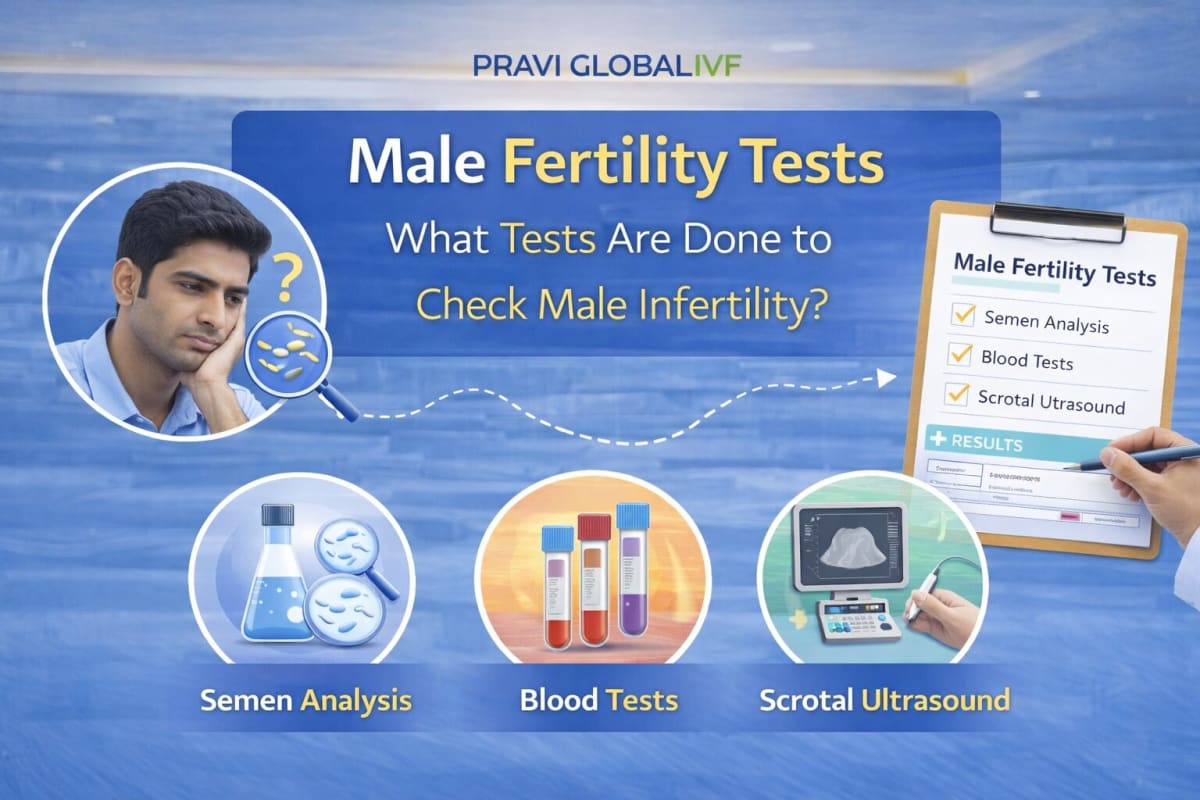
Male Fertility Tests: What Tests Are Done to Check Male Infertility?
When couples experience difficulty conceiving, fertility evaluation should include both partners. Many people assume infertility is primarily related to women, but male factors contribute to nearly 40–50% of infertility cases.
Male fertility testing helps doctors evaluate sperm health, hormone levels, and reproductive system function.
Understanding the tests used to diagnose male infertility can help couples seek the right medical support and treatment.
Why Male Fertility Testing Is Important
Male fertility depends on several factors including sperm production, sperm movement, hormone balance, and reproductive health.
If pregnancy does not occur after regular attempts, doctors may recommend fertility testing for men to identify possible causes.
Early testing can help:
-
Identify sperm abnormalities
-
Detect hormonal imbalance
-
Diagnose reproductive health conditions
-
Guide appropriate fertility treatment
Proper diagnosis helps improve the chances of successful treatment.
Semen Analysis
The most important and commonly performed male fertility test is semen analysis.
This test evaluates several key sperm parameters, including:
-
Sperm count (number of sperm present)
-
Sperm motility (how well sperm move)
-
Sperm morphology (shape of sperm)
-
Semen volume
Semen analysis provides valuable information about sperm quality and helps determine whether sperm may be affecting fertility.
Hormone Testing
Hormones play an important role in sperm production.
Blood tests may be recommended to measure hormone levels such as:
-
Testosterone
-
FSH (Follicle Stimulating Hormone)
-
LH (Luteinizing Hormone)
-
Prolactin
Hormone testing helps doctors identify whether hormonal imbalance may be affecting sperm production.
Ultrasound Examination
Doctors may recommend an ultrasound scan to evaluate the male reproductive organs.
Ultrasound can help detect conditions such as:
-
Varicocele (enlarged veins in the scrotum)
-
Structural abnormalities
-
Blockages in the reproductive tract
These conditions may interfere with sperm production or sperm transport.
Genetic Testing
In certain cases, genetic testing may be recommended.
This test is usually advised when sperm count is extremely low or absent.
Genetic testing helps doctors identify inherited conditions that may affect sperm production.
Additional Male Fertility Evaluations
Depending on the results of initial tests, doctors may recommend additional evaluations such as:
-
DNA fragmentation testing
-
Infection screening
-
Specialized semen tests
These tests help provide a more detailed understanding of male reproductive health.
When Should Men Consider Fertility Testing?
Men may consider fertility evaluation if:
-
Pregnancy has not occurred after 12 months of trying
-
There is a history of testicular injury or surgery
-
Sexual dysfunction is present
-
Hormonal problems are suspected
Early testing helps identify issues and guide treatment.
Male Fertility Treatment in Delhi
Delhi offers advanced diagnostic facilities and experienced fertility specialists who evaluate both male and female fertility.
Clinics such as PRAVI Global IVF Polyclinic provide fertility testing services including semen analysis, hormonal evaluation, and treatment options for male infertility.
Understanding Male Fertility Health
Male fertility testing plays an essential role in diagnosing infertility and planning treatment.
With proper evaluation and medical guidance, many causes of male infertility can be managed successfully.
Seeking early consultation with a fertility specialist can help couples move forward toward achieving pregnancy.
Contact Details
PRAVI Global IVF Polyclinic — Lajpat Nagar, Delhi
41, First Floor, Ring Road
Block Q, Lajpat Nagar IV, New Delhi – 110024
Phone: +91 80091 50040
Email: info@praviglobalivf.in
Ready to Start Your Fertility Journey?
Our experienced team at Pravi IVF is here to support you every step of the way