
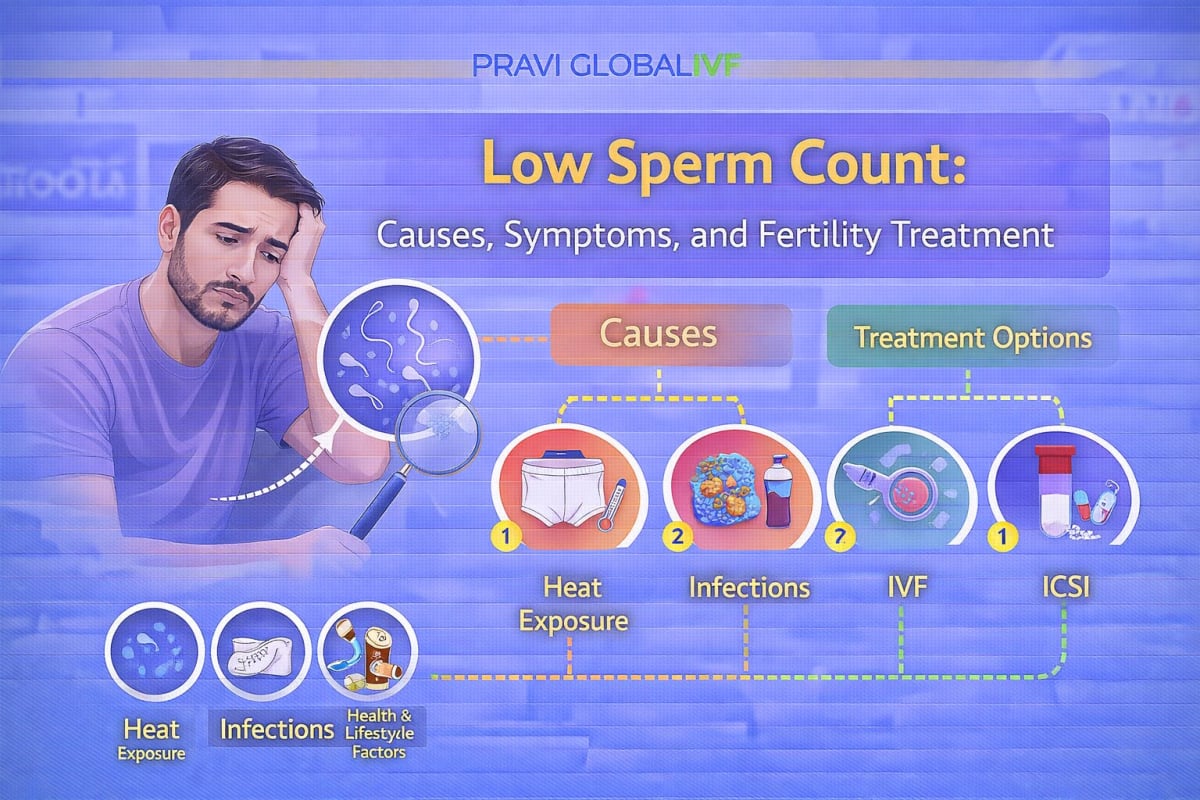
Low Sperm Count: Causes, Symptoms, and Fertility Treatment Options
When couples face difficulty conceiving, many people initially assume that the problem lies with the woman. However, medical research shows that male infertility contributes to nearly half of infertility cases.
One of the most common male fertility issues is low sperm count, medically known as oligospermia.
Low sperm count does not necessarily mean pregnancy is impossible. With proper diagnosis and treatment, many couples successfully conceive even when sperm count is low.
Understanding the causes and available fertility treatments can help couples make informed decisions.
What Is Low Sperm Count?
Low sperm count means that the number of sperm present in semen is lower than normal.
According to medical guidelines, a normal sperm count is typically 15 million sperm per milliliter of semen or higher.
When the sperm count falls below this level, the chances of sperm reaching and fertilizing the egg may decrease.
Causes of Low Sperm Count
Several factors can affect sperm production and reduce sperm count.
Hormonal Imbalances
Hormones play a crucial role in sperm production. Imbalances in reproductive hormones may affect sperm development.
Varicocele
Varicocele is a condition in which veins inside the scrotum become enlarged. It can affect sperm production and quality.
Infections
Certain infections involving the reproductive organs may interfere with sperm production or transport.
Lifestyle Factors
Lifestyle habits can significantly impact male fertility.
Common factors include:
-
Smoking
-
Excessive alcohol consumption
-
Obesity
-
Stress
-
Poor sleep patterns
-
Exposure to environmental toxins
Medical Conditions
Certain health conditions may also contribute to low sperm count, including:
-
Diabetes
-
Hormonal disorders
-
Genetic conditions
-
Testicular injury
Symptoms of Low Sperm Count
In many cases, low sperm count does not produce obvious symptoms.
The most common sign is difficulty achieving pregnancy after regular attempts.
Some men may experience additional symptoms such as:
-
Reduced sexual desire
-
Erectile difficulties
-
Pain or swelling in the testicular area
However, many men with low sperm count feel completely healthy otherwise.
How Is Low Sperm Count Diagnosed?
Diagnosis usually begins with a semen analysis.
This test evaluates:
-
Sperm count
-
Sperm motility (movement)
-
Sperm morphology (shape)
-
Semen volume
Additional tests may include:
-
Hormone blood tests
-
Ultrasound imaging
-
Genetic testing in certain cases
These tests help determine the cause of male infertility and guide treatment options.
Treatment Options for Low Sperm Count
Treatment depends on the underlying cause and severity of the condition.
Lifestyle Improvements
Improving lifestyle habits can sometimes improve sperm health.
Doctors may recommend:
-
Balanced diet
-
Regular exercise
-
Stress reduction
-
Avoiding smoking and excessive alcohol
Medical Treatment
If hormonal imbalances or infections are present, medications may be prescribed to address the underlying problem.
IUI (Intrauterine Insemination)
IUI may be recommended when sperm count is mildly reduced.
During IUI, healthy sperm are concentrated and placed directly into the uterus during ovulation to improve fertilization chances.
IVF (In Vitro Fertilization)
IVF may be recommended when sperm count is significantly low or when other treatments have not been successful.
Eggs are fertilized with sperm in the laboratory before the embryo is transferred to the uterus.
ICSI (Intracytoplasmic Sperm Injection)
ICSI is commonly used in cases of severe male infertility.
A single healthy sperm is injected directly into an egg to achieve fertilization.
This technique has helped many couples achieve pregnancy even with extremely low sperm counts.
When Should You Consult a Fertility Specialist?
Couples should consider consulting a fertility specialist if:
-
Pregnancy has not occurred after 12 months of trying
-
Semen analysis shows abnormal results
-
There is a history of reproductive or testicular problems
Early diagnosis helps identify the most effective treatment options.
Why Delhi Is a Preferred Destination for Fertility Treatment
Delhi offers advanced fertility diagnostics and experienced specialists who treat both male and female infertility.
Clinics such as PRAVI Global IVF Polyclinic provide comprehensive fertility evaluations and modern treatment options including IUI, IVF, and ICSI for male infertility cases.
A Positive Perspective
Low sperm count can feel discouraging at first, but many couples overcome this challenge with the help of modern fertility treatments.
With the right diagnosis, treatment, and medical guidance, achieving pregnancy remains possible.
Contact Details
PRAVI Global IVF Polyclinic — Lajpat Nagar, Delhi
41, First Floor, Ring Road
Block Q, Lajpat Nagar IV, New Delhi – 110024
Phone: +91 80091 50040
Email: info@praviglobalivf.in
Ready to Start Your Fertility Journey?
Our experienced team at Pravi IVF is here to support you every step of the way