
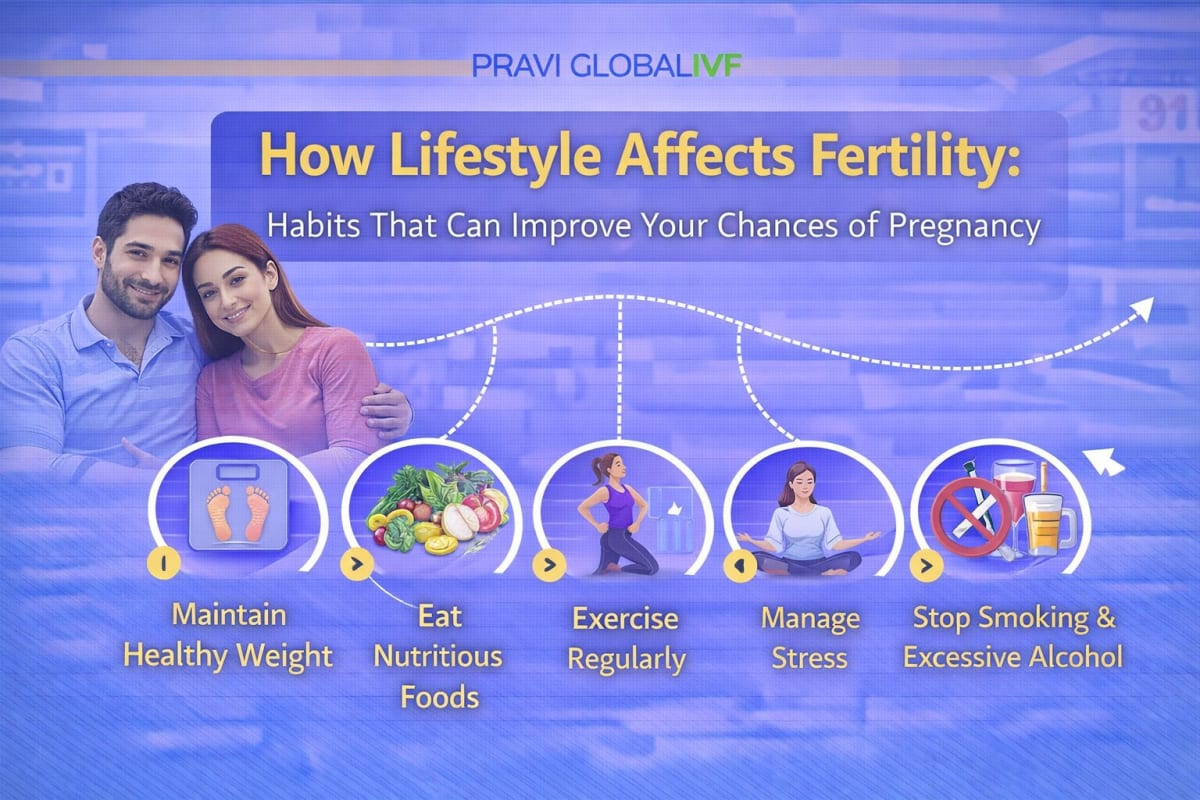
How Lifestyle Affects Fertility: Habits That Can Improve Your Chances of Pregnancy
For many couples trying to conceive, the focus often stays on medical treatments such as IVF or IUI. However, fertility is influenced by more than just medical conditions.
Daily lifestyle habits — including diet, sleep, stress, and physical activity — can significantly affect reproductive health in both men and women.
While lifestyle changes alone may not solve every fertility issue, they can play an important role in improving the chances of conception and supporting fertility treatments.
Understanding how lifestyle affects fertility can help couples take simple steps toward better reproductive health.
How Lifestyle Influences Fertility
Reproductive health is closely linked to overall physical health. Hormones, egg quality, sperm health, and ovulation patterns can all be influenced by everyday habits.
Certain lifestyle factors may improve fertility, while others may reduce the chances of conception.
Some of the most important factors include:
-
Diet and nutrition
-
Physical activity
-
Body weight
-
Stress levels
-
Sleep quality
-
Smoking and alcohol consumption
Making positive lifestyle choices can support healthy reproductive function.
Diet and Nutrition
Nutrition plays an essential role in maintaining hormonal balance and reproductive health.
A balanced fertility-friendly diet often includes:
-
Fresh fruits and vegetables
-
Whole grains
-
Healthy fats such as nuts and seeds
-
Lean protein sources
-
Foods rich in vitamins and antioxidants
Nutrients such as folic acid, vitamin D, zinc, and omega-3 fatty acids may help support reproductive health.
Highly processed foods, excess sugar, and unhealthy fats may negatively affect hormonal balance.
Maintaining a Healthy Body Weight
Body weight can strongly influence fertility.
Both underweight and overweight individuals may experience hormonal disruptions that affect ovulation or sperm production.
Maintaining a healthy body weight through balanced nutrition and regular exercise can help support reproductive function.
Physical Activity
Moderate physical activity is beneficial for fertility.
Regular exercise can help:
-
Improve hormonal balance
-
Reduce stress
-
Maintain healthy body weight
-
Improve overall health
However, excessive or intense exercise may disrupt ovulation in some women.
Balanced and moderate exercise routines are usually recommended.
Managing Stress
Trying to conceive can be emotionally challenging, and prolonged stress may influence hormone levels.
While stress alone does not cause infertility, chronic stress can interfere with reproductive hormones and overall well-being.
Activities that may help manage stress include:
-
Meditation or relaxation techniques
-
Yoga or light exercise
-
Spending time outdoors
-
Maintaining healthy work-life balance
Reducing stress can improve both emotional health and fertility outcomes.
Sleep and Hormonal Balance
Quality sleep plays an important role in hormone regulation.
Poor sleep patterns may affect the production of reproductive hormones involved in ovulation and sperm production.
Adults are generally encouraged to aim for 7–8 hours of sleep each night to support overall health and fertility.
Smoking and Alcohol
Smoking is known to negatively affect fertility in both men and women.
In women, smoking may accelerate egg loss and reduce ovarian reserve.
In men, smoking may lower sperm count and affect sperm quality.
Excessive alcohol consumption can also disrupt hormonal balance and reduce fertility.
Reducing or avoiding these habits may help improve reproductive health.
Environmental Factors
Exposure to environmental toxins may affect fertility.
These may include:
-
Pesticides
-
Industrial chemicals
-
Plastic containers used for heating food
-
Heavy metals
Minimizing exposure to harmful substances may support reproductive health.
Lifestyle and Fertility Treatments
Healthy lifestyle habits can also support fertility treatments such as IUI or IVF.
Improving nutrition, sleep, and stress levels may help the body respond better to treatment and support overall reproductive health.
Doctors often encourage couples to adopt healthy lifestyle practices before and during fertility treatment.
When Lifestyle Changes Are Not Enough
Although lifestyle improvements can benefit fertility, medical evaluation may still be necessary if pregnancy does not occur after regular attempts.
A fertility specialist can help determine whether underlying conditions require medical treatment.
Clinics such as PRAVI Global IVF Polyclinic provide comprehensive fertility evaluation and treatment options designed to address both medical and lifestyle factors affecting fertility.
A Healthy Start to the Fertility Journey
Fertility is influenced by many factors, and lifestyle habits are an important part of the overall picture.
Adopting healthier habits can support reproductive health, improve overall well-being, and enhance the chances of conception.
With the right balance of medical guidance and healthy lifestyle choices, many couples successfully move closer to achieving pregnancy.
Contact Details
PRAVI Global IVF Polyclinic — Lajpat Nagar, Delhi
41, First Floor, Ring Road
Block Q, Lajpat Nagar IV, New Delhi – 110024
Phone: +91 80091 50040
Email: info@praviglobalivf.in
Ready to Start Your Fertility Journey?
Our experienced team at Pravi IVF is here to support you every step of the way