
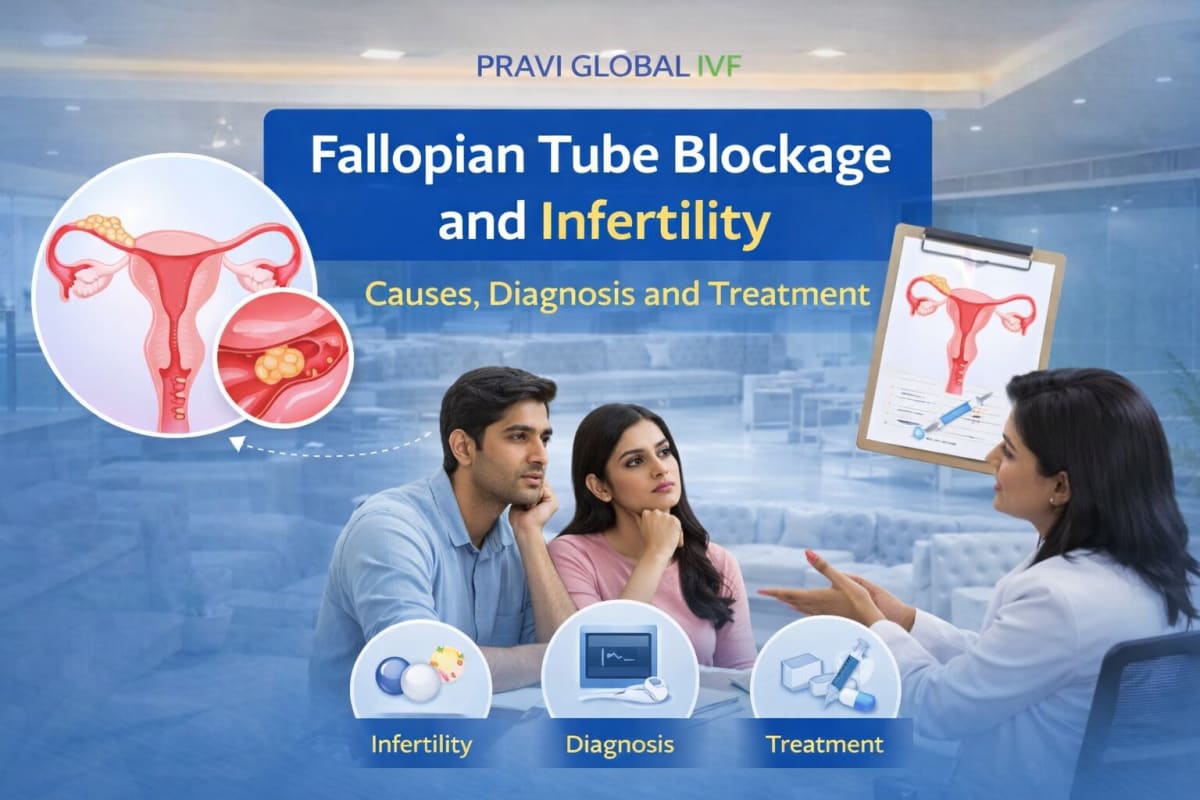
Fallopian Tube Blockage and Infertility: Causes, Diagnosis and Treatment
The fallopian tubes play an essential role in natural conception. These tubes connect the ovaries to the uterus and provide the pathway where the sperm meets the egg.
When a fallopian tube is blocked or damaged, the sperm may not be able to reach the egg, making fertilization difficult or impossible.
Fallopian tube blockage is one of the common causes of female infertility. Understanding the causes, symptoms, and treatment options can help women seek proper medical care and improve their chances of pregnancy.
What Are Fallopian Tubes?
Fallopian tubes are thin structures that connect the ovaries to the uterus.
During ovulation, the ovary releases an egg. The egg then travels through the fallopian tube toward the uterus.
If sperm meets the egg inside the fallopian tube, fertilization occurs. The fertilized egg then moves to the uterus where implantation takes place.
If the tubes are blocked, this process may be disrupted.
Causes of Fallopian Tube Blockage
Several conditions may lead to blocked or damaged fallopian tubes.
Some of the most common causes include:
-
Pelvic inflammatory disease (PID)
-
Endometriosis
-
Previous pelvic or abdominal surgery
-
Sexually transmitted infections
-
Scar tissue in the pelvic region
-
Tubal damage from previous infections
These conditions may create scar tissue or fluid buildup that blocks the fallopian tubes.
Symptoms of Blocked Fallopian Tubes
In many cases, fallopian tube blockage does not cause obvious symptoms.
Many women only discover the problem when they are unable to conceive after trying for some time.
However, certain symptoms may sometimes be present, such as:
-
Pelvic pain
-
Pain during menstruation
-
History of pelvic infections
-
Difficulty conceiving
Because symptoms may not always be noticeable, fertility evaluation is often necessary for diagnosis.
How Fallopian Tube Blockage Is Diagnosed
Doctors use several diagnostic tests to evaluate the fallopian tubes.
One of the most common tests is HSG (Hysterosalpingography).
During this test, a special dye is injected into the uterus and X-ray images are taken to determine whether the fallopian tubes are open.
Other diagnostic methods may include ultrasound imaging or laparoscopy.
These tests help doctors determine the location and severity of the blockage.
Treatment Options for Blocked Fallopian Tubes
Treatment for fallopian tube blockage depends on the cause and severity of the condition.
Surgical Treatment
In some cases, surgery may be performed to remove scar tissue or repair the fallopian tubes.
However, surgery may not always be successful, especially if the tubes are severely damaged.
IVF (In Vitro Fertilization)
When fallopian tubes are severely blocked, doctors often recommend IVF.
During IVF, eggs are retrieved from the ovaries and fertilized with sperm in the laboratory.
The resulting embryo is then transferred directly into the uterus, bypassing the fallopian tubes entirely.
IVF has helped many couples overcome tubal infertility.
Fertility Treatment in Delhi
Delhi offers advanced fertility treatment facilities with experienced reproductive specialists and modern IVF laboratories.
Clinics such as PRAVI Global IVF Polyclinic provide fertility evaluation and treatment options for women experiencing fallopian tube blockage.
Overcoming Tubal Infertility
Fallopian tube blockage can make natural conception difficult, but modern fertility treatments provide several solutions.
With proper diagnosis and the right medical approach, many women with blocked fallopian tubes are able to achieve pregnancy.
Consulting a fertility specialist can help determine the most suitable treatment plan and guide couples toward successful parenthood.
Contact Details
PRAVI Global IVF Polyclinic — Lajpat Nagar, Delhi
41, First Floor, Ring Road
Block Q, Lajpat Nagar IV, New Delhi – 110024
Phone: +91 80091 50040
Email: info@praviglobalivf.in
Ready to Start Your Fertility Journey?
Our experienced team at Pravi IVF is here to support you every step of the way