

Yes, you can get pregnant with uterine fibroids, and many women conceive without fertility treatment. Whether fibroids affect your chances depends mainly on their location, whether they change the uterine cavity, and other fertility factors—not simply their presence on a scan.
If you are deciding between trying naturally, IUI, IVF or surgery, the first step is understanding what your particular fibroids mean.
Key takeaways
- Fibroids are usually non-cancerous growths in the uterine muscle.
- Many fibroids do not prevent pregnancy or need removal.
- Fibroids that distort the uterine cavity deserve closer assessment.
- IUI and IVF do not correct a distorted uterine cavity.
- Your age, symptoms and fertility history help guide treatment.
Getting Pregnant with Uterine Fibroids: What Matters Most
A scan finding can sound worrying, especially when you are trying for a baby. However, the label “fibroid” alone cannot tell you whether conception will be difficult.
Location often matters more than size alone
Submucosal fibroids grow towards the uterine cavity and may interfere with implantation or increase miscarriage risk. Intramural fibroids sit within the muscle wall; their effect depends partly on whether they distort the cavity.
Subserosal fibroids grow towards the outside of the uterus and usually have less direct impact on fertility. Large fibroids can still cause pressure symptoms or affect surrounding anatomy.
A fibroid is not always the explanation
Irregular ovulation, blocked fallopian tubes, endometriosis and sperm-related factors can also affect conception. Assessing both partners helps avoid unnecessary surgery or months spent treating a finding that is not the main problem.
Get an Assessment That Answers the Right Questions
Your consultation should connect the ultrasound findings with your symptoms and pregnancy plans. Bring previous scans, prescriptions, pregnancy records and any earlier fertility test results so your doctor can compare findings.
Start with a clear fibroid map
A transvaginal ultrasound commonly assesses fibroid number, size and location. If the relationship to the cavity is unclear, a saline infusion scan or hysteroscopy may help; MRI is reserved for selected situations, including complex surgical planning.
Check fertility factors alongside the scan
Your doctor may recommend ovulation assessment, ovarian reserve testing, semen analysis and a tubal patency test, depending on your situation. Heavy periods may also warrant a blood count and assessment for iron deficiency.
- Does any fibroid change the shape of my uterine cavity?
- Is there another likely reason conception is taking longer?
- Would removing this fibroid improve my chances?
- What would treatment delay mean at my age?
Trying Naturally Without Losing Useful Time
If fibroids do not distort the cavity and no other fertility concern is identified, trying naturally may be reasonable. Agree on a review date rather than waiting indefinitely.
Know when to seek help
Generally, arrange a fertility assessment after 12 months of trying if you are under 35, or after six months if you are 35 or older. Seek advice sooner if you are over 40, have irregular periods, significant symptoms or known reproductive problems.
Keep pre-pregnancy care practical
Have intercourse every two to three days, or every one to two days during the fertile window. Take folic acid, usually 400 micrograms daily unless your doctor advises a different dose, and review medicines before pregnancy.
- Address heavy bleeding and low iron before conception.
- Avoid smoking and alcohol while trying to conceive.
- Discuss persistent pain rather than repeatedly self-medicating.
- Avoid supplements claiming to dissolve fibroids or guarantee pregnancy.
Choose Between IUI and IVF for the Right Reason
Fertility treatment should address the reason you are struggling to conceive. Neither IUI nor IVF automatically makes a fibroid irrelevant, especially when it affects the space where an embryo would implant.
When IUI may be considered
IUI treatment places prepared sperm inside the uterus around ovulation. It may suit selected cases of unexplained infertility or mild sperm-related difficulty when at least one tube is open and the uterine cavity is suitable.
When IVF may be considered
IVF treatment may be appropriate for blocked tubes, some sperm-related problems, unsuccessful previous treatment or other clinical reasons. It allows fertilisation outside the body, but embryo transfer still requires assessment of the uterus.
ICSI treatment involves injecting a sperm into an egg during IVF for specific indications. It does not treat fibroids or correct an implantation problem caused by cavity distortion.
| Option | When it may fit | Main limitation |
| Trying naturally | Suitable cavity and no other identified concern | Needs an agreed review timeline |
| IUI | Selected cases with an open tube | Does not correct cavity distortion |
| IVF | Clinical reasons needing assisted fertilisation | Does not bypass uterine implantation issues |
Consider Fibroid Removal Only When Benefits Justify It
Not every fibroid needs surgery before pregnancy. Removal may be considered for cavity-distorting fibroids, troublesome bleeding or pain, or selected fertility situations after reviewing other possible causes.
Match the procedure to the fibroid
Some submucosal fibroids can be removed through hysteroscopy, without an abdominal incision. Other fibroids may require laparoscopic or open myomectomy, depending on their size, number, position and surgical complexity.
Discuss the trade-offs before deciding
Myomectomy preserves the uterus but carries risks, including bleeding, adhesions and scarring. The benefit of removing intramural fibroids that do not distort the cavity is less certain, so decisions should be individualised.
- Ask what improvement surgery is reasonably expected to offer.
- Confirm how long healing may delay trying or embryo transfer.
- Discuss whether egg retrieval before surgery makes sense.
- Ask whether surgery could affect future delivery planning.
Medicines may control symptoms or temporarily shrink fibroids, but they are not usually a direct fertility treatment. Uterine artery embolisation is generally not the first choice when future pregnancy is a priority; discuss reproductive implications with a specialist.
Plan Pregnancy Monitoring Without Assuming the Worst
Many pregnancies with fibroids progress well. Depending on fibroid features, there may be higher risks of pain, miscarriage, preterm birth, unusual baby position, caesarean birth or bleeding after delivery.
Tell your obstetrician about known fibroids and previous uterine surgery. Seek prompt medical care for severe abdominal pain, heavy bleeding, fainting or fever rather than assuming the fibroid is responsible.
Frequently Asked Questions
Can a small fibroid stop me getting pregnant?
Size alone cannot answer this. A small fibroid projecting into the cavity may matter more than a larger one on the outer surface of the uterus.
Do all fibroids need removal before IVF?
No. Cavity-distorting fibroids often need closer consideration, while others may be monitored. The decision should weigh likely benefit, surgical risks and treatment delay.
Can I have IUI if I have fibroids?
Possibly, if the cavity is suitable and other requirements for IUI are met. Fibroid location, tubal status and semen results help determine suitability.
How soon can I try after fibroid surgery?
There is no single waiting period for everyone. Your surgeon will advise based on the procedure, depth of uterine incisions and healing before pregnancy or embryo transfer.
Will fibroids always mean a caesarean delivery?
No. Delivery planning depends on fibroid position, the baby's position and any previous uterine surgery. Your obstetrician will explain whether vaginal birth is appropriate.
Discuss Your Fibroid Report and Pregnancy Options
At Pravi Global IVF in Lajpat Nagar, New Delhi, you can discuss your reports and the next steps suited to your pregnancy plans. Bring your latest ultrasound and a short note of your symptoms and how long you have been trying.
Call +91 80091 50040 or book an appointment. For directions, visit our contact page; Lajpat Nagar Metro station serves the Violet and Pink lines.
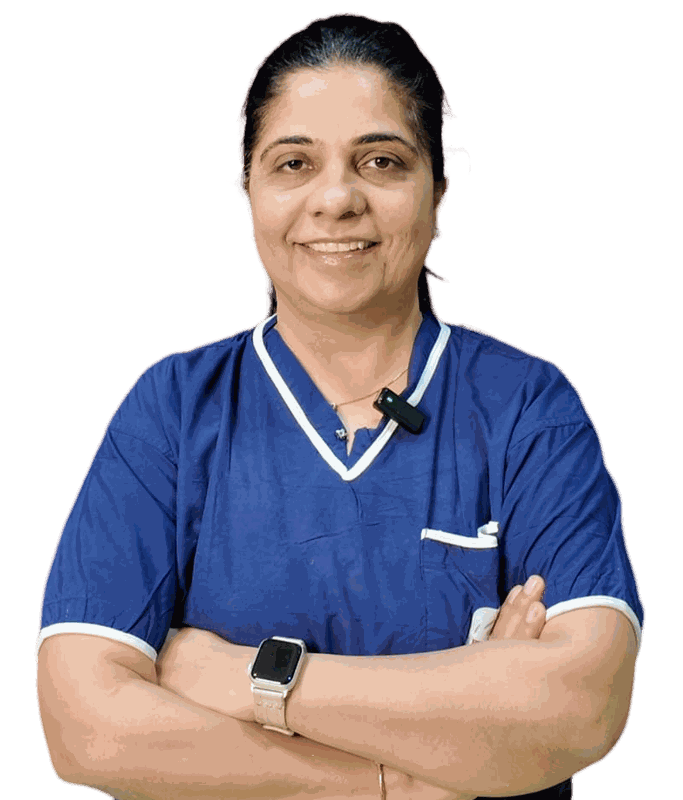
Medical Reviewer
Dr. Monica Sachdev
Dr. Monica Sachdev is a leading IVF specialist in Delhi with over 18 years of experience in reproductive medicine. She is dedicated to providing evidence-based fertility care and has helped thousands of families achieve parenthood.
Ready to Start Your Fertility Journey?
Our friendly team at Pravi IVF is here to stand by you, listen to your story, and help you through every single step.