

You may be able to get pregnant with blocked fallopian tubes, but your options depend on whether one or both tubes are affected and how much damage is present. A blocked-tube report does not automatically mean you need IVF, although IVF can bypass the tubes when natural conception is unlikely.
Key takeaways
- One healthy, open tube may allow natural pregnancy.
- Confirmed complete blockage of both tubes prevents natural conception unless patency is restored.
- IUI needs at least one functioning fallopian tube.
- IVF bypasses the tubes, but fluid-filled tubes may need treatment first.
- A suspected blockage sometimes needs confirmation before treatment decisions.
Getting pregnant with blocked fallopian tubes: what matters
Fallopian tubes usually provide the meeting place for an egg and sperm. After fertilisation, the developing embryo travels towards the uterus; blockage or damage can interfere with either step.
When one tube is blocked
If your other tube is healthy and you ovulate, natural pregnancy remains possible. Your age, duration of trying, sperm quality and other fertility findings help determine whether waiting is reasonable.
Ovulation does not reliably alternate between ovaries each month. Occasionally, an open tube can collect an egg released from the opposite ovary, so the side of ovulation is not the only consideration.
When both tubes are blocked
If both tubes are completely blocked, sperm cannot normally reach the egg. IVF is usually the main option because fertilisation takes place outside your body, although selected blockages may be suitable for procedures to restore an opening.
When a tube is open but damaged
An open tube is not necessarily a fully functioning tube. Scarring can affect egg pickup or embryo transport and increase the risk of an ectopic pregnancy, where a pregnancy develops outside the uterus.
Confirm the blockage before choosing treatment
A hysterosalpingogram, or HSG, uses contrast and X-rays to assess whether the tubes appear open. HyCoSy is an ultrasound-based contrast test used for a similar purpose; availability and suitability vary.
Why a report may need another look
Temporary muscle spasm or technical factors can sometimes make a tube appear blocked, especially near the uterus. Your specialist may review the images or recommend another assessment rather than treating one report as the whole answer.
When further testing helps
Laparoscopy with dye testing may be considered if endometriosis, pelvic adhesions or another surgical problem is suspected. It requires anaesthesia and is not routinely necessary for everyone with an abnormal HSG.
- Bring the original HSG images, not just the written report.
- Share previous pelvic infection and surgery records.
- Mention any previous ectopic pregnancy.
- Ask whether the blockage is near the uterus or the tube’s outer end.
- Check whether either tube is swollen or fluid-filled.
Know when natural trying or tube treatment makes sense
Trying naturally with one healthy tube
If one tube is healthy and there are no major additional fertility concerns, your doctor may suggest a defined period of natural trying. Having intercourse every one to two days during the fertile window can help, without making timing an exhausting daily task.
Because suspected tubal disease is already a reason for fertility assessment, you do not need to wait the usual six or twelve months before seeking advice. Agree on a review date based on your age and test results.
Procedures for selected blockages
For some blockages close to the uterus, selective tubal cannulation may help confirm or clear the obstruction. Surgery may be considered for selected adhesions or tubal damage, but suitability depends on the location and severity.
Opening a tube does not guarantee normal function or pregnancy. Ask about the likelihood of re-blockage, ectopic pregnancy risk and whether surgery would delay a more suitable treatment.
What home remedies cannot do
There is no reliable evidence that herbs, massage, steam treatments or fertility supplements unblock scarred tubes. Antibiotics can treat an active infection when prescribed, but they do not reverse established scarring.
Choose between IUI and IVF with clearer expectations
The key difference is where fertilisation happens. IUI still relies on a working fallopian tube, while IVF allows eggs and sperm to meet in a laboratory.
When IUI may be considered
During IUI treatment, prepared sperm is placed inside the uterus around ovulation. It may suit some people with one healthy, open tube, depending on ovulation, semen findings and other factors.
IUI does not bypass blocked tubes. It is not an appropriate solution for confirmed complete blockage of both tubes.
When IVF may offer a more direct route
With IVF treatment in Lajpat Nagar, eggs are collected from the ovaries and fertilised in the laboratory. An embryo is then transferred into the uterus, so open fallopian tubes are not required.
IVF is not a guarantee of pregnancy. Age, egg and sperm factors, embryo development and uterine health all influence the chances.
- Natural trying: may be reasonable with one healthy tube.
- IUI: needs at least one functioning tube and suitable fertility findings.
- Tubal procedures: may help selected blockages, not all damage.
- IVF: bypasses the tubes when they cannot function adequately.
ICSI treatment involves injecting a sperm into an egg during IVF. Blocked tubes alone do not automatically require ICSI; sperm-related findings or previous fertilisation problems may influence that recommendation.
Address fluid-filled tubes and pregnancy safety early
A hydrosalpinx is a blocked, swollen fallopian tube containing fluid. That fluid can reach the uterus and reduce the chance of implantation during IVF.
Your specialist may recommend removing the affected tube or disconnecting it from the uterus before embryo transfer. The decision should account for surgical risks, adhesions and possible effects on ovarian blood supply.
Once you have a positive pregnancy test, tell your doctor about your tubal history. Early assessment, sometimes including repeat blood tests and an ultrasound, helps confirm where the pregnancy is developing.
- Seek urgent assessment for one-sided pelvic pain with possible pregnancy.
- Shoulder-tip pain, fainting or severe abdominal pain needs emergency care.
- Report bleeding with pain promptly, even without a positive home test.
Make your first consultation more useful
Bring your tubal tests, ultrasound reports, medication list and any available semen analysis. Both partners should be assessed where relevant, so treatment does not focus only on the tubes.
Ask for a written plan covering further tests, alternatives, expected visits and itemised costs. If you are travelling to Pravi Global IVF in Lajpat Nagar, New Delhi, check the contact page; Lajpat Nagar Metro station serves the Violet and Pink lines.
Frequently Asked Questions
Can I get pregnant naturally with both tubes blocked?
Not if both tubes are truly and completely blocked. Some apparent blockages need confirmation, and selected cases may be treatable; otherwise, IVF bypasses the obstruction.
Does a regular period mean my tubes are open?
No. Periods reflect hormonal changes and shedding of the uterine lining, not tubal openness. You can have regular cycles with one or both tubes blocked.
Can an HSG unblock my tubes?
Contrast flushing may clear minor material in some cases, and fertility benefits have been observed in selected patients. However, an HSG cannot reliably treat scarred or severely damaged tubes.
Is IVF always needed if one tube is blocked?
No. Natural trying or IUI may be considered if the other tube is healthy. Your age, time spent trying and other fertility findings guide the choice.
Will removing a damaged tube stop my periods?
Removing a fallopian tube does not usually stop periods because the ovaries produce hormones. Discuss surgical risks and whether the other tube could support natural pregnancy.
Discuss your next step with Pravi Global IVF
You deserve an explanation of your reports before choosing treatment. Call Pravi Global IVF, Lajpat Nagar, New Delhi, on +91 80091 50040 or book an appointment to discuss which options fit your findings and priorities.
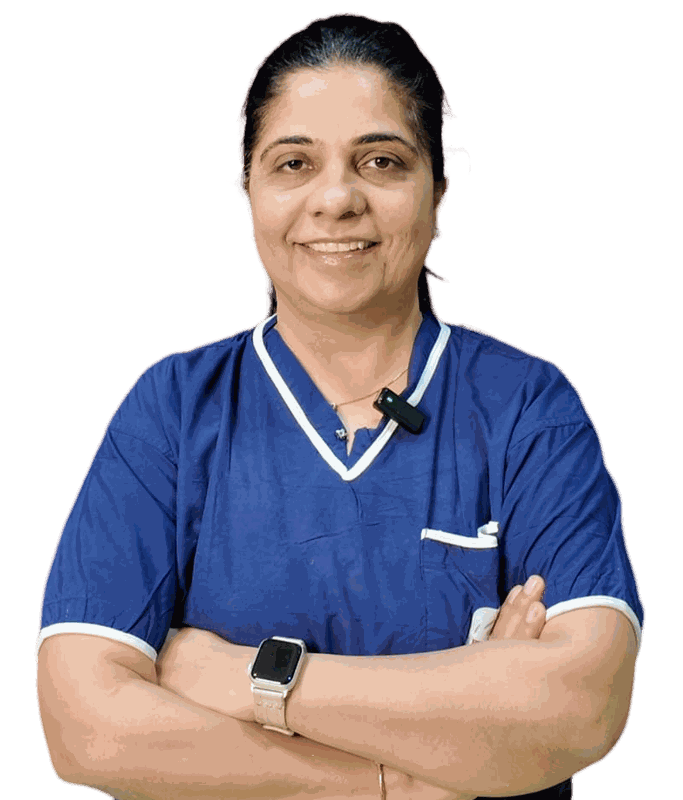
Medical Reviewer
Dr. Monica Sachdev
Dr. Monica Sachdev is a leading IVF specialist in Delhi with over 18 years of experience in reproductive medicine. She is dedicated to providing evidence-based fertility care and has helped thousands of families achieve parenthood.
Ready to Start Your Fertility Journey?
Our friendly team at Pravi IVF is here to stand by you, listen to your story, and help you through every single step.