
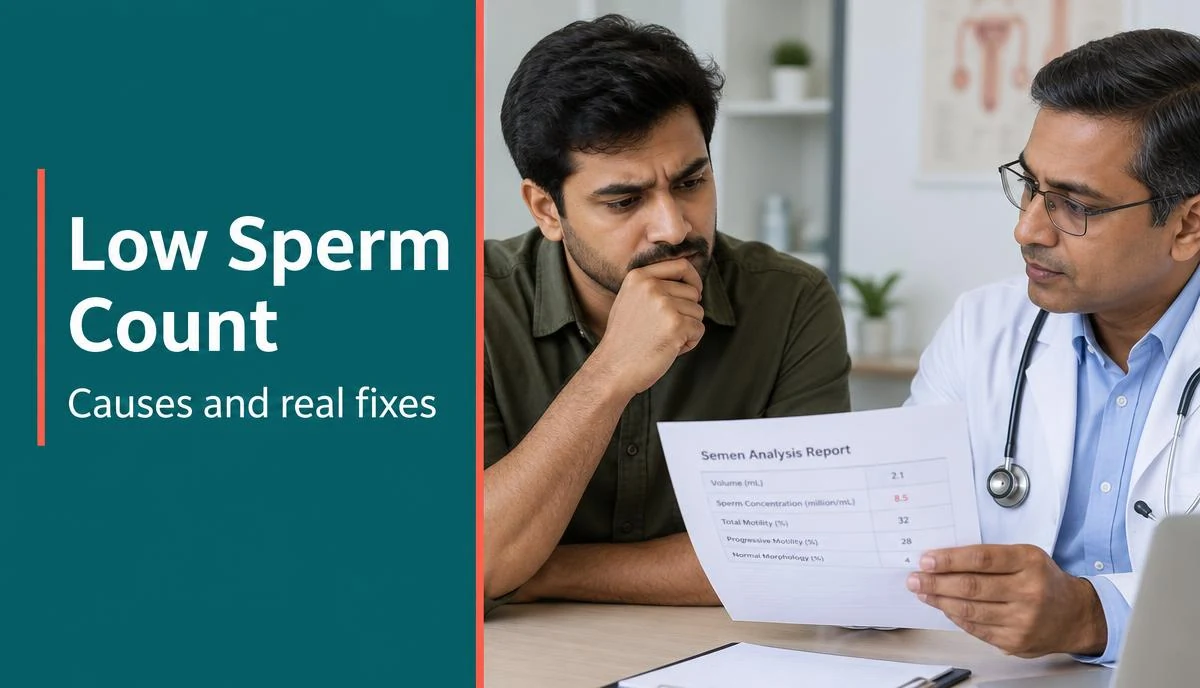
For couples facing challenges conceiving, male factor infertility is a common concern. The most frequent diagnosis in male fertility evaluations is Oligozoospermia, commonly known as a low sperm count.
According to the World Health Organization (WHO), a normal sperm count is at least 15 million sperm per milliliter of semen. A count below this threshold is classified as Oligozoospermia. Fortunately, because sperm production is a continuous cycle, low sperm count oligozoospermia is highly responsive to treatment, lifestyle changes, and assisted reproductive technologies.
Classification of Oligozoospermia
- Mild Oligozoospermia: 10 to 15 million sperm/mL.
- Moderate Oligozoospermia: 5 to 10 million sperm/mL.
- Severe Oligozoospermia: Under 5 million sperm/mL.
Causes of a Low Sperm Count
1. Varicocele
A varicocele is an enlargement of the veins within the scrotum, similar to varicose veins in the leg. It is the most common reversible cause of male infertility, as it increases the temperature in the testicles, which damages sperm production.
2. Hormonal Imbalances & Lifestyle
Imbalances in FSH and LH pathways can lower sperm counts. Lifestyle factors like smoking, drug use, excessive alcohol, scrotal heat exposure, and obesity also impact count.
3. Infections and Blockages
Infections like epididymitis can damage sperm-producing tissues or create blockages that restrict semen flow.
Advanced Male Fertility Evaluations
Reaching a clear diagnosis is the key to choosing the right treatment path. If you are seeking a detailed evaluation, you can schedule a semen analysis at Pravi Global IVF.
Treatment Options for Oligozoospermia
- Varicocele Repair (Varicocelectomy): A minor surgery to tie off enlarged veins, restoring normal testicular temperature and blood flow, which often improves counts within 3 to 6 months.
- Hormone Therapy & Supplements: Medications to correct hormone imbalances and antioxidants like Zinc and CoQ10. Learn more in our male fertility supplements guide.
- Assisted Reproduction: IUI (Intrauterine Insemination) for mild cases, and IVF with ICSI (Intracytoplasmic Sperm Injection) for moderate-to-severe cases where a single sperm is injected into the egg.
Frequently Asked Questions
1. How long does it take to improve sperm count?
Because new sperm require approximately 74 days to develop, any treatment or lifestyle change must be maintained for at least 3 months to see improvements.
2. Can a low sperm count cause miscarriage?
Yes. A low sperm count is often associated with high sperm DNA fragmentation (damage to genetic material), which can lead to early pregnancy loss.
Conclusion
Being diagnosed with low sperm count oligozoospermia can feel stressful, but it is one of the most manageable aspects of reproductive medicine. With a urological evaluation, lifestyle adjustments, and advanced treatments like ICSI, achieving a healthy pregnancy is highly successful.
Our medical team offers expert urological assessments and personalized care plans. Contact Pravi Global IVF today to schedule your evaluation.

Medical Reviewer
Dr. Monica Sachdev
Dr. Monica Sachdev is a leading IVF specialist in Delhi with over 18 years of experience in reproductive medicine. She is dedicated to providing evidence-based fertility care and has helped thousands of families achieve parenthood.
Ready to Start Your Fertility Journey?
Our friendly team at Pravi IVF is here to stand by you, listen to your story, and help you through every single step.