
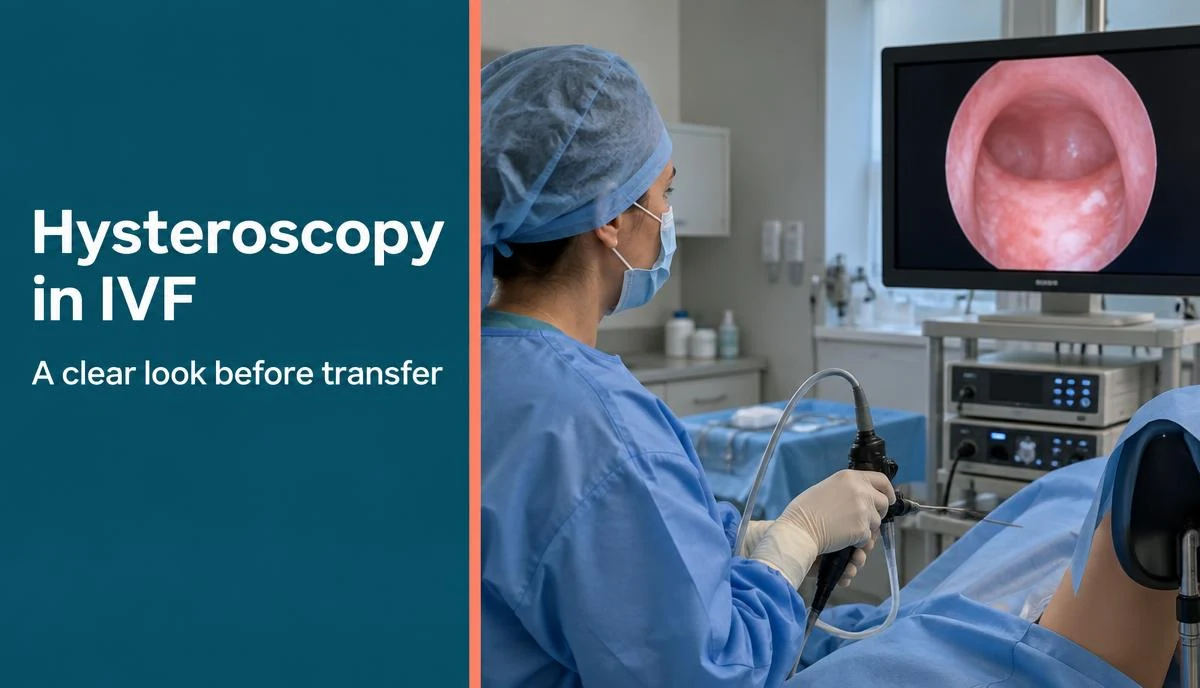
In a successful In Vitro Fertilization (IVF) cycle, creating a high-quality embryo is only half the battle. The other half is ensuring that the uterine environment is receptive and healthy enough for the embryo to implant. To evaluate and optimize the uterine cavity, doctors often recommend a hysteroscopy.
A hysteroscopy in IVF allows specialists to view the inside of the uterus, diagnose abnormalities, and treat issues like polyps or scarring before an embryo transfer, significantly improving implantation success rates. Here is what to expect from the procedure.
What Is a Hysteroscopy?
A hysteroscopy is a minimally invasive procedure used to examine the inside of the cervix and uterine cavity. A thin, lighted tube with a camera (a hysteroscope) is inserted through the cervix into the uterus. Because it enters through natural openings, it requires no incisions on your body.
Why Is a Hysteroscopy Performed Before IVF?
A healthy uterine lining is essential for embryo implantation. A hysteroscopy helps identify and treat issues that could interfere with this process:
- Removing Polyps and Fibroids: Polyps and submucosal fibroids act like natural contraceptive devices, preventing the embryo from attaching. Removing them restores a smooth, healthy lining.
- Treating Scar Tissue (Asherman's Syndrome): Prior infections or procedures can leave scar tissue inside the uterus. Removing them helps restore uterine receptivity.
- Evaluating After Implantation Failure: If a patient has experienced repeated IVF failures, a hysteroscopy is performed to check for chronic endometritis or minor structural anomalies. Learn more in our guide on septate uterus pregnancy.
Optimize Your Implantation Window
Ensuring a healthy uterine environment is key to IVF success. If you want to discuss hysteroscopy or evaluate your uterine cavity, you can book a diagnostic consultation at Pravi Global IVF.
The Procedure: What to Expect
A hysteroscopy is a quick, outpatient procedure:
- Timing: Typically scheduled during the first week after your period ends (days 6 to 12 of your cycle), when the uterine lining is thin.
- Anesthesia & Duration: Performed under conscious sedation or light general anesthesia. Diagnostic hysteroscopy takes 5 to 10 minutes, while operative takes 15 to 30 minutes.
- Recovery: Very quick. Most patients return home the same day and experience only mild cramping or light spotting for a day or two.
Frequently Asked Questions
1. Does hysteroscopy improve IVF success rates?
Yes. Clinical studies indicate that performing a hysteroscopy before an embryo transfer in women with suspected uterine issues or past implantation failures increases pregnancy success rates by up to 30% to 40%.
2. How long should I wait to transfer embryos after a hysteroscopy?
If minor treatments (like polyp removal) were performed, most doctors recommend waiting 1 to 2 cycles to allow the endometrium to heal completely before transfer.
Conclusion
A hysteroscopy in IVF is a safe, highly effective diagnostic and therapeutic tool. By providing a direct view of the uterine cavity and allowing specialists to resolve structural barriers before transfer, it optimizes your uterine lining and gives your embryo the best possible chance to implant and grow.
Our medical team offers advanced hysteroscopic treatments to support your fertility success. Contact Pravi Global IVF today to schedule a consultation with an IVF specialist.

Medical Reviewer
Dr. Monica Sachdev
Dr. Monica Sachdev is a leading IVF specialist in Delhi with over 18 years of experience in reproductive medicine. She is dedicated to providing evidence-based fertility care and has helped thousands of families achieve parenthood.
Ready to Start Your Fertility Journey?
Our friendly team at Pravi IVF is here to stand by you, listen to your story, and help you through every single step.