
When preparing for pregnancy or experiencing difficulties carrying a pregnancy to term, learning about your uterine anatomy is essential. Among congenital uterine anomalies (birth defects of the uterus), a septate uterus is one of the most common and most closely linked to pregnancy complications.
A septate uterus pregnancy carries increased risks of miscarriage, preterm birth, and fetal malposition. Fortunately, the condition is highly treatable. Understanding how a uterine septum affects pregnancy and the diagnostic and management options available can help you plan a safe, successful pregnancy.
What Is a Septate Uterus?
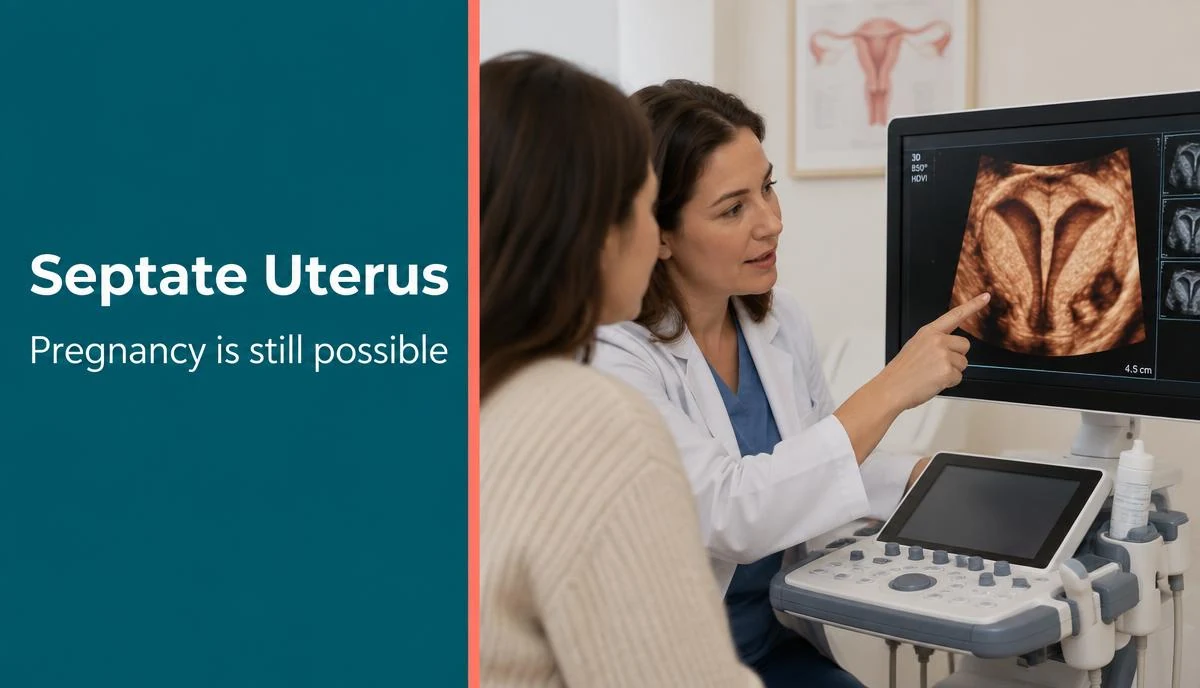
A septate uterus is a congenital condition, meaning it is present from birth. It occurs during fetal development when the two Mullerian ducts fail to fuse correctly, leaving a band of fibrous tissue (the septum) down the middle of the uterine cavity, splitting it into two separate chambers.
How a Septate Uterus Affects Pregnancy
A uterine septum does not prevent conception; eggs can still be fertilized and implant successfully. However, it alters the environment inside the uterus, leading to several key risks:
- High Risk of Early Miscarriage: If the embryo implants directly on the fibrous septum, it cannot receive the blood flow and nutrients required to grow, leading to pregnancy loss.
- Preterm Birth: As the baby grows, the uterine septum restricts the space available inside the uterus, which can trigger early contractions.
- Breech or Malpositioned Baby: Due to the restricted space, the baby is often unable to turn into the head-down position before birth, requiring a C-section.
Compassionate Congenital & Fertility Care
Identifying uterine anomalies early is a key step in preventing recurrent losses. If you have concerns about uterine anatomy or require specialized diagnostics, you can schedule a consultation with a specialist at Pravi Global IVF.
Diagnosing a Uterine Septum
Because it causes no physical symptoms, a septate uterus is diagnosed using advanced pelvic imaging:
- 3D Pelvic Ultrasound: Non-invasive tool to visualize both the outer contour and inner cavity, allowing doctors to distinguish a septate uterus from a bicornuate (heart-shaped) uterus.
- Hysterosalpingogram (HSG): An X-ray test using contrast dye to show the outline of the split cavity.
- Hysteroscopy: A procedure where a small camera is inserted through the cervix to provide a direct view of the septum.
Treatment: Septum Resection (Hysteroscopic Metroplasty)
If a woman has a septate uterus and a history of miscarriage, a surgical correction called a **hysteroscopic septum resection (metroplasty)** is highly recommended. It is a minimally invasive outpatient procedure performed under light anesthesia. The surgeon cuts away the fibrous septum, merging the two chambers. Following a recovery of 2 to 3 months, the risk of miscarriage is dramatically reduced.
Frequently Asked Questions
1. Can you carry a baby to term with a septate uterus?
Yes. Some women with a septate uterus carry their babies to term successfully without treatment. However, due to the high risk of loss, surgery is recommended for those with a history of miscarriage.
2. What is the difference between a septate and a bicornuate uterus?
A septate uterus has a normal outer shape but is divided inside by a fibrous wall. A bicornuate uterus is heart-shaped on the outside. A bicornuate uterus does not require surgery, whereas a septate uterus does.
3. How long should I wait to get pregnant after septum surgery?
Most surgeons recommend waiting 2 to 3 months after a hysteroscopic resection to allow the uterine lining (endometrium) to heal completely.
Conclusion
A septate uterus pregnancy presents challenges, but modern reproductive surgery offers a simple, safe, and highly successful solution. By correcting the septum through hysteroscopy, you can optimize your uterine environment and move forward on your path to parenthood with confidence.
Our surgical team specializes in advanced hysteroscopic treatments to support healthy pregnancies. Contact Pravi Global IVF today to schedule a consultation.

Medical Reviewer
Dr. Monica Sachdev
Dr. Monica Sachdev is a leading IVF specialist in Delhi with over 18 years of experience in reproductive medicine. She is dedicated to providing evidence-based fertility care and has helped thousands of families achieve parenthood.
Ready to Start Your Fertility Journey?
Our friendly team at Pravi IVF is here to stand by you, listen to your story, and help you through every single step.