

Understanding Female Infertility
Getting pregnant requires many things to go right. Your body needs to develop and release a healthy egg, the fallopian tubes must be open so sperm can meet the egg, and the uterine lining must be ready for the embryo to attach. When any of these steps are disrupted, it can make conceiving difficult. Infertility is not a failure of your body; it is a common medical condition that can be treated. At Pravi IVF in Lajpat Nagar, New Delhi, we look at you as a whole person. We focus on finding the exact cause of your fertility challenges and design a personalized treatment plan that works with your body. For details on our clinic location, see our Best IVF Centre in Lajpat Nagar page.
Common Causes of Female Infertility
There are several common factors that can impact a woman's fertility:
- PCOS (Polycystic Ovary Syndrome): A hormonal imbalance that prevents regular ovulation, making cycles irregular.
- Endometriosis: A condition where tissue similar to the uterine lining grows outside the uterus, causing painful inflammation and scarring.
- Blocked Fallopian Tubes: Often caused by past pelvic infections, blockages prevent the egg and sperm from meeting.
- Low Ovarian Reserve: A drop in egg count or quality, which naturally happens as we get older, but can also be genetic.
Personalized Treatments for Successful Pregnancy
Once we have a clear diagnosis, we target the treatment directly to your needs. For ovulation issues, we use mild medicines or hormone injections to help your follicles mature, tracking them carefully with ultrasound scans. If there are physical barriers like polyps, fibroids, or blocked tubes, we use minimally invasive laparoscopy or hysteroscopy surgery to correct them. When needed, advanced IVF allows us to retrieve eggs, fertilize them in our Class-100 lab, and place a healthy embryo directly into your uterus, bypassing the fallopian tubes entirely. You can read details about fertilization and lab setup in our IVF Treatment Decoded guide, or explore simpler options like intrauterine insemination in our IUI Guide.
A Holistic Approach to Fertility
Medical treatments are only one part of the journey. Your body's response to fertility treatments is closely linked to your overall health and stress levels. At Pravi IVF, we support your treatment with lifestyle modifications, dietary guidance, and stress-reduction techniques. We work with fertility nutritionists to design meal plans that support egg quality and prepare your uterine lining for implantation. We also offer mindfulness practices and professional counseling to help you manage the emotional challenges of the process. We share regular updates and patient stories on our Instagram page (follow @PraviIVF or search #PraviIVF). By caring for your mind and body together, we help create the best possible conditions for a healthy pregnancy. Visit our Lajpat Nagar clinic to meet our specialists, led by doctors with over 18 years of clinical experience, and begin your customized care plan.
Frequently Asked Questions (FAQs)
- What are the main causes of female infertility?
The most common causes include ovulatory disorders like PCOS, fallopian tube blockages, pelvic endometriosis, uterine fibroids, and age-related low ovarian reserve. - How is fallopian tube blockage diagnosed?
It is diagnosed using a specialized X-ray scan called a Hysterosalpingogram (HSG) or through a minimally invasive diagnostic laparoscopy. - Can a woman get pregnant naturally if she has PCOS?
Yes. Many women with PCOS conceive naturally once ovulation is regularized using simple oral medications, hormone support, and lifestyle improvements. - What is hysteroscopy and when is it recommended?
It is a quick procedure where a small camera is inserted through the cervix to inspect the uterine cavity, recommended to detect polyps, fibroids, or septums. - How does egg quality change with age?
Egg numbers and genetic quality naturally decrease after the age of 30, with a faster decline after 35, which increases the time needed to conceive.
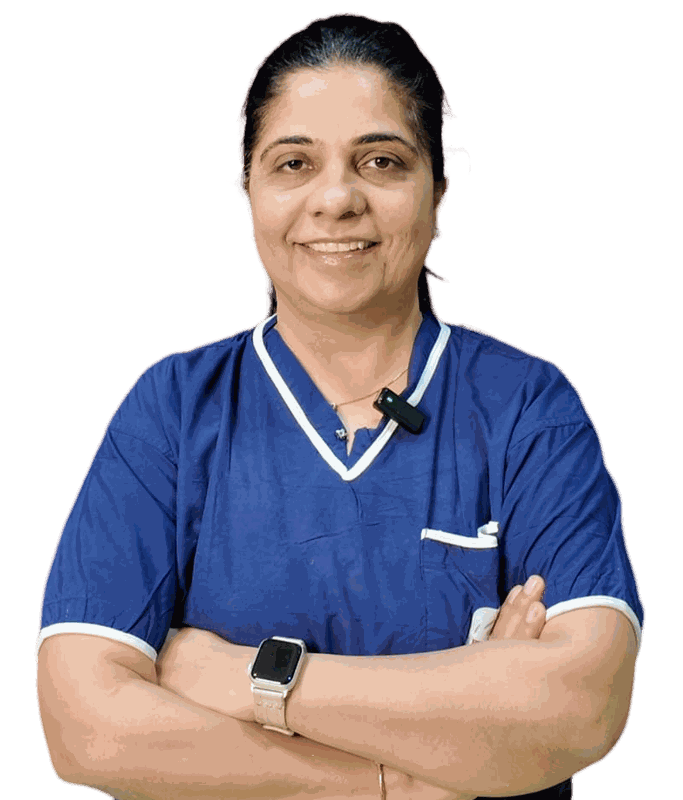
Medical Reviewer
Dr. Monica Sachdev
Dr. Monica Sachdev is a leading IVF specialist in Delhi with over 18 years of experience in reproductive medicine. She is dedicated to providing evidence-based fertility care and has helped thousands of families achieve parenthood.
Ready to Start Your Fertility Journey?
Our friendly team at Pravi IVF is here to stand by you, listen to your story, and help you through every single step.