
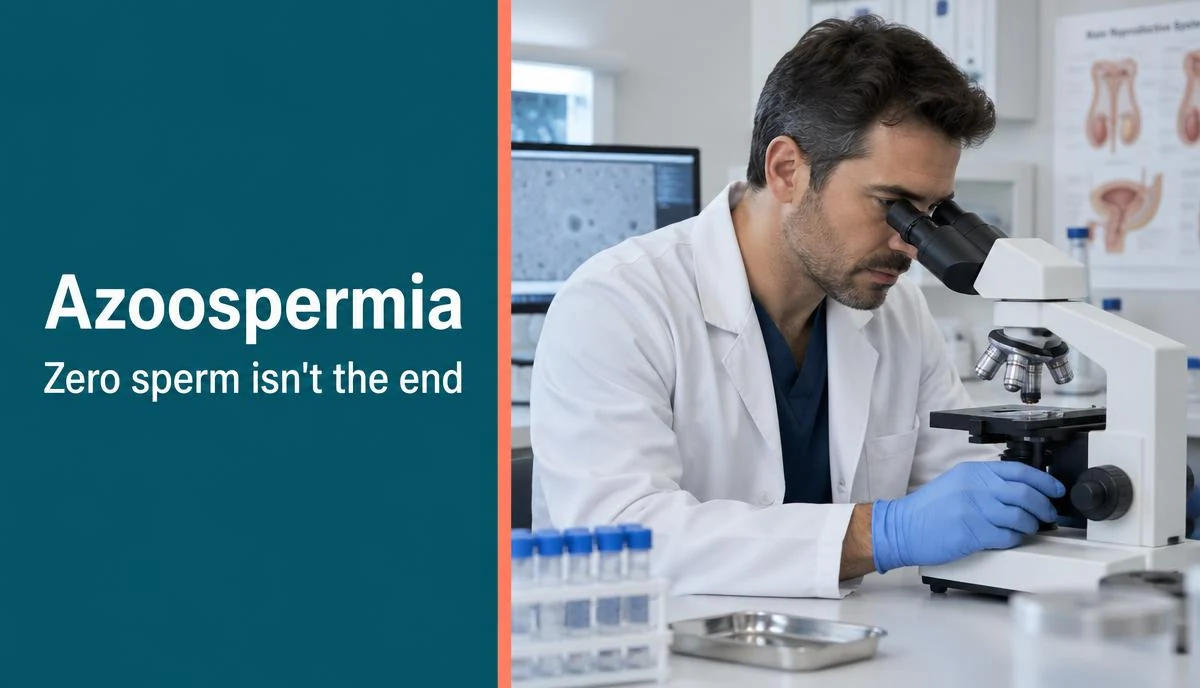
For couples experiencing fertility struggles, finding out that a semen analysis shows a "zero sperm count" can be a shocking and emotional moment. This clinical condition is known as Azoospermia.
Azoospermia affects approximately 1% of all men and up to 15% of men experiencing infertility. While a diagnosis of Azoospermia sounds final, it does not mean fatherhood is impossible. Understanding the azoospermia types causes treatment options can help you navigate this diagnosis and find successful pathways to have biological children.
What Is Azoospermia?
Azoospermia is defined as the complete absence of sperm in the ejaculated semen. It is divided into two primary types:
- Obstructive Azoospermia (OA): Sperm are produced normally in the testicles but blocked from exiting due to physical barriers (e.g., prior vasectomy or infection scarring).
- Non-Obstructive Azoospermia (NOA): The testicles struggle to produce sperm due to genetic factors, hormone deficiencies, or prior chemotherapy.
Sensitive, Specialist Urological Care
Reaching an accurate diagnosis for zero sperm count is the key to planning sperm retrieval. If you want to schedule a diagnostic evaluation, you can book a consultation with a reproductive urologist at Pravi Global IVF.
Treatment and Sperm Retrieval Options
With modern reproductive surgery, men with Azoospermia can still father biological children through IVF with ICSI:
Surgical Retrieval for Obstructive Azoospermia (OA)
Sperm are retrieved directly from the epididymis or testicles using PESA or TESA needles, with success rates near 100%.
Surgical Retrieval for Non-Obstructive Azoospermia (NOA)
Even if no sperm are in the semen, tiny pockets of sperm production may exist inside the testicles. **Micro-TESE (Microsurgical Testicular Sperm Extraction)** uses an operating microscope to inspect the testicular tubules, selectively retrieving sperm-bearing tissues with success rates of **40% to 50%**.
Frequently Asked Questions
1. Can a man with Azoospermia produce semen?
Yes. Ejaculated semen consists primarily of fluid from the prostate and seminal vesicles. Sperm cells make up only 1% to 2% of the volume. A man with Azoospermia will have normal-looking ejaculation, but it will lack sperm cells.
2. What is the difference between Azoospermia and Oligozoospermia?
Azoospermia is the complete absence of sperm in the semen. Oligozoospermia is a low sperm count (below 15 million sperm/mL). Learn more in our guide on Low Sperm Count (Oligozoospermia).
Conclusion
An azoospermia types causes treatment evaluation is the first step toward overcoming a zero sperm count diagnosis. With modern microsurgical retrieval methods like Micro-TESE and advanced IVF with ICSI, having biological children remains a highly achievable goal.
Our urology and IVF teams specialize in advanced surgical sperm retrieval. Contact Pravi Global IVF today to schedule a consultation with a reproductive urologist.

Medical Reviewer
Dr. Monica Sachdev
Dr. Monica Sachdev is a leading IVF specialist in Delhi with over 18 years of experience in reproductive medicine. She is dedicated to providing evidence-based fertility care and has helped thousands of families achieve parenthood.
Ready to Start Your Fertility Journey?
Our friendly team at Pravi IVF is here to stand by you, listen to your story, and help you through every single step.