

Key Takeaways
- If the partner trying to become pregnant is under 35, seek an evaluation after 12 months of regular unprotected intercourse without pregnancy.
- At ages 35–40, arrange an evaluation after six months. Over 40, seek advice without waiting.
- Irregular periods, known reproductive conditions, or concerns about sperm health justify an earlier consultation.
- Both partners should usually be assessed, and seeing a specialist does not automatically mean starting IVF.
Knowing when to see a fertility doctor after trying to conceive can be confusing, especially when each month brings another negative test. You do not need to wait indefinitely, but a few unsuccessful cycles do not necessarily mean something is wrong.
The right timing depends mainly on age, menstrual patterns, medical history, and how long you have had regular unprotected intercourse. These guideposts can help you decide when professional advice would be useful.
When to See a Fertility Doctor After Trying to Conceive: Age-Based Guidance
Fertility evaluation timelines reflect how reproductive potential changes with age, particularly egg quantity and quality. They are starting points, not rules requiring you to delay care when there is a known concern.
| Age of the partner trying to become pregnant | Usual time to seek evaluation | Important exception |
|---|---|---|
| Under 35 | After 12 months of trying | Seek help sooner for irregular cycles, symptoms, or known risk factors. |
| 35–40 | After six months of trying | An earlier discussion is appropriate if either partner has a relevant medical history. |
| Over 40 | Without waiting through a set trying period | Arrange a prompt consultation to discuss evaluation and options. |
These timelines generally assume regular intercourse without contraception. Sex every two to three days throughout the cycle is a practical approach; every one to two days during the fertile window is another option.
If intercourse is infrequent because of travel, pain, or sexual difficulties, explain that at your appointment. A clinician can help without assuming that you must first complete another year of trying.
Reasons to Book a Consultation Earlier
Age is only one part of deciding when to see a fertility doctor after trying to conceive. Certain symptoms and medical histories make earlier assessment sensible.
- Irregular or absent periods: These may suggest that ovulation is inconsistent or absent.
- Significant pelvic pain: Severe period pain, persistent pelvic pain, or pain during sex may need investigation.
- Known reproductive conditions: PCOS, endometriosis, suspected blocked fallopian tubes, or some uterine problems can affect the plan.
- Relevant medical history: Previous ectopic pregnancy, pelvic infection, or pelvic surgery may warrant earlier advice.
- Possible sperm-related concerns: Previous abnormal semen results, testicular injury, or erection or ejaculation difficulties deserve attention.
- Cancer treatment: Discuss fertility preservation before chemotherapy or radiotherapy whenever possible.
- Repeated pregnancy losses: Two or more miscarriages warrant a discussion about evaluation rather than simply continuing to try.
These concerns do not prove that you cannot conceive naturally. They mean that checking for a treatable issue sooner may be more helpful than waiting.
When Symptoms Need Urgent Medical Care
Severe abdominal pain, fainting, shoulder-tip pain, or heavy bleeding with a positive pregnancy test needs urgent assessment. Do not wait for a routine fertility appointment, as an ectopic pregnancy or another emergency must be ruled out.
What Counts as Trying to Conceive?
Usually, trying means having regular vaginal intercourse without contraception. You do not have to use ovulation kits or fertility apps for those months to count.
The fertile window includes the five days before ovulation and the day of ovulation. Ovulation is not always on day 14, even when periods seem fairly predictable.
- Use cycle tracking as a guide, not a guarantee of the exact ovulation day.
- If ovulation tests cause stress, regular intercourse throughout the cycle is a reasonable alternative.
- Tell your doctor about breastfeeding or recently stopping contraception, since some methods can temporarily delay the return of ovulation.
- If you need donor sperm or cannot conceive through intercourse, seek advice about an appropriate pathway without waiting for these timelines.
A previous pregnancy does not rule out a current fertility problem. Difficulty conceiving again, called secondary infertility, deserves assessment using the same age-based guidance.
What Happens at the First Fertility Consultation?
The first visit is usually about understanding your situation and planning relevant tests. At Pravi Global IVF in Lajpat Nagar, New Delhi, you can request a consultation to discuss your history and next steps.
Expect questions about cycle length, previous pregnancies, contraception, operations, medicines, sexual health, and family history. Both partners should generally be involved from the beginning, where applicable.
Tests Your Doctor May Discuss
- Semen analysis: Checks sperm count, movement, and shape; abnormal findings may need repeat testing.
- Ovulation assessment: Menstrual history may be sufficient, with hormone tests used when indicated.
- Pelvic ultrasound: Helps assess the uterus and ovaries.
- Tubal testing: An HSG or another appropriate test may check whether the fallopian tubes are open.
- Ovarian reserve testing: AMH or antral follicle count may help guide treatment planning but cannot reliably predict natural conception alone.
Not everyone needs every test immediately. Ask what each investigation can clarify, when it should happen, and whether the result would change your care.
Does Seeing a Fertility Doctor Mean You Need IVF?
No. Recommendations may include better timing, treatment for an underlying condition, ovulation medication, or further assessment before any procedure is considered.
Depending on the findings, your doctor may discuss intrauterine insemination (IUI) or IVF treatment. Suitability depends on factors such as age, tubal health, sperm results, and the duration of infertility.
ICSI may be recommended during IVF for certain sperm-related problems or previous fertilisation difficulties. It is not automatically necessary for everyone and does not guarantee pregnancy.
How to Prepare Without Adding Pressure
Bring previous reports, a medication list, and notes about your cycles and how long you have been trying. Include supplements and testosterone or anabolic steroid use, which can suppress sperm production.
Take 400 micrograms of folic acid daily before conception unless your clinician recommends a different dose. Avoid smoking and recreational drugs, and discuss alcohol, ongoing medicines, and long-term conditions with your clinician.
You do not need a perfect lifestyle before asking for help. For appointment logistics, use the clinic contact page and ask which records to bring and whether any planned tests require cycle-specific timing.
Frequently Asked Questions
When should I see a doctor if I am 35?
At 35, seek an evaluation after six months of regular unprotected intercourse without pregnancy. Irregular periods, pelvic pain, or a relevant medical history are reasons to book sooner.
Should I wait a year if my periods are irregular?
No. Irregular or absent periods justify earlier advice because ovulation may be unpredictable. An evaluation can explore possible causes without assuming you need assisted conception.
Should my partner be checked even if I have PCOS?
Yes. A known condition in one partner does not exclude another contributing factor. Assessing both partners early helps avoid an incomplete picture and unnecessary delays.
Can normal AMH results mean it is safe to keep waiting?
No. AMH mainly helps estimate ovarian response to stimulation, not egg quality or your individual chance of natural pregnancy. Age and medical history still guide when to see a fertility doctor after trying to conceive.
Can I book a consultation before reaching the usual timeline?
Yes. A preconception or fertility discussion can address concerns and review risk factors. Your clinician may recommend continued trying rather than immediate testing or treatment.
For personalised guidance, contact Pravi Global IVF in Lajpat Nagar, New Delhi, on +91 80091 50040 or book an appointment.
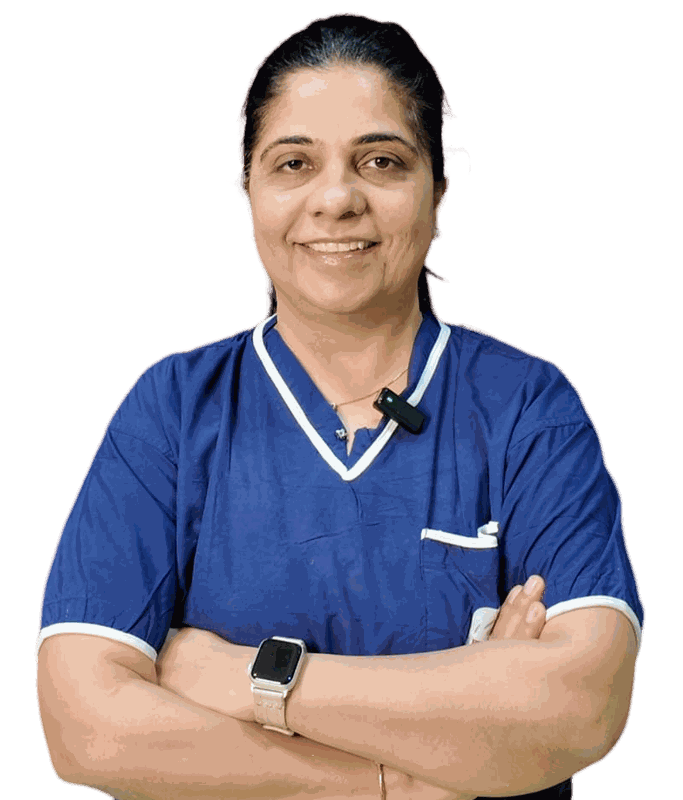
Medical Reviewer
Dr. Monica Sachdev
Dr. Monica Sachdev is a leading IVF specialist in Delhi with over 18 years of experience in reproductive medicine. She is dedicated to providing evidence-based fertility care and has helped thousands of families achieve parenthood.
Ready to Start Your Fertility Journey?
Our friendly team at Pravi IVF is here to stand by you, listen to your story, and help you through every single step.