

Platelet-rich plasma (PRP) therapy for ovaries is gaining attention as a potential innovative treatment in fertility. Understanding the prp for ovaries process can help individuals and couples make informed decisions about their reproductive health.
This article provides a comprehensive, step-by-step guide to what you can expect with PRP ovarian rejuvenation.
Key Takeaways
- PRP for ovaries involves drawing your blood, concentrating platelets, and injecting them into the ovaries to potentially improve ovarian function.
- The process typically includes initial consultation, blood collection, PRP preparation, ovarian injection, and a recovery period.
- Candidates for PRP ovarian rejuvenation often include women with diminished ovarian reserve, premature ovarian insufficiency, or those seeking alternatives to conventional IVF.
- While promising, it's crucial to have realistic expectations and discuss potential outcomes and limitations with a fertility specialist.
- Recovery is generally swift, with most women resuming normal activities within a day or two, though individual experiences may vary.
What is PRP for Ovaries and How Does it Work?
PRP for ovaries is an autologous treatment, meaning it uses your own blood. The process involves isolating platelets, which are rich in growth factors, from your blood.
These concentrated platelets are then injected into the ovaries. The goal is to stimulate dormant ovarian follicles, improve egg quality, and potentially enhance ovarian response.
Growth factors within PRP are believed to promote cell regeneration and tissue repair. This could translate to improved ovarian function and increased chances of conception for some women.
Who Can Benefit from PRP Ovarian Rejuvenation?
PRP ovarian rejuvenation is often considered for specific fertility challenges. It's not a universal solution but may offer hope to certain individuals.
Potential Candidates for PRP
- Diminished Ovarian Reserve (DOR): Women with lower than expected egg count for their age.
- Premature Ovarian Insufficiency (POI)/Failure (POF): Women under 40 experiencing symptoms of menopause due to ovarian dysfunction.
- Poor Responders to IVF: Those who have not responded well to traditional ovarian stimulation protocols during IVF treatment.
- Advanced Maternal Age: Women seeking to improve ovarian health and egg quality as they age.
A thorough evaluation by a fertility specialist is essential to determine suitability. They will assess your medical history, hormonal profiles, and ultrasound findings.
The Step-by-Step PRP for Ovaries Process
Understanding each phase of the prp for ovaries process can help you prepare mentally and physically. This journey is typically divided into several key stages.
Step 1: Initial Consultation and Evaluation
Your journey begins with a detailed consultation at Pravi Global IVF. Our specialists will review your medical history, conduct physical examinations, and order specific diagnostic tests.
These tests usually include hormonal blood tests (like AMH, FSH, LH, Estradiol) and transvaginal ultrasounds. This helps assess your ovarian reserve and overall reproductive health.
We will discuss your fertility goals, previous treatments, and explain if PRP is a suitable option for you. This is also your opportunity to ask any questions.
Step 2: Blood Collection
Once you are deemed a suitable candidate, the first practical step is a simple blood draw. A small amount of your blood, similar to a routine blood test, is collected from your arm.
This blood is the source material for creating the platelet-rich plasma. The quantity depends on the specific protocol used by the clinic.
Step 3: PRP Preparation
The collected blood is then processed in a specialized centrifuge machine. This machine spins the blood at high speeds, separating its components.
The red blood cells, white blood cells, and plasma are separated. The platelet-rich plasma layer, which contains a high concentration of growth factors, is carefully extracted.
This preparation takes about 30-60 minutes in a sterile laboratory setting within the clinic. The resulting PRP is a golden-yellow liquid, ready for injection.
Step 4: Ovarian Injection Procedure
The PRP is injected directly into your ovaries. This is typically done as an outpatient procedure under mild sedation or local anesthesia for your comfort.
The specialist uses transvaginal ultrasound guidance to ensure precise placement of the PRP. A thin needle is passed through the vaginal wall into each ovary.
The procedure usually takes about 20-30 minutes. You will be monitored briefly after the injection.
Step 5: Post-Procedure Monitoring and Recovery
After the PRP injection, you will rest in the clinic for a short period. Most women experience minimal discomfort, similar to mild cramping.
You can typically go home the same day. We advise avoiding strenuous activities for 24-48 hours. Most patients can resume normal daily activities very quickly.
Follow-up appointments and hormone tests will be scheduled to monitor ovarian response. This helps track any changes in hormone levels or follicle development over the coming weeks and months.
Understanding the Timeline of PRP for Ovaries
The overall timeline for the prp for ovaries process varies by individual and treatment plan. It's not a one-size-fits-all approach.
Typical Timeline Overview
- Initial Consultation to Procedure: This can range from a few days to a few weeks, depending on necessary diagnostic tests and scheduling.
- PRP Preparation and Injection: This usually occurs on the same day and takes a total of 1-2 hours including preparation and the procedure itself.
- Post-Procedure Monitoring: Follow-up blood tests and ultrasounds are typically performed 1-3 months after the procedure to assess changes in ovarian function and hormone levels.
- Expected Effects: While some changes might be seen within weeks, the full potential effects of PRP on ovarian function and potential fertility outcomes may become apparent over several months.
It's important to remember that PRP is part of a broader fertility strategy. It might be followed by other treatments like IUI or IVF, depending on the individual's progress and goals.
Recovery and What to Expect After PRP Ovarian Rejuvenation
Recovery from the PRP ovarian injection is generally straightforward. Understanding what to expect can ease any anxieties.
Immediate Post-Procedure
- Mild Discomfort: You might experience some mild cramping, spotting, or pelvic pressure immediately after the procedure. This is usually managed with over-the-counter pain relievers.
- Rest: It's recommended to rest for the remainder of the day. Avoid heavy lifting or intense exercise for 24-48 hours.
- Activity: Most women can return to light activities the next day.
Longer-Term Monitoring
Your fertility specialist will schedule follow-up appointments to monitor your progress. This typically involves:
- Hormone Level Checks: Assessing changes in AMH, FSH, and Estradiol levels.
- Ultrasound Scans: Monitoring ovarian volume, antral follicle count, and follicle development.
- Symptom Review: Discussing any changes in menstrual cycles or overall well-being.
It is important to have realistic expectations. The effects of PRP can vary greatly among individuals. Not everyone will experience significant changes, and success is not guaranteed.
PRP for Ovaries: What to Consider
When considering PRP ovarian rejuvenation, it's helpful to weigh it against other options and understand its unique aspects.
| Feature | PRP for Ovaries | Conventional IVF |
|---|---|---|
| Type of Treatment | Autologous (uses own blood), aims to rejuvenate ovaries | Uses hormones for ovarian stimulation, retrieves eggs for fertilization |
| Invasiveness | Minimally invasive injection | More invasive (egg retrieval surgery) |
| Anesthesia | Mild sedation/local anesthesia | General anesthesia for egg retrieval |
| Primary Goal | Improve ovarian function, egg quality, potentially increase egg count | Create embryos outside the body for transfer |
| Potential Candidates | DOR, POI, poor IVF responders | Wide range of infertility factors |
PRP is often considered a complementary or alternative approach, especially for those who have exhausted conventional methods or prefer a less invasive route. Discuss all your options thoroughly with your fertility specialist.
Navigating Your Fertility Journey with Pravi Global IVF
At Pravi Global IVF in Lajpat Nagar, New Delhi, we are committed to providing personalized and compassionate care. Our team uses advanced techniques and offers a range of fertility treatments tailored to your unique needs.
Understanding the prp for ovaries process is just one step. We encourage you to seek expert advice to determine the most suitable path for your fertility goals.
Our clinic is equipped to handle complex fertility cases, guiding you through every decision with transparency and support. We believe in empowering our patients with knowledge.
Frequently Asked Questions
Can PRP for ovaries help improve AMH levels?
Some studies and anecdotal evidence suggest that PRP might lead to an increase in AMH levels, which is an indicator of ovarian reserve. However, more robust research is needed to confirm this consistently, and results vary greatly among individuals.
Is the PRP for ovaries procedure painful?
The PRP injection itself is performed under mild sedation or local anesthesia to minimize discomfort. You might experience some mild cramping or pressure post-procedure, but this is usually manageable with over-the-counter pain relief and subsides quickly.
How many PRP treatments are typically needed?
The number of PRP treatments can vary. Some protocols involve a single treatment, while others might suggest repeat injections after several months. Your fertility specialist will recommend a personalized plan based on your response and specific condition.
What are the risks associated with PRP for ovaries?
Since PRP uses your own blood, the risk of allergic reactions is very low. Potential risks are generally associated with any invasive procedure, including minor bleeding, infection at the injection site, or mild discomfort. These are rare and typically mild.
How long does it take to see results after PRP for ovaries?
Changes in hormone levels or ovarian function might be observed within 1-3 months after the PRP procedure. However, the full potential effects and any impact on conception could take several months to become apparent. Patience and continued monitoring are key.
If you're exploring fertility options or have questions about PRP, please don't hesitate to book an appointment with us. Contact Pravi Global IVF in Lajpat Nagar, New Delhi, at +91 80091 50040 to discuss your unique situation. We are here to support you. Reach out today.
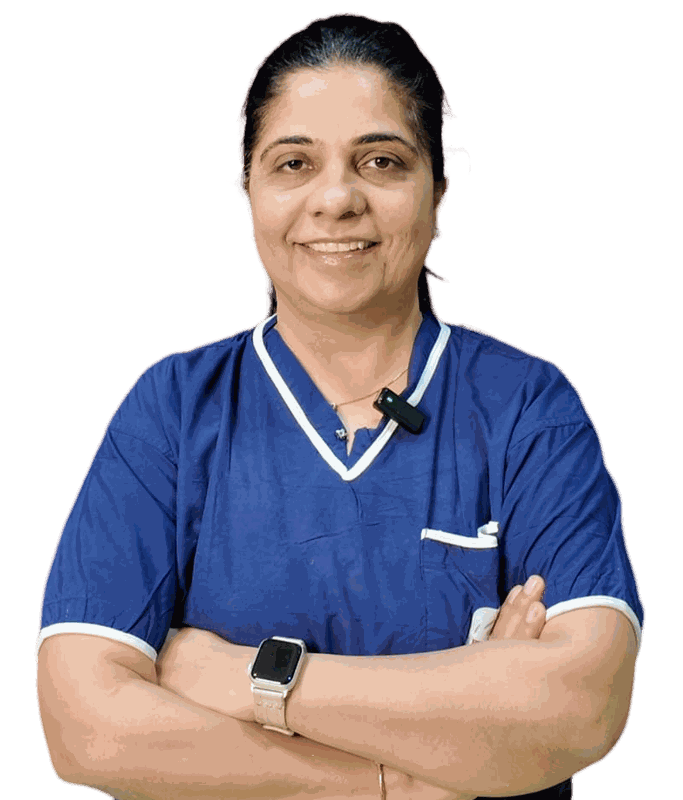
Medical Reviewer
Dr. Monica Sachdev
Dr. Monica Sachdev is a leading IVF specialist in Delhi with over 18 years of experience in reproductive medicine. She is dedicated to providing evidence-based fertility care and has helped thousands of families achieve parenthood.
Ready to Start Your Fertility Journey?
Our friendly team at Pravi IVF is here to stand by you, listen to your story, and help you through every single step.