

Yes, it is possible to get pregnant with secondary infertility, sometimes naturally and sometimes with treatment. Having conceived before is useful medical history, but it does not guarantee another pregnancy; the best approach depends on your age, current fertility health, and how long you have been trying.
Key Takeaways
- Secondary infertility means difficulty conceiving after a previous pregnancy, even if that pregnancy did not result in a live birth.
- Changes in ovulation, fallopian tubes, the uterus, or sperm can affect fertility after an earlier conception.
- Natural conception, ovulation treatment, IUI, and IVF may be options depending on the cause.
- Both partners should usually be assessed rather than assuming the problem is female infertility alone.
- Seek evaluation after 12 months of trying if under 35, or after six months if 35 or older; some situations need earlier care.
What Causes Secondary Infertility?
Fertility can change between pregnancies. A previous uncomplicated conception does not rule out a new medical issue, and several smaller factors may contribute together.
Changes in female fertility
Age affects both egg quantity and egg quality. Irregular ovulation, including that associated with polycystic ovary syndrome (PCOS) or thyroid disorders, can also make conception less predictable.
- Blocked or damaged fallopian tubes, sometimes following pelvic infection or surgery.
- Endometriosis, which may affect pelvic anatomy and fertility.
- Uterine polyps, certain fibroids, or adhesions that may interfere with implantation.
- Breastfeeding-related hormonal changes that can delay regular ovulation.
Not every fibroid or previous caesarean birth causes infertility. Symptoms and test findings need careful interpretation before deciding whether treatment is necessary.
Sperm and shared factors
Sperm count, movement, and shape can change because of illness, medications, smoking, or other health conditions. Sexual difficulties, infrequent intercourse, and timing may also contribute, while some couples have no clear cause despite standard testing.
Can You Get Pregnant with Secondary Infertility Naturally?
Some people do conceive without fertility procedures, particularly when ovulation occurs, the tubes are open, and sperm findings are reassuring. However, the chance of becoming pregnant with secondary infertility naturally depends on the underlying cause, age, and duration of infertility—not simply on having conceived before.
Steps that may support conception
- Have intercourse every one to two days during the fertile window, or every two to three days throughout the cycle.
- Consider ovulation tracking if helpful, remembering that apps only estimate fertile days and ovulation kits can be misleading with PCOS.
- Avoid tobacco and recreational drugs, and discuss alcohol use and medications with your clinician.
- Aim for sustainable nutrition, activity, and sleep habits rather than restrictive diets or unproven fertility supplements.
- Take preconception folic acid, usually 400 micrograms daily, unless your clinician recommends a different dose.
These steps support reproductive health but cannot unblock fallopian tubes or reverse age-related egg changes. Do not postpone an assessment while waiting for lifestyle changes to work.
When Should You See a Fertility Specialist?
If you are under 35, arrange an evaluation after 12 months of regular unprotected intercourse without pregnancy. At 35 or older, seek help after six months; over 40, a prompt consultation is generally recommended.
Seek advice sooner at any age if periods are absent or very irregular, intercourse is painful, or there is known endometriosis, tubal disease, or a sperm problem. Previous cancer treatment or repeated pregnancy losses also warrants timely specialist advice, although recurrent pregnancy loss needs its own assessment.
What an assessment may include
Your specialist will review previous pregnancies, delivery complications, menstrual patterns, medications, and both partners’ health. Testing should answer specific questions rather than involve every available investigation.
- A semen analysis to assess sperm-related factors.
- Ultrasound to examine the uterus and ovaries.
- Ovulation assessment and selected hormone tests, based on menstrual history and symptoms.
- A test such as HSG or HyCoSy to assess whether the fallopian tubes are open.
- Ovarian reserve testing, such as AMH or antral follicle count, when useful for treatment planning.
AMH helps estimate likely ovarian response to stimulation; it does not directly measure egg quality or reliably predict natural conception on its own.
Which Treatment Options May Help?
Treating an identified cause
If ovulation is irregular, a specialist may recommend medication to help eggs develop and release. Treatment for a relevant thyroid disorder or selected uterine problems may also help, but surgery is not automatically needed for every abnormal scan finding.
Ovulation medicines require appropriate supervision because some can increase the risk of multiple pregnancy or excessive ovarian response. Avoid taking fertility tablets without a prescription and monitoring plan.
IUI: When simpler treatment may be appropriate
Intrauterine insemination places prepared sperm inside the uterus around ovulation. IUI treatment in Lajpat Nagar may be considered for selected cases of unexplained infertility, mild sperm-related problems, or difficulties with intercourse.
Usually, at least one fallopian tube must be open and the prepared sperm sample suitable. IUI is generally not appropriate for bilateral tubal blockage or severe sperm-related infertility, and the number of attempts should be reviewed against age and other findings.
IVF and when ICSI may be considered
IVF involves stimulating the ovaries, collecting eggs, fertilising them in a laboratory, and transferring an embryo into the uterus. IVF treatment in Lajpat Nagar may be advised for blocked tubes, certain significant fertility factors, or when other approaches have not worked.
ICSI involves injecting a single sperm into an egg and may be recommended for severe sperm-related factors or previous fertilisation problems. ICSI treatment is not automatically necessary for every IVF cycle and does not guarantee fertilisation or pregnancy.
IVF also carries burdens and risks, including medication side effects and ovarian hyperstimulation. Discuss embryo transfer choices, multiple-pregnancy risk, and realistic expectations before starting.
Choosing a Plan That Fits Your Situation
There is no single best way to become pregnant with secondary infertility. A sensible plan balances your diagnosis, age, treatment preferences, emotional wellbeing, and the time available for trying different options.
Ask what each treatment is intended to address, what monitoring it needs, and when the plan should be reassessed. Feeling upset about difficulty conceiving again is valid, even when you already have a child; counselling or support can help.
Frequently Asked Questions
Can secondary infertility happen after an easy first pregnancy?
Yes. Age, ovulation, tubal health, and sperm quality can change after an earlier pregnancy, even when conception happened quickly before.
Does secondary infertility always require IVF?
No. Depending on the findings, timed intercourse, treatment of an underlying condition, ovulation medication, or IUI may be reasonable options.
Can breastfeeding affect attempts to conceive?
Breastfeeding can suppress ovulation, particularly while periods are absent or irregular. Ovulation can still occur before the first period, so discuss feeding preferences and reproductive plans with your clinician.
Does a previous pregnancy guarantee treatment success?
No. Previous pregnancy is one part of the assessment, but current age, egg and sperm factors, uterine health, and the diagnosis influence outcomes.
Should my partner be tested despite having conceived before?
Yes, semen analysis is usually part of the initial assessment when a male partner is involved. Testing both partners can reduce delays and guide appropriate treatment.
Discuss Your Next Steps at Pravi Global IVF
If you are hoping to get pregnant with secondary infertility, seek personalised advice rather than assuming your only option is IVF. At Pravi Global IVF in Lajpat Nagar, New Delhi, discuss your history and the assessments that may be appropriate.
Book an appointment or contact the clinic to plan your visit. Call +91 80091 50040 to arrange a fertility consultation.
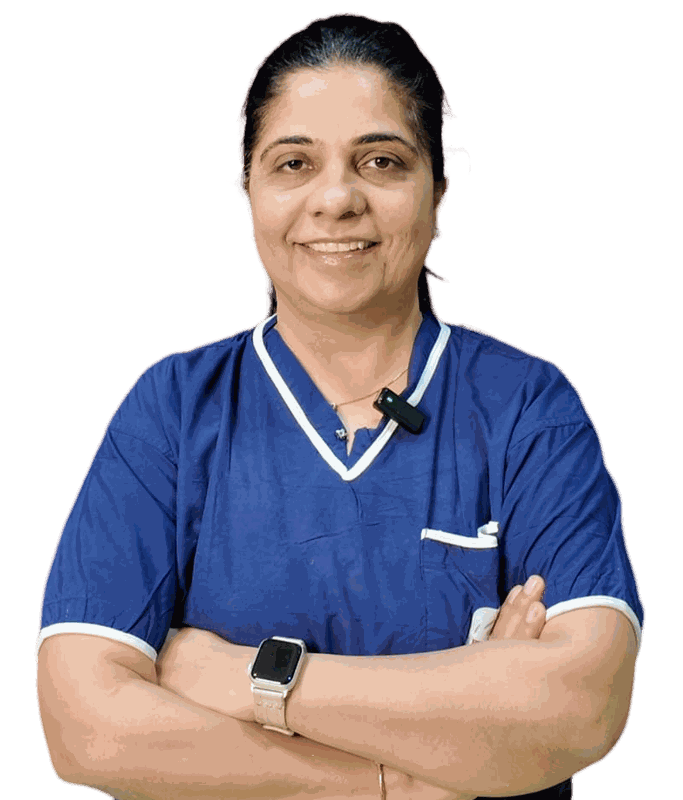
Medical Reviewer
Dr. Monica Sachdev
Dr. Monica Sachdev is a leading IVF specialist in Delhi with over 18 years of experience in reproductive medicine. She is dedicated to providing evidence-based fertility care and has helped thousands of families achieve parenthood.
Ready to Start Your Fertility Journey?
Our friendly team at Pravi IVF is here to stand by you, listen to your story, and help you through every single step.