

Yes, you can get pregnant with ovarian cysts, and many people conceive without fertility treatment. Whether a cyst affects your chances depends on its type, size, symptoms and effect on ovulation—not simply its presence on an ultrasound.
Key Takeaways
- Most common ovarian cysts are temporary and do not cause infertility.
- Endometriosis-related cysts may affect fertility; PCOS is a different condition.
- Natural conception, IUI or IVF may be appropriate depending on your overall fertility assessment.
- Not every cyst needs surgery, and ovarian surgery can sometimes reduce ovarian reserve.
- Sudden severe pelvic pain, especially with vomiting or faintness, needs urgent medical assessment.
Can You Get Pregnant with Ovarian Cysts Naturally?
Often, yes. If you ovulate regularly, have at least one functioning fallopian tube and there are no significant sperm-related concerns, natural conception may still be possible.
A cyst on one ovary does not automatically stop that ovary from releasing eggs or prevent the other ovary from working. However, an underlying condition such as endometriosis can affect fertility through mechanisms beyond the cyst itself.
When trying naturally may be reasonable
Your doctor may recommend continued attempts with ultrasound follow-up when a cyst looks benign and you have no concerning symptoms. Intercourse every two to three days throughout the cycle can help cover the fertile window without making timing overly stressful.
- Track periods to notice irregular or missed cycles.
- Take a preconception folic acid supplement as advised by your clinician.
- Avoid smoking and discuss alcohol, medicines and supplements before pregnancy.
- Keep follow-up appointments even if pain improves.
Which Ovarian Cysts Can Affect Fertility?
Functional cysts
Follicular and corpus luteum cysts develop as part of the menstrual cycle. Many settle on their own over a few cycles and do not cause lasting fertility problems.
A follicular cyst can occur when a follicle does not release an egg, potentially affecting that cycle. A corpus luteum forms after ovulation and produces hormones that support early pregnancy; its presence is not automatically a problem.
Endometriomas
Endometriomas are ovarian cysts associated with endometriosis. This condition can involve inflammation, pelvic adhesions and reduced ovarian reserve, although its effect differs considerably between individuals.
Management depends on pain, ultrasound findings, cyst size, age, ovarian reserve and pregnancy plans. Removing an endometrioma is not always the best first step before fertility treatment.
Dermoid cysts and cystadenomas
These cysts are often benign and usually do not directly disrupt ovulation. Larger or symptomatic cysts may need assessment because of pressure symptoms, torsion risk or uncertainty about their appearance.
PCOS is not the same as an ovarian cyst
Polycystic ovary syndrome, or PCOS, is a hormonal and metabolic condition that can cause irregular ovulation. The small follicles seen on an ultrasound are not the same as a single large ovarian cyst, and ultrasound alone does not establish a PCOS diagnosis.
What Should a Fertility Assessment Include?
To understand your chances of getting pregnant with ovarian cysts, a specialist looks beyond the scan. Your age, cycle pattern, symptoms, previous surgery and how long you have been trying all help guide the next step.
- Pelvic ultrasound: Assesses the cyst’s size, appearance and whether follow-up is needed.
- Ovulation assessment: Reviews cycle history and uses hormone testing when appropriate.
- Ovarian reserve tests: AMH and antral follicle count may help predict response to stimulation, but do not independently predict natural conception.
- Other fertility factors: Semen analysis and, when indicated, tests of fallopian tube patency.
Usually, seek fertility advice after 12 months of trying if you are under 35, or after six months if you are 35 or older. Seek advice sooner for irregular periods, known endometriosis, significant pelvic pain or other concerns; over 40, prompt evaluation is generally recommended.
When Can IUI Help?
Intrauterine insemination, or IUI, places prepared sperm inside the uterus around ovulation. It may be considered for selected cases of unexplained infertility, mild sperm-related difficulties or ovulation problems after appropriate assessment.
IUI does not treat or remove an ovarian cyst, and at least one functioning fallopian tube is generally needed. Significant endometriosis or other major fertility factors may make a different approach more suitable.
Why the baseline scan matters
Before an IUI cycle, a scan may identify a persistent or hormone-producing cyst. Your doctor may delay stimulation, check hormone levels or repeat the scan rather than start treatment immediately.
When Might IVF Be Recommended?
IVF treatment may be considered when there are blocked tubes, significant endometriosis, certain sperm-related problems or unsuccessful previous treatments. Age, ovarian reserve and time spent trying also influence the recommendation.
It is possible to get pregnant with ovarian cysts through IVF, but treatment needs individual planning. The team considers whether a cyst affects stimulation, makes egg retrieval difficult or needs further investigation before proceeding.
Does an endometrioma need removal before IVF?
Not routinely just to improve IVF outcomes. Surgery can remove healthy ovarian tissue alongside the cyst and may reduce ovarian reserve, particularly after repeat procedures or surgery on both ovaries.
Surgery may still be considered for significant pain, suspicious findings or difficulty accessing follicles. ICSI, where a sperm is injected into an egg, may be advised for specific fertilisation concerns; an ovarian cyst alone is not an indication.
Monitoring, Medicines or Surgery?
There is no single treatment for every ovarian cyst. Decisions should balance symptom relief, safety and preservation of fertility.
- Monitoring: Often appropriate for simple, benign-looking cysts without significant symptoms.
- Medicines: May help manage symptoms or an underlying condition, but do not remove every type of cyst.
- Hormonal contraception: Can suppress ovulation while taken, so it is not a treatment for achieving pregnancy during that time.
- Surgery: May be needed for selected persistent, symptomatic or suspicious cysts, with discussion of fertility-preserving options.
Symptoms That Need Urgent Attention
Sudden severe pelvic or abdominal pain, pain with vomiting, faintness, fever or heavy bleeding needs urgent medical assessment. These symptoms can occur with ovarian torsion, cyst rupture or other emergencies.
If pregnancy is possible, pain or bleeding also requires assessment for an ectopic pregnancy. Do not assume that a previously diagnosed cyst explains new symptoms.
Frequently Asked Questions
Can a cyst stop ovulation every month?
Not necessarily. Many cysts do not interfere with ovulation, while some functional cysts can affect a particular cycle; persistent irregular periods need assessment for other causes.
Can I get pregnant with ovarian cysts on both ovaries?
Yes, pregnancy may still be possible. The cyst types, ovarian reserve, ovulation and other fertility factors matter more than whether one or both ovaries are involved.
Will removing a cyst improve my fertility?
Sometimes, but improvement is not guaranteed. Discuss the expected benefit against the risk of losing healthy ovarian tissue, especially with endometriomas.
Can an ovarian cyst harm an existing pregnancy?
Many cysts found during pregnancy are benign and monitored with ultrasound. Large, painful or unusual-looking cysts need individual specialist assessment.
Is IVF always needed if I have an ovarian cyst?
No. Many people conceive naturally, while others benefit from ovulation treatment or IUI; IVF is recommended according to the overall diagnosis.
Discuss Your Pregnancy Options in Lajpat Nagar
At Pravi Global IVF in Lajpat Nagar, New Delhi, you can discuss your scan findings and pregnancy plans with a fertility specialist. Bring previous ultrasound reports, test results and details of any ovarian surgery.
Book an appointment or contact the clinic to discuss an individual assessment. Call +91 80091 50040 to explore the next step.
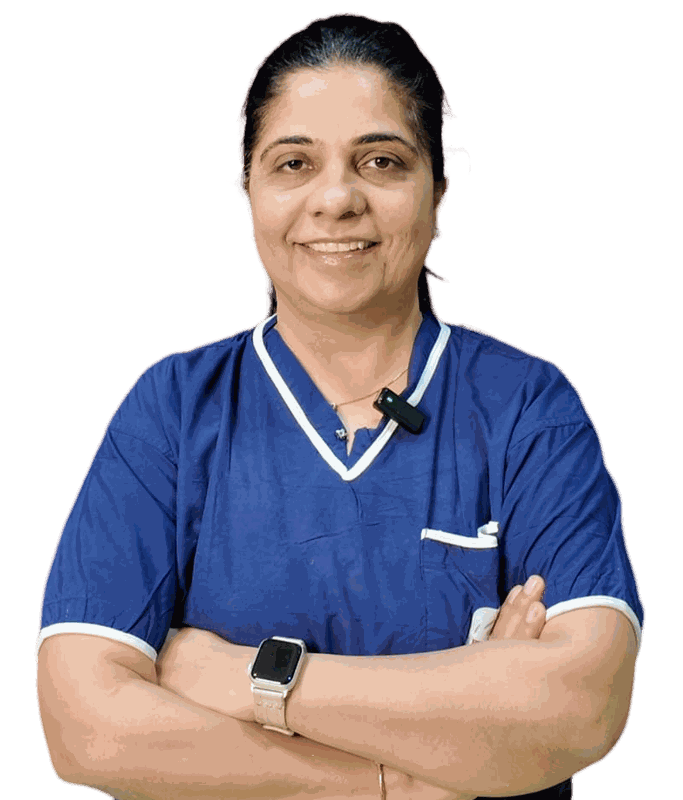
Medical Reviewer
Dr. Monica Sachdev
Dr. Monica Sachdev is a leading IVF specialist in Delhi with over 18 years of experience in reproductive medicine. She is dedicated to providing evidence-based fertility care and has helped thousands of families achieve parenthood.
Ready to Start Your Fertility Journey?
Our friendly team at Pravi IVF is here to stand by you, listen to your story, and help you through every single step.