

Yes, you can get pregnant with recurrent miscarriage, and many people later have a successful pregnancy. The right next step depends on why the losses happened, your age, and whether becoming pregnant is also difficult—not simply on how many treatments you have tried.
Repeated loss can leave you worried about trying again. You deserve a careful review, clear explanations, and support without being pushed towards IVF automatically.
Key takeaways
- Repeated miscarriage does not automatically mean you need fertility treatment.
- An evaluation is often appropriate after two pregnancy losses.
- Natural conception may remain a reasonable option after assessment.
- IUI helps sperm reach the egg; it does not treat most miscarriage causes.
- IVF, including genetic testing in selected cases, cannot guarantee a live birth.
Getting Pregnant with Recurrent Miscarriage: What Matters
Conceiving and sustaining pregnancy are different
Miscarriage means a pregnancy has ended, while infertility usually refers to difficulty becoming pregnant. You can conceive readily but have repeated losses, or experience both problems. Your treatment needs to address the problem actually present.
Your history guides the outlook
Your age, previous pregnancy outcomes, timing of losses, and any identified cause help your doctor estimate your outlook. Many early miscarriages involve random chromosomal changes in the embryo; they are not usually caused by ordinary exercise, work, sex, or something you did.
Even when testing finds no clear explanation, a future live birth may still be possible. No single test or treatment can predict your individual outcome with certainty.
Get a Focused Assessment Before Choosing Treatment
Definitions of recurrent miscarriage vary between guidelines, but discussing evaluation after two losses is reasonable. Seek advice earlier if you have had a second-trimester loss, an ectopic pregnancy, or a known genetic or uterine condition.
Bring records that clarify what happened
Old reports can prevent unnecessary repeat testing. If some records are unavailable, write down the approximate dates, pregnancy weeks, and treatments you remember.
- Ultrasound reports and pregnancy discharge summaries.
- Any testing of pregnancy tissue.
- Previous thyroid, diabetes, or clotting-related reports.
- Your medicines, supplements, and menstrual history.
- Relevant pregnancy or genetic history on either side of the family.
Choose tests with a clear purpose
Depending on your history, assessment may include pelvic ultrasound to examine the uterus, thyroid testing, and blood tests for antiphospholipid syndrome. Diabetes screening, parental chromosome testing, or further uterine imaging may be appropriate in selected situations.
Routine inherited thrombophilia panels, infection panels, and immune tests are not recommended for everyone. Ask what each test could reveal and whether its result would change your care.
Consider Natural Conception with a Support Plan
When trying naturally may make sense
If you conceive without difficulty and no condition requiring assisted reproduction is found, trying naturally may be reasonable. Your doctor can help you balance this option against your age, time trying, and how ready you feel emotionally.
Treat an identified problem first
Care may involve managing thyroid disease or diabetes, or considering treatment for a specific uterine abnormality. For confirmed antiphospholipid syndrome, prescribed low-dose aspirin and heparin may help; these medicines are not routine treatment for unexplained miscarriage.
Progesterone may be offered in certain circumstances, particularly if you have early-pregnancy bleeding and previous miscarriage. Do not start it yourself; bleeding first needs assessment, including confirmation of where the pregnancy is located.
- Take folic acid, usually 400 micrograms daily, unless advised otherwise.
- Avoid smoking, alcohol, and recreational drugs.
- Keep caffeine below 200 milligrams daily during pregnancy.
- Review medicines and herbal supplements before trying.
- Arrange whom to contact when a pregnancy test turns positive.
Understand Where IUI Can—and Cannot—Help
Intrauterine insemination places prepared sperm inside the uterus around ovulation. It may help selected people with difficulty conceiving, such as some cases involving sperm factors or unexplained infertility, when at least one fallopian tube is open.
However, IUI does not screen embryos or correct most causes of recurrent miscarriage. If you already conceive easily, repeating IUI solely to prevent another loss usually has no clear rationale.
If fertility difficulties coexist, discuss whether IUI treatment in Lajpat Nagar fits your assessment. Ask about ovarian stimulation and multiple pregnancy risk, especially when medicines are used to develop more than one follicle.
Choose IVF Only When It Addresses Your Needs
When IVF may be considered
IVF may be appropriate when recurrent loss occurs alongside blocked tubes, significant sperm problems, or other fertility difficulties. Your age and reproductive goals also influence whether spending more time trying naturally is reasonable.
Read about IVF treatment in Lajpat Nagar, but ask which specific problem it would address for you. IVF alone does not prevent miscarriage or treat conditions such as antiphospholipid syndrome.
What embryo testing can tell you
If either partner has a structural chromosome rearrangement, genetic counselling may lead to discussion of IVF with PGT-SR. PGT-A screens embryos for chromosome-number differences, but routine use for all couples with recurrent miscarriage is not supported by clear evidence of improved cumulative live birth.
Testing adds expense and may leave no embryo suitable for transfer. Results have limitations, and prenatal screening or diagnostic testing should still be discussed if pregnancy occurs.
ICSI is not a miscarriage treatment
ICSI involves injecting one sperm into an egg, often for significant male-factor infertility or previous fertilisation problems. ICSI treatment does not repair sperm or egg chromosomes and should not be presented as protection against recurrent loss.
Compare Your Options Before Deciding
| Option | Main role | Key limitation |
|---|---|---|
| Natural conception | Trying with cause-specific care and monitoring | Does not avoid every miscarriage cause |
| IUI | Helping selected conception difficulties | Does not screen embryo chromosomes |
| IVF | Addressing infertility; enabling selected embryo testing | Cannot guarantee a live birth |
Ask for an itemised estimate covering tests, medicines, procedures, freezing, and any genetic testing proposed. You should also understand the alternative of waiting or trying naturally before giving consent.
Plan Early Pregnancy Care and Emotional Support
After a positive test, contact your clinician to arrange appropriately timed monitoring. Early scans can confirm pregnancy location and assess development, but very early scans may be inconclusive and require repeating.
- Agree on scan timing and any prescribed medicines.
- Ask whom to call for bleeding or pain.
- Seek urgent care for severe one-sided pain, fainting, shoulder-tip pain, or heavy bleeding.
- Request counselling if anxiety or grief feels overwhelming.
Frequently Asked Questions
Can I have a healthy baby after three miscarriages?
Yes, it is possible. Your individual outlook depends on factors including age, previous outcomes, and any identified cause, so a personalised assessment is more useful than a general percentage.
Do I need IVF after two miscarriages?
Not necessarily. Two losses warrant a discussion about evaluation, but natural conception with appropriate care may still be suitable.
Does IUI reduce miscarriage risk?
IUI is not an established treatment for recurrent miscarriage. It may help with a separate difficulty conceiving, but does not remove most causes of pregnancy loss.
How soon can I try again?
After an uncomplicated early miscarriage, a prolonged delay is often unnecessary once you have recovered and feel ready. Ectopic pregnancy, molar pregnancy, infection, or particular treatments may require a different waiting period.
What if all my tests are normal?
Unexplained recurrent miscarriage is recognised and does not mean you caused the losses. Discuss supportive care and early monitoring rather than automatically adding unproven treatments.
Discuss Your Next Pregnancy with Pravi Global IVF
Bring your reports to Pravi Global IVF in Lajpat Nagar, New Delhi, to discuss an individualised plan. Call +91 80091 50040 or book an appointment.
For clinic directions, visit our contact page. You can use Lajpat Nagar Metro station on the Violet and Pink lines; allow extra time depending on traffic.
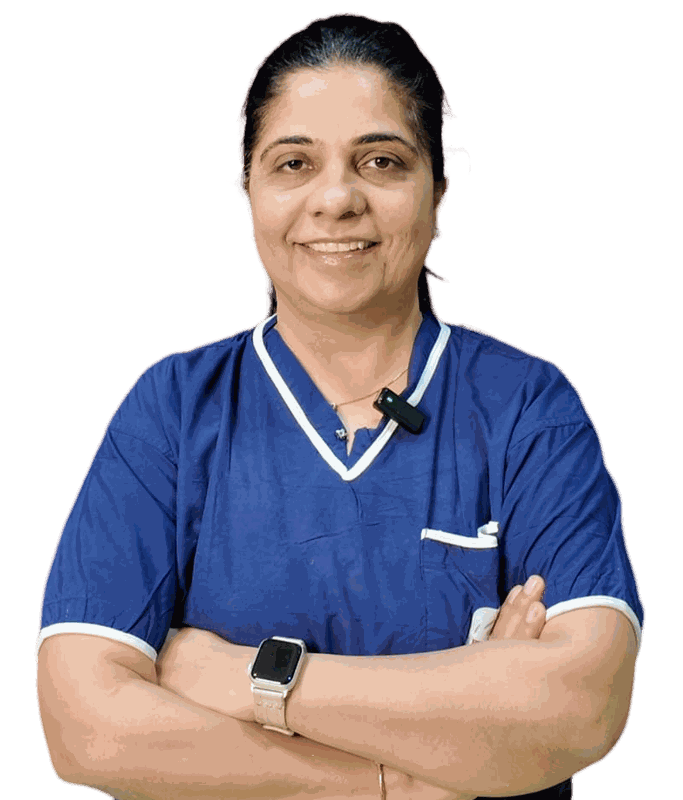
Medical Reviewer
Dr. Monica Sachdev
Dr. Monica Sachdev is a leading IVF specialist in Delhi with over 18 years of experience in reproductive medicine. She is dedicated to providing evidence-based fertility care and has helped thousands of families achieve parenthood.
Ready to Start Your Fertility Journey?
Our friendly team at Pravi IVF is here to stand by you, listen to your story, and help you through every single step.