

Can you get pregnant with premature ovarian insufficiency? Sometimes, yes: occasional ovulation can allow natural conception, while fertility treatment may offer other possibilities. The best approach depends on whether your ovaries still release eggs, your overall health, and your preferences about using your own or donated eggs.
Key takeaways
- Premature ovarian insufficiency, or POI, affects ovarian function before age 40.
- Natural pregnancy remains possible, but ovulation can be unpredictable.
- IUI requires an available egg; it cannot restore ovarian function.
- IVF using your own eggs may be possible in selected cases.
- Donor egg IVF is an established option when usable eggs are unavailable.
Understand Your Diagnosis Before Choosing Treatment
POI is not always a complete stop in ovarian activity
POI means your ovaries are not functioning as expected before age 40. Periods may become irregular or stop, and lower oestrogen can cause hot flushes, vaginal dryness, or sleep changes.
Unlike established menopause, POI can involve intermittent ovarian activity. An occasional period, however, does not guarantee ovulation or mean ovarian function has permanently recovered.
A low AMH result alone does not diagnose POI
Your doctor considers your menstrual history and hormone results, particularly follicle-stimulating hormone (FSH). Pregnancy and other causes of absent periods must be excluded; repeat testing may be needed when results or symptoms are unclear.
Anti-Müllerian hormone (AMH) and ultrasound can help assess ovarian reserve and treatment planning, but they cannot reliably predict spontaneous pregnancy. Low ovarian reserve and confirmed POI are related but different diagnoses.
Getting Pregnant with Premature Ovarian Insufficiency: Natural Options
Occasional ovulation can allow conception
If an egg is released, natural conception may occur. However, ovarian activity is unpredictable, and no test can reliably tell you when an occasional ovulation will happen.
If trying naturally feels right, intercourse every two to three days can reduce pressure around timing. Home ovulation kits may be confusing when hormone patterns are disrupted, so ask whether ultrasound monitoring would meaningfully help.
Agree on a review date rather than waiting indefinitely
With known or suspected POI, seek fertility advice promptly rather than waiting the usual months recommended for couples without a known fertility condition. You can discuss natural attempts and treatment planning together.
- Ask about folic acid before conception, usually 400 micrograms daily unless advised otherwise.
- Avoid tobacco and discuss alcohol use with your clinician.
- Review medicines and supplements for pregnancy safety.
- Consider semen testing and tubal assessment when appropriate.
- Set a review date that considers your age and priorities.
Healthy habits support pregnancy health, but they do not reverse POI. You have not caused this condition by being stressed, eating imperfectly, or failing to try hard enough.
Know When IUI May—and May Not—Help
IUI needs an egg to work
Intrauterine insemination places prepared sperm inside your uterus near ovulation. It may be considered if you develop a follicle, have at least one suitable open fallopian tube, and the sperm findings support this approach.
However, IUI cannot create eggs or correct ovarian insufficiency. Medicines used to encourage follicle growth may produce little or no response in POI, so repeated treatment without reassessment can add emotional and financial strain.
Ask what problem IUI is intended to address
Before choosing IUI treatment in Lajpat Nagar, ask why it is being suggested instead of timed intercourse or IVF. Discuss what would happen if no follicle develops and when the plan would change.
Compare IVF Using Your Own Eggs and Donor Eggs
Own-egg IVF depends on an ovarian response
Some people with POI have occasional follicle development that may allow an attempt at egg retrieval. Your doctor should explain that stimulation may yield no eggs, a cycle may be cancelled, or retrieved eggs may not produce transferable embryos.
Age, ultrasound findings, hormone results, and previous responses help shape this discussion. There is no proven stimulation protocol that consistently restores ovarian activity in POI.
Donor eggs offer a different route to pregnancy
Donor egg IVF uses an egg from a screened donor, fertilised with partner or donor sperm. An embryo is then transferred into your uterus after appropriate preparation, provided carrying a pregnancy is medically suitable.
You would carry the pregnancy but would not provide the egg’s genetic contribution. Ask about counselling, screening, consent, and eligibility under current Indian assisted reproduction rules before making a decision.
Use this quick comparison when discussing your options:
- Natural conception: Requires spontaneous ovulation and suitable sperm and tubes.
- IUI: Requires ovulation; does not bypass egg availability.
- Own-egg IVF: Requires retrievable eggs; cancellation is possible.
- Donor egg IVF: Bypasses the shortage of usable eggs, but pregnancy is not guaranteed.
ICSI is not a treatment for low egg supply
ICSI injects a sperm into an egg to assist fertilisation when indicated, such as for certain sperm-related problems. It cannot increase egg numbers or reverse ovarian insufficiency.
Read about IVF treatment in Lajpat Nagar and ICSI treatment, then ask which steps your situation actually requires.
Protect Your Health Alongside Fertility Planning
POI care is not only about pregnancy. Low oestrogen can affect bone health, sexual comfort, and longer-term cardiovascular health, so ongoing medical follow-up matters even if you pause fertility treatment.
Hormone therapy is often recommended until the usual age of menopause unless contraindicated. It supports health and symptoms but does not replenish eggs; do not stop prescribed treatment without discussing your conception plans.
- Ask whether bone-density assessment is appropriate.
- Discuss thyroid, genetic, or autoimmune testing when indicated.
- Request emotional support if the diagnosis feels overwhelming.
- Be cautious about supplements promising ovarian recovery.
Ovarian PRP, stem-cell treatments, and “ovarian rejuvenation” are not established treatments for improving live-birth outcomes in POI. Ask about evidence, risks, and research oversight before considering experimental procedures.
Make Your First Consultation More Useful
Bring previous hormone reports with their dates, ultrasound findings, details of menstrual changes, and records of surgery, chemotherapy, or fertility treatment. Include your current medicines and any family history of early menopause.
Ask for a written plan covering expected monitoring, reasons for cancellation, costs by treatment stage, and alternatives. If travelling to Lajpat Nagar, allow flexibility depending on traffic; Lajpat Nagar Metro station serves the Violet and Pink lines.
Frequently Asked Questions
Can POI go away on its own?
Ovarian activity can occasionally resume, but this does not mean POI has resolved. Continue follow-up even if periods return, because hormone levels and ovulation may remain unpredictable.
Does having no periods mean pregnancy is impossible?
No. Occasional ovulation may happen before a period returns. If pregnancy is not desired, discuss contraception: standard hormone replacement therapy is not reliable contraception.
Can very low AMH rule out natural pregnancy?
No. AMH alone cannot rule out pregnancy or confirm POI. Your menstrual pattern, FSH results, age, and other fertility factors need to be considered together.
Is donor egg IVF guaranteed to work?
No fertility treatment guarantees a baby. Embryo development, uterine factors, sperm factors, and general health all matter, and pregnancy suitability should be assessed before treatment.
Can someone with Turner syndrome safely carry a pregnancy?
Some people with Turner syndrome have serious cardiovascular risks in pregnancy. Specialist cardiac and maternal-medicine assessment is essential; carrying a pregnancy may be unsafe even when donor eggs are available.
Discuss Your Next Step at Pravi Global IVF
You do not need to decide between natural attempts, IUI, and IVF before your first visit. At Pravi Global IVF in Lajpat Nagar, New Delhi, you can discuss your reports, preferences, and questions about POI.
Call +91 80091 50040, book an appointment, or use our contact page to plan your visit.
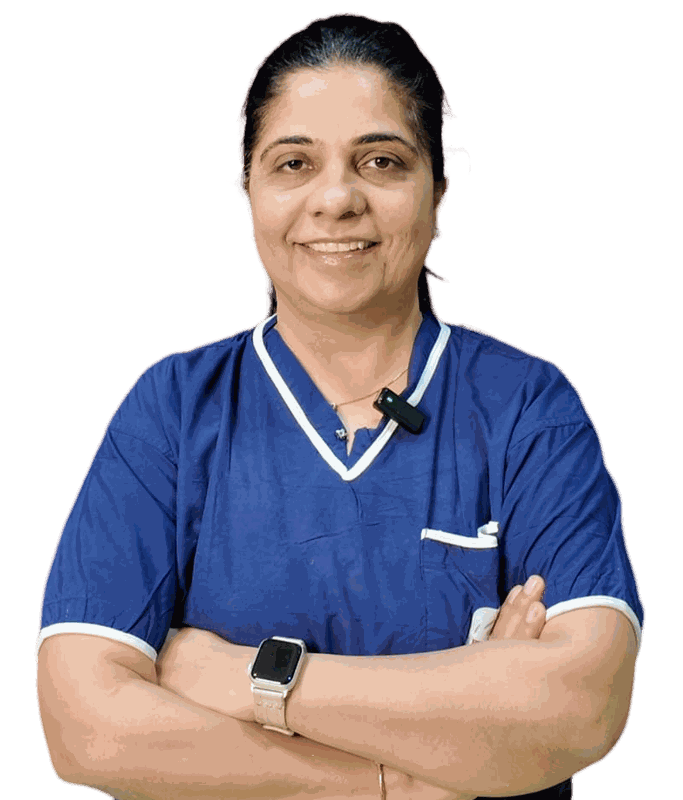
Medical Reviewer
Dr. Monica Sachdev
Dr. Monica Sachdev is a leading IVF specialist in Delhi with over 18 years of experience in reproductive medicine. She is dedicated to providing evidence-based fertility care and has helped thousands of families achieve parenthood.
Ready to Start Your Fertility Journey?
Our friendly team at Pravi IVF is here to stand by you, listen to your story, and help you through every single step.