

Yes, you can get pregnant with endometriosis, either naturally or with fertility treatment. The right approach depends on your age, fallopian tubes, ovarian reserve, sperm health and how long you have been trying—not simply how much pain you experience.
If you are planning a baby, understanding these factors can help you avoid unnecessary delays without rushing into treatment you may not need.
Key takeaways
- Endometriosis does not automatically mean infertility.
- Natural conception remains possible, particularly when tubes and ovulation are functioning.
- IUI may suit selected cases; IVF may help when other barriers exist.
- Ovarian surgery needs careful discussion because it can reduce ovarian reserve.
- Known endometriosis is a reason to seek fertility advice earlier.
Understand how endometriosis can affect conception
Endometriosis involves tissue similar to the uterine lining growing outside the uterus. It can cause inflammation, ovarian cysts called endometriomas, and scar tissue that affects how reproductive organs function.
Egg pickup and fertilisation may be affected
Adhesions can interfere with the fallopian tubes collecting an egg. Inflammation may also affect fertilisation, while ovarian endometriomas can be associated with reduced ovarian reserve.
Pain does not measure your fertility
Severe period pain does not necessarily mean you cannot conceive, and mild symptoms do not guarantee normal fertility. Disease stage alone cannot reliably predict your individual chance of pregnancy.
Pain during sex can also make regular intercourse difficult. Tell your doctor about this directly; it deserves attention alongside fertility planning.
Getting pregnant with endometriosis: when to seek help
Because endometriosis is a known fertility risk factor, you can request an assessment before trying or soon after you begin. You do not need to wait a full year to ask for advice.
Your age helps set the pace
General advice for people without known fertility risks is assessment after 12 months of trying under age 35, or six months from age 35. With endometriosis, earlier review is appropriate, especially over 35 or if you have already had ovarian surgery.
Bring information that changes the plan
- Your period dates and how long you have been trying.
- Previous ultrasound reports and operation notes.
- Details of cyst surgery or hormonal treatment.
- A list of medicines and supplements you use.
- Any previous pregnancy or semen analysis reports.
An assessment commonly includes ultrasound, a semen analysis and, when appropriate, a tubal patency test. AMH and antral follicle count help estimate ovarian response to stimulation, but neither can tell you with certainty whether you will conceive naturally.
Make natural conception attempts more purposeful
A time-limited trial of natural conception may be reasonable when your age, symptoms, duration of trying and test results are reassuring. Agree on a review date rather than continuing indefinitely without reassessment.
Keep timing manageable
Intercourse every two to three days usually covers the fertile window without intensive tracking. If you prefer ovulation tracking, remember that apps estimate dates and may be less reliable with irregular cycles.
- Take 400 micrograms of folic acid daily unless your doctor recommends a different dose.
- Avoid smoking and alcohol while trying to conceive.
- Review pain medicines and supplements with your doctor.
- Choose comfortable positions if intercourse is painful; stop if pain persists.
Know which medicines prevent conception
Hormonal treatments used to control endometriosis symptoms generally suppress ovulation or are contraceptive. They do not improve natural pregnancy chances while you take them, so discuss a planned change rather than stopping prescribed treatment yourself.
No specific diet, supplement or “detox” has been proven to cure endometriosis-related infertility. Balanced meals, sleep and manageable activity support health but do not replace assessment.
Decide whether IUI is a sensible first step
Intrauterine insemination places prepared sperm inside the uterus around ovulation. It does not bypass the fallopian tubes or correct adhesions.
Who may benefit from IUI?
IUI treatment, often with ovarian stimulation, may be considered for selected people with minimal or mild endometriosis, at least one open tube and suitable sperm parameters.
When another approach may save time
IUI is usually less suitable when both tubes are blocked, pelvic anatomy is substantially affected or significant male-factor infertility is present. Age, reduced ovarian reserve and previous unsuccessful attempts may also favour moving to IVF sooner.
Ask how many IUI cycles are reasonable for you before reassessment. Stimulation requires monitoring because multiple pregnancy and, less commonly, ovarian hyperstimulation can occur.
Understand what IVF can—and cannot—solve
IVF involves stimulating the ovaries, collecting eggs, fertilising them in a laboratory and transferring an embryo into the uterus. It bypasses several tubal and pelvic barriers, but it does not cure endometriosis or guarantee pregnancy.
When IVF may be recommended
- Blocked or significantly damaged fallopian tubes.
- Long-standing infertility or unsuccessful previous treatment.
- Age-related time pressure or reduced ovarian reserve.
- Significant sperm-related difficulties alongside endometriosis.
You can discuss IVF treatment in Lajpat Nagar after your reports are reviewed. Ask about your likely ovarian response, monitoring schedule and whether embryos might be frozen before transfer.
ICSI is not automatic for endometriosis
ICSI involves injecting a single sperm into an egg. ICSI treatment may be recommended for sperm-related problems or previous fertilisation difficulties; endometriosis alone does not mean everyone needs it.
Weigh surgery against your fertility priorities
Surgery may help selected people by treating lesions or adhesions, and it can be appropriate for significant pain or a concerning cyst. However, removing an endometrioma can also remove healthy ovarian tissue and reduce ovarian reserve.
Routine endometrioma surgery before IVF is not recommended solely to improve live-birth chances. Decisions should consider symptoms, scan findings, previous surgery and whether a cyst prevents safe egg collection.
- What specific benefit is surgery expected to offer?
- Could it reduce my remaining ovarian reserve?
- Would fertility treatment first be reasonable?
- Should fertility preservation be discussed before surgery?
Compare your next-step options
| Option | When it may fit | Main limitation |
|---|---|---|
| Natural attempts | Reassuring assessment and time available | Cannot overcome blocked tubes |
| IUI | Selected mild disease with an open tube | Still depends on tubal function |
| IVF | Tubal problems or other fertility barriers | No guarantee of pregnancy |
Frequently Asked Questions
Can I conceive naturally with severe endometriosis?
It is possible, but significant adhesions or tubal damage may reduce the chance. An individual assessment is more useful than predicting pregnancy from disease stage alone.
Does endometriosis always require IVF?
No. Depending on your results, natural attempts or IUI may be reasonable. IVF becomes more relevant when there are additional barriers or less time available.
Should an ovarian endometrioma always be removed?
No. Surgery is not automatic, especially before IVF. Your doctor should balance pain, cyst appearance and egg-collection access against possible damage to ovarian reserve.
Will pregnancy cure my endometriosis?
No. Symptoms may improve temporarily during pregnancy, but they can return afterwards. Pregnancy should not be recommended as a treatment for endometriosis.
Does endometriosis affect pregnancy care?
It is associated with higher risks of some complications, including ectopic pregnancy and preterm birth, although many pregnancies progress well. Tell your obstetrician about your diagnosis and previous surgery.
Get a clear plan for your next step
At Pravi Global IVF in Lajpat Nagar, New Delhi, you can discuss your symptoms, reports and family plans. Ask which options fit your situation, what can reasonably wait and what needs attention now.
Call +91 80091 50040 or book an appointment. For clinic directions or visit-related questions, use our contact page.
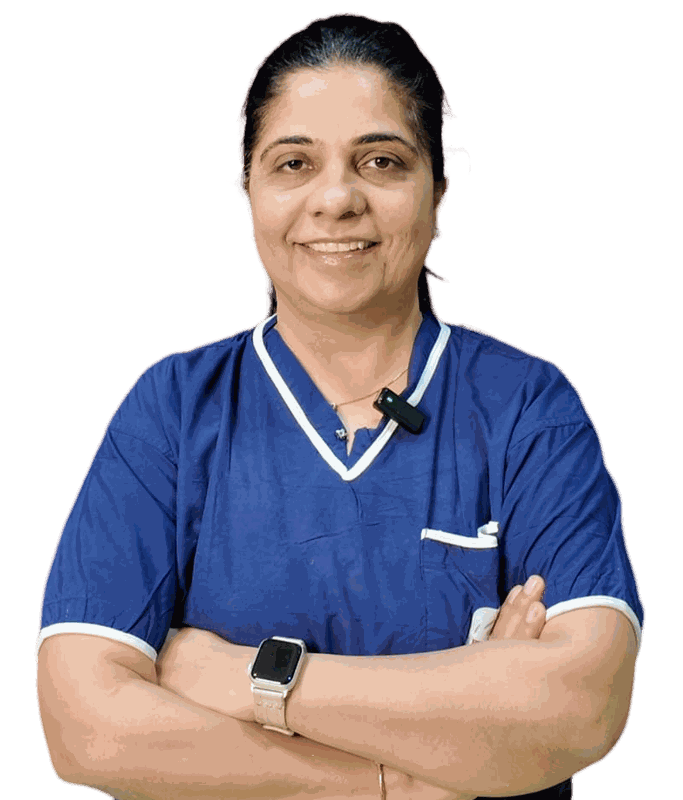
Medical Reviewer
Dr. Monica Sachdev
Dr. Monica Sachdev is a leading IVF specialist in Delhi with over 18 years of experience in reproductive medicine. She is dedicated to providing evidence-based fertility care and has helped thousands of families achieve parenthood.
Ready to Start Your Fertility Journey?
Our friendly team at Pravi IVF is here to stand by you, listen to your story, and help you through every single step.