

Yes, you may be able to get pregnant with Asherman syndrome, especially after treatment restores the uterine cavity. Your options depend on the extent of scarring, the remaining healthy uterine lining, your age and any other fertility concerns.
If your periods became much lighter after a uterine procedure, or you have experienced difficulty conceiving or repeated pregnancy losses, an assessment can help you understand what is happening. IVF is not automatically the first or best next step.
Key takeaways
- Asherman syndrome involves scar tissue inside the uterus.
- Hysteroscopy can confirm adhesions and help guide treatment.
- Natural conception may be possible after successful treatment.
- IUI and IVF do not remove or bypass uterine scarring.
- Pregnancy may need additional monitoring, particularly for placental problems.
Understand how uterine scarring affects pregnancy
What Asherman syndrome means
Asherman syndrome generally refers to intrauterine adhesions associated with symptoms such as reduced menstrual flow, absent periods, infertility or pregnancy loss. These bands of scar tissue can partially or extensively join the uterine walls.
Adhesions can develop after procedures involving the uterine cavity, especially following pregnancy-related curettage. Infection can also contribute; in selected patients in India, a doctor may investigate genital tuberculosis based on history and findings, rather than assume it is present.
Why implantation may be affected
An embryo needs a suitable uterine cavity and receptive lining to implant. Scarring can distort that space, reduce functioning endometrium or obstruct parts of the cavity.
The amount and location of scarring matter. Mild adhesions may be easier to treat, while extensive damage can remain difficult even after the cavity has been reopened.
Can you get pregnant with Asherman syndrome?
Natural conception can remain an option
Pregnancy without assisted reproduction may be possible, particularly after adhesions have been treated and the cavity reassessed. Ovulation, fallopian tube function and sperm quality also need to support conception.
Some people conceive despite untreated adhesions, but this does not mean the condition is harmless. If scarring is suspected or confirmed, discuss assessment before trying rather than relying on a positive pregnancy test as reassurance.
Your outlook needs an individual assessment
No single success figure can reliably describe your chances. The severity of adhesions, endometrial recovery, age, ovarian reserve and other fertility factors all influence the plan.
- Ask how much of the cavity is affected.
- Check whether the tubal openings are involved.
- Discuss the lining’s response during follow-up.
- Review ovulation, semen results and tubal testing where appropriate.
- Agree on a reassessment date rather than trying indefinitely.
Get the right diagnosis before choosing treatment
Bring the details that help your doctor
Tell your specialist when your periods changed and whether you have had a miscarriage procedure, retained placenta treatment, uterine surgery or infection. Light periods alone do not confirm Asherman syndrome; hormonal causes can produce similar changes.
- Previous operation notes and discharge summaries
- Ultrasound reports and any hysteroscopy photographs
- A brief record of periods and cyclical pain
- Details of previous pregnancies and losses
- Earlier fertility tests and treatment records
Why hysteroscopy is often needed
A routine ultrasound may miss adhesions. Saline infusion sonography or a hysterosalpingogram may suggest cavity abnormalities, but hysteroscopy allows direct inspection and is the reference standard for diagnosing intrauterine adhesions.
Your doctor passes a thin camera through the cervix to examine the cavity. Whether diagnosis and treatment happen together depends on the findings, procedure setting and your consent.
Treat the cavity before relying on fertility treatment
Removing adhesions under direct vision
When treatment is indicated, hysteroscopic adhesiolysis separates scar tissue under direct vision. Extensive scarring may require an experienced hysteroscopic surgeon and sometimes more than one procedure; blind curettage is not the preferred treatment for adhesions.
Discuss possible complications, including bleeding, infection and uterine perforation. Surgery aims to restore the cavity, but it cannot guarantee that damaged endometrium will recover fully.
Preventing recurrence and checking healing
Adhesions can return, particularly when they were severe. Depending on your circumstances, your doctor may recommend hormonal treatment, a temporary intrauterine balloon or another barrier, followed by reassessment.
These measures are individualised, and evidence varies between approaches. A follow-up hysteroscopy or other cavity assessment may be advised before trying to conceive or scheduling an embryo transfer.
- Ask when your cavity will be reassessed.
- Follow prescribed medicines without changing doses yourself.
- Confirm when intercourse and conception attempts can resume.
- Seek prompt advice for fever, worsening pain, heavy bleeding or foul-smelling discharge.
Compare natural conception, IUI and IVF realistically
The key distinction is simple: IUI helps sperm reach the uterus, while IVF creates embryos outside the body. Neither repairs scar tissue or guarantees implantation in a damaged lining.
| Option | When it may fit | Main limitation |
|---|---|---|
| Natural conception | Adequately restored cavity, ovulation and suitable tube and sperm findings | Other fertility problems may still prevent conception |
| IUI | A suitable cavity, at least one functioning open tube and selected fertility indications | Does not overcome uterine scarring |
| IVF | Blocked tubes, significant sperm factors or other indications after assessment | Embryo transfer still requires a suitable uterine environment |
When IUI may make sense
After satisfactory healing, IUI treatment may be considered for selected additional fertility concerns. It should not be offered simply because you have Asherman syndrome, particularly while significant adhesions remain.
When IVF may be appropriate
Your specialist may recommend IVF treatment for blocked tubes, age-related time pressures or other factors. If ovarian reserve is a concern, egg collection and embryo freezing may sometimes be discussed while uterine treatment is being planned.
ICSI treatment may help when indicated for sperm-related or previous fertilisation problems. It changes how fertilisation happens in the laboratory; it does not improve uterine scarring.
Plan pregnancy care beyond a positive test
Once you conceive, tell your obstetrician about the adhesions and any surgery. A history of Asherman syndrome can be associated with miscarriage, preterm birth and abnormal placental attachment, including placenta accreta spectrum.
Your care may include an early ultrasound and later assessment of placental location and attachment. Keep your hysteroscopy records available, and ask whether specialist obstetric input is appropriate.
Frequently Asked Questions
Can Asherman syndrome cause infertility even if I have periods?
Yes. Some people continue to menstruate despite adhesions. Period flow alone cannot show whether the cavity is suitable for implantation.
Will periods return to normal after treatment?
They may improve, but recovery varies with the extent of endometrial damage. More normal bleeding is encouraging, although it does not prove that adhesions are gone.
How soon can I try to conceive after surgery?
There is no fixed waiting period for everyone. Follow your surgeon’s advice about healing, prescribed treatment and repeat cavity assessment before trying.
Can IVF work if my lining stays thin?
Pregnancy may still be possible, but persistent lining damage can reduce the chance of implantation. Thickness is only one part of assessment, and no add-on reliably reverses severe scarring.
Can adhesions come back after successful treatment?
Yes, recurrence is possible. Follow-up matters even if symptoms improve, especially before fertility treatment or if periods become lighter again.
Discuss your next step with Pravi Global IVF
At Pravi Global IVF in Lajpat Nagar, New Delhi, you can discuss your reports and whether further cavity assessment is needed before choosing fertility treatment. Bring previous surgical records and your questions about healing and conception.
Call +91 80091 50040 or book an appointment. For location details, visit our contact page.
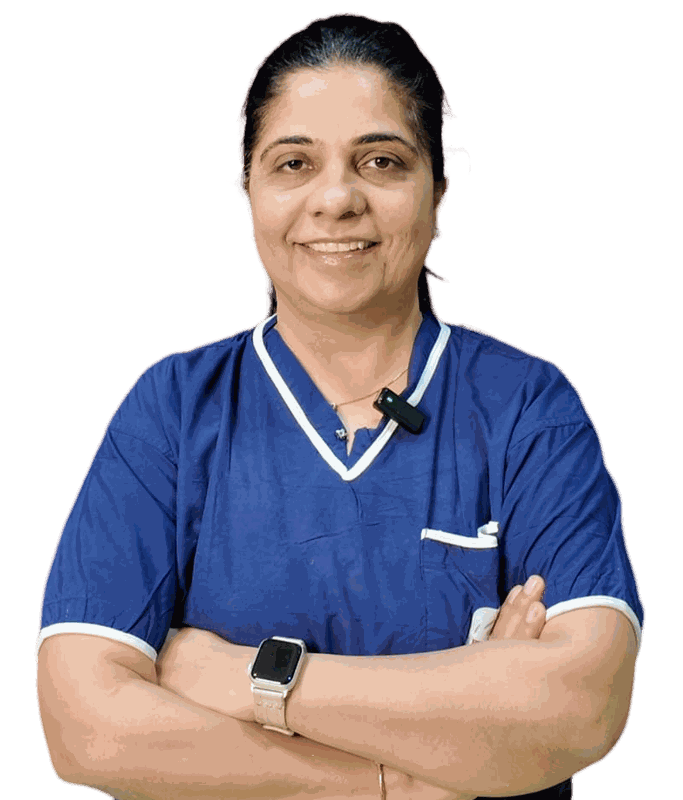
Medical Reviewer
Dr. Monica Sachdev
Dr. Monica Sachdev is a leading IVF specialist in Delhi with over 18 years of experience in reproductive medicine. She is dedicated to providing evidence-based fertility care and has helped thousands of families achieve parenthood.
Ready to Start Your Fertility Journey?
Our friendly team at Pravi IVF is here to stand by you, listen to your story, and help you through every single step.