
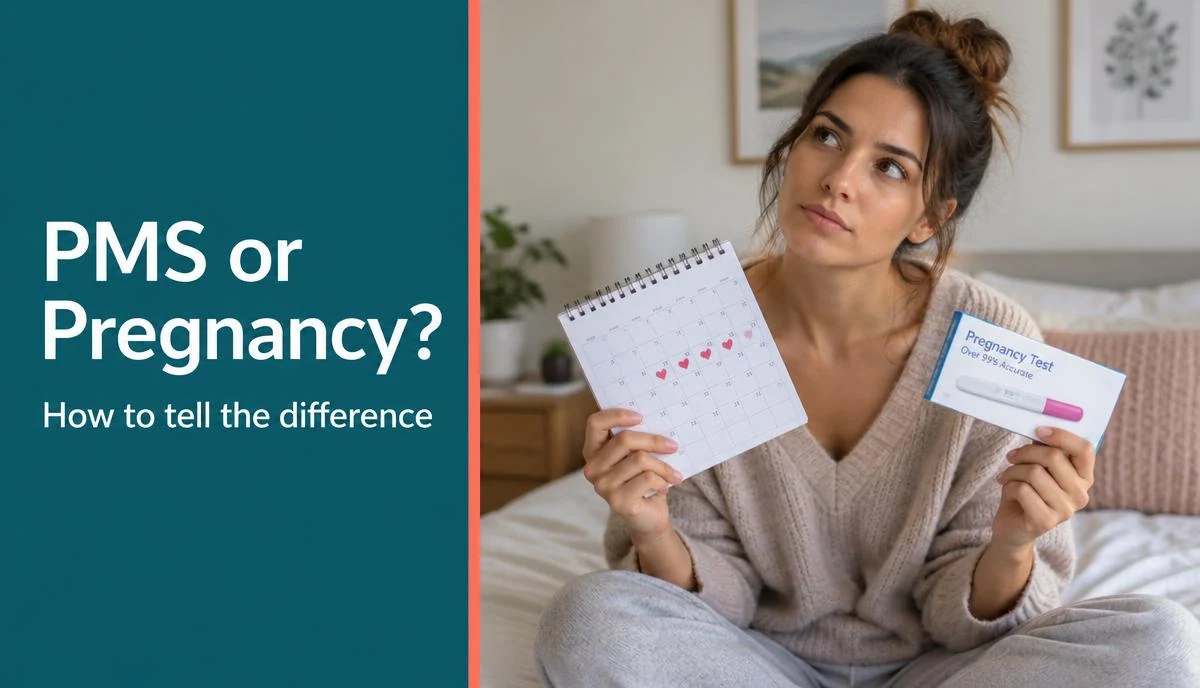
For many women, the two weeks between ovulation and their expected period—often called the "two-week wait"—can be a time of intense anticipation. Every muscle twinge, mood change, or wave of fatigue is analyzed. You might find yourself wondering: Are these early signs of pregnancy, or is my period on the way?
Distinguishing between PMS vs pregnancy symptoms is notoriously difficult because both conditions share many of the same physiological triggers. Understanding how these symptoms overlap, where they differ, and how your body responds in the early days of conception can help ease the anxiety of waiting.
The Two-Week Wait: Why Symptoms Overlap
The main reason PMS and early pregnancy symptoms feel so similar is a hormone called progesterone.
After ovulation, your ovaries produce progesterone to prepare the lining of the uterus for a potential pregnancy.
- If you do not conceive: Progesterone levels peak about a week after ovulation and then drop sharply, triggering your menstrual period. This rise and fall of progesterone causes Premenstrual Syndrome (PMS).
- If you do conceive: Progesterone levels continue to rise to support the developing embryo.
Because progesterone is active in both scenarios, your body’s initial response—fatigue, breast changes, and mild cramping—can feel identical during the first week or two.
PMS vs. Pregnancy Symptoms: Common Overlaps
Here is a close look at the symptoms that occur in both PMS and early pregnancy, along with subtle clues that can help you distinguish between them:
1. Breast Tenderness and Swelling
During PMS: Breasts can feel heavy, tender, or swollen, particularly during the second half of your cycle. The pain is usually most intense right before your period starts and improves quickly once bleeding begins.
During Early Pregnancy: Your breasts may feel extremely sensitive, tender, or sore to the touch. They may also feel fuller or heavier. Unlike PMS, this tenderness does not go away after a few days; instead, it often increases as hormone levels continue to rise.
2. Fatigue and Exhaustion
During PMS: Fluctuating hormones can disrupt your sleep patterns, leaving you feeling tired or sluggish. This fatigue usually resolves once your period arrives.
During Early Pregnancy: Progesterone levels skyrocket, which can make you feel completely exhausted. This deep fatigue is one of the most common early signs of pregnancy and typically lasts throughout the first trimester.
3. Abdominal Cramping
During PMS: Dysmenorrhea (menstrual cramping) is common. PMS cramps usually start 24 to 48 hours before bleeding begins and can be felt as a dull ache in the lower abdomen or lower back.
During Early Pregnancy: You may experience mild abdominal cramping. These cramps are often described as a light pulling, tugging, or tingling sensation in the pelvis, often related to the uterus expanding.
4. Mood Changes and Irritability
During PMS: Irritability, anxiety, and crying spells are common PMS symptoms. These emotional shifts typically peak in the days leading up to your period.
During Early Pregnancy: Rapid hormonal changes can cause sudden mood swings. However, if you are pregnant, these emotional shifts are often accompanied by other physical signs like nausea or frequent urination.
Navigating Your Conception Journey
Tracking symptoms can be stressful, especially if you are actively trying to conceive. If you have questions about your cycle or are experiencing difficulty conceiving, you can book a consultation at Pravi Global IVF to discuss your options with a specialist.
Key Differences: Symptoms Unique to Pregnancy
While many symptoms overlap, there are several signs that are unique to early pregnancy. If you experience any of these, it is a strong indicator that you may have conceived:
1. Implantation Bleeding
About 10 to 14 days after conception, the fertilized egg attaches to the uterine lining. This can cause light spotting known as implantation bleeding. Unlike a period, implantation bleeding is very light, does not fill a pad or tampon, lasts only a few hours to two days, and is usually light pink or brown in color (never bright red).
2. Nausea and Vomiting (Morning Sickness)
While some women feel mild nausea before their period, true morning sickness (which can happen at any time of day) is a classic sign of pregnancy. It typically starts around the 6th week of pregnancy but can begin earlier.
3. Missed Period
The most obvious difference is a missed period. If your menstrual cycle is regular and your period is more than a few days late, it is time to take a pregnancy test.
4. Changes to the Areolas
During pregnancy, you may notice that the skin around your nipples (the areolas) becomes darker, larger, or shows tiny, painless bumps (Montgomery's tubercles). This change does not happen during PMS.
Comparison Table
| Symptom | Premenstrual Syndrome (PMS) | Early Pregnancy |
|---|---|---|
| Cramping | Moderate to severe; begins 1-2 days before period. | Mild; described as a light pulling or pinching. |
| Bleeding | Starts light, becomes heavy, lasts 3-7 days. | Light spotting (pink/brown); lasts 1-2 days. |
| Nausea | Rare; occasional mild digestive upset. | Common; starts around week 4 to 6. |
| Food Cravings | Cravings for sweet or salty foods. | Strong cravings or sudden disgust at familiar smells. |
| Areola Changes | None. | Areolas may darken or expand. |
When and How to Take a Pregnancy Test
The only definitive way to tell the difference between PMS vs pregnancy symptoms is to take a home pregnancy test.
These tests detect human chorionic gonadotropin (hCG) in your urine. For the most accurate result, wait until the first day of your missed period. Testing too early can lead to a "false negative" because hCG levels have not built up enough to be detected. Use your first morning urine, as it has the highest concentration of hCG.
If you get a positive result, or if you receive a negative result but your period still does not arrive after a week, consult your healthcare provider for a blood test. If you are tracking ovulation or experiencing irregular cycles, reading about PCOS treatment in Delhi can offer helpful insights.
Frequently Asked Questions
1. Can you have pregnancy symptoms and still get a period?
If you get your normal, heavy menstrual period, you are not pregnant. However, some women experience light implantation spotting or early pregnancy bleeding and mistake it for a light period.
2. How early do pregnancy symptoms start?
Some women report feeling mild symptoms like implantation spotting or breast tenderness as early as 6 to 10 days after conception. However, for most women, noticeable symptoms begin around the 5th or 6th week of pregnancy.
3. Do PMS cramps feel different from pregnancy cramps?
PMS cramps are typically stronger and feel like a throbbing or aching pain in the lower abdomen that intensifies before bleeding begins. Pregnancy cramps are usually milder and feel like light pulling, stretching, or pinching in the pelvis.
4. Can you have morning sickness during PMS?
While hormonal shifts in PMS can cause mild digestive issues or cravings, vomiting and persistent nausea are rarely caused by PMS. They are highly indicative of early pregnancy.
5. What should I do if my pregnancy test is negative but my period is late?
A late period can be caused by stress, travel, hormonal imbalances, or irregular ovulation. If your period is more than a week late and your test is negative, consult a doctor to identify the cause.
Conclusion
It is completely natural to closely monitor your body when you are hoping to conceive. While the overlaps between PMS vs pregnancy symptoms can be confusing, looking for key differences like implantation bleeding, morning sickness, and a missed period can help clarify what your body is experiencing.
If you have been trying to conceive and want to understand your cycle better, our medical team is here to support you. Contact Pravi Global IVF today to schedule an evaluation with a fertility specialist.
Medical Reviewer
Dr. Monica Sachdev
Dr. Monica Sachdev is a leading IVF specialist in Delhi with over 18 years of experience in reproductive medicine. She is dedicated to providing evidence-based fertility care and has helped thousands of families achieve parenthood.
Ready to Start Your Fertility Journey?
Our friendly team at Pravi IVF is here to stand by you, listen to your story, and help you through every single step.