
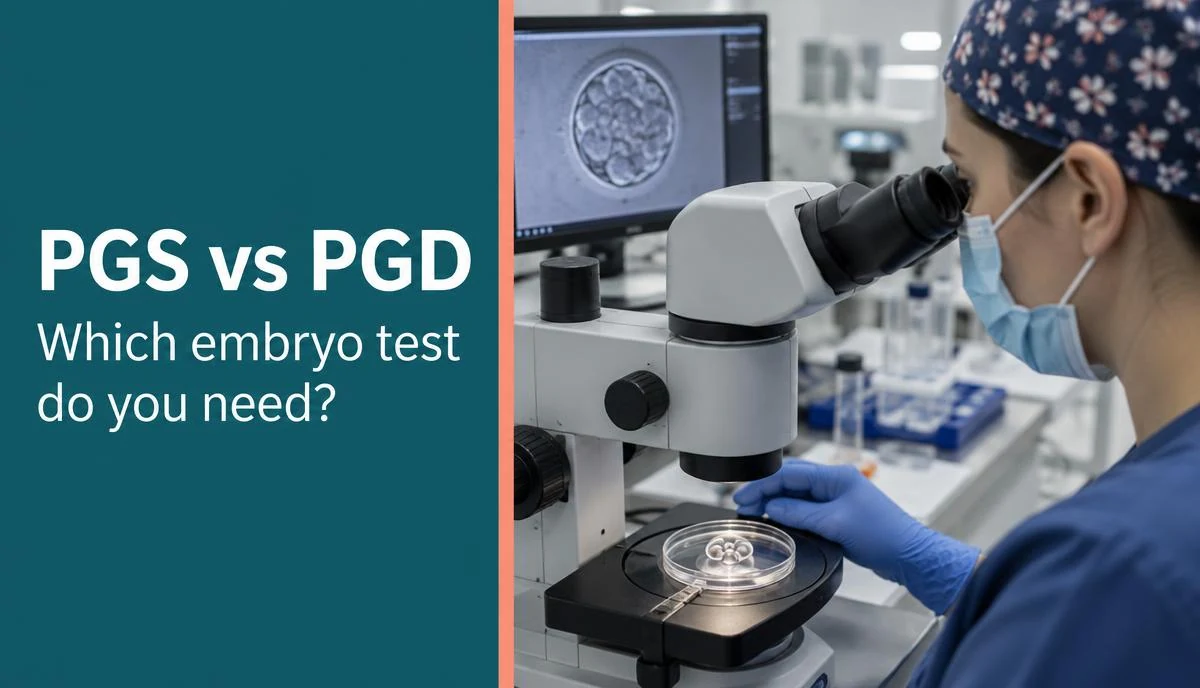
In modern In Vitro Fertilization (IVF), genetic screening of embryos has transformed success rates. By testing cells from an embryo before transfer, embryologists can identify abnormalities, reduce miscarriage rates, and prevent the transmission of genetic diseases.
When researching genetic testing, you will frequently encounter the terms PGS and PGD. While they sound similar and use the same laboratory biopsy procedures, they serve entirely different clinical purposes. Understanding PGS vs PGD testing is essential to choosing the right options for your IVF cycle.
The Modern Nomenclature: PGT-A and PGT-M
To clear up confusion, international medical bodies have updated the terms:
- PGS (Preimplantation Genetic Screening) is now officially called **PGT-A** (Preimplantation Genetic Testing for Aneuploidies).
- PGD (Preimplantation Genetic Diagnosis) is now officially called **PGT-M** (Preimplantation Genetic Testing for Monogenic/Single-Gene Defects).
PGS (PGT-A) vs. PGD (PGT-M)
PGS (PGT-A): Screening for Chromosomal Abnormalities
PGS checks the overall number of chromosomes inside an embryo (e.g. Down Syndrome). It is recommended for women over 35, couples with recurrent miscarriages, or past failed cycles.
PGD (PGT-M): Diagnosing Specific Inherited Diseases
PGD is a targeted test used to check if the embryo has inherited a specific gene mutation from the parents (such as Thalassemia, Cystic Fibrosis, or Sickle Cell Anemia).
Advanced Embryological Screenings
Choosing the right genetic testing options is key to achieving a healthy pregnancy. If you want to discuss PGT-A or PGT-M options, you can schedule a genetic consultation with a specialist at Pravi Global IVF.
Frequently Asked Questions
1. Does embryo biopsy damage the embryo?
No. Embryo biopsies are performed at the blastocyst stage. Embryologists remove cells from the outer ring (placenta cells), leaving the inner cell mass (baby cells) untouched.
2. Can you do both PGS and PGD?
Yes. If a couple is at risk of passing on a single-gene disorder and wants to ensure normal chromosome counts, the lab can perform both tests on the same biopsy sample.
Conclusion
When comparing PGS vs PGD testing, the difference comes down to screening versus diagnosis. PGS acts as a general quality check for chromosome numbers, while PGD is a targeted test to prevent specific inherited diseases. Both tools represent the cutting edge of modern IVF, supporting healthy, successful pregnancies.
Our embryology team offers advanced PGT-A and PGT-M screenings. Contact Pravi Global IVF today to schedule your consultation.

Medical Reviewer
Dr. Monica Sachdev
Dr. Monica Sachdev is a leading IVF specialist in Delhi with over 18 years of experience in reproductive medicine. She is dedicated to providing evidence-based fertility care and has helped thousands of families achieve parenthood.
Ready to Start Your Fertility Journey?
Our friendly team at Pravi IVF is here to stand by you, listen to your story, and help you through every single step.