

Key Takeaways
- PCOS can make ovulation unpredictable, but a diagnosis does not mean pregnancy is impossible.
- Irregular periods deserve assessment; PCOS is only one possible explanation.
- Treatment depends on ovulation, age, other fertility factors and personal preferences.
- Many people with PCOS do not need IVF to conceive.
- No verified patient case was supplied for this article. This is an educational guide, not a real patient testimonial.
The PCOS journey: from irregular periods to pregnancy often begins with uncertainty about when—or whether—ovulation is happening. Understanding your cycle and getting an individual assessment can make the next steps clearer without promising a particular outcome.
A genuine patient story needs verified details and permission to share them. Until those are available, this guide explains common care pathways without inventing a patient, treatment experience or pregnancy result.
When Irregular Periods Raise Questions
Periods that arrive unpredictably can make trying for pregnancy frustrating. Long gaps between cycles may mean ovulation happens infrequently, although bleeding patterns alone cannot confirm whether an egg was released.
Polycystic ovary syndrome, or PCOS, is a hormonal condition that can affect ovulation and metabolic health. Some people also experience acne, increased facial or body hair, or scalp hair thinning, but symptoms vary.
Not every irregular cycle is caused by PCOS. Pregnancy, thyroid conditions, elevated prolactin, stress, changes in energy intake and other health issues can also affect periods.
Signs worth discussing with a doctor
- Cycles that are repeatedly longer than 35 days or fewer than eight periods a year.
- No period for around three months, particularly when pregnancy tests are negative.
- Irregular cycles alongside acne or increased facial hair.
- Difficulty identifying ovulation while trying to conceive.
- Heavy, prolonged or otherwise unusual bleeding.
If pregnancy is possible and your period is late, take a pregnancy test. Severe pelvic pain, fainting or heavy bleeding needs urgent medical assessment, especially with a positive test.
PCOS Journey: From Irregular Periods to Pregnancy—A Care Pathway
There is no single treatment sequence that suits everyone. The aim is to understand what is preventing conception, support overall health and choose the least intensive effective option where appropriate.
Step 1: Confirm the diagnosis
In adults, PCOS is generally diagnosed when at least two recognised features are present after other causes are excluded: irregular ovulation, signs of excess androgens, or polycystic ovarian appearance. Ultrasound findings alone do not establish the diagnosis.
In selected adults, an anti-Müllerian hormone blood test may help assess polycystic ovarian morphology instead of ultrasound, but it is not a standalone PCOS test. Diagnostic criteria differ for adolescents.
Your doctor may review cycle history, medications and symptoms, then recommend relevant blood tests. Blood pressure, blood glucose and cholesterol assessment may also be appropriate because PCOS can affect health beyond fertility.
Step 2: Look beyond PCOS
It is easy to assume that irregular ovulation explains every delay in conception. However, sperm factors, blocked fallopian tubes, endometriosis or age-related changes may also play a role.
A fertility assessment may therefore include semen analysis and, when appropriate, testing whether the fallopian tubes are open. These checks help avoid spending months on treatment that does not address the full picture.
Step 3: Build a practical preconception plan
Regular movement, balanced meals and adequate sleep support health whether or not weight changes. PCOS occurs across body sizes, and care should not rely on blame or a demand to reach an arbitrary weight before receiving help.
- Discuss folic acid before conception; the appropriate dose depends on your medical circumstances.
- Review prescriptions, supplements and acne treatments for pregnancy safety.
- Avoid smoking and alcohol while trying to conceive.
- Discuss blood glucose testing and management of existing health conditions.
- Ask for emotional support if tracking cycles or treatment is becoming overwhelming.
For some people, supported weight management can improve ovulation and metabolic health. Any plan should account for age, fertility goals and eating-disorder risk rather than delaying care indefinitely.
Which Fertility Treatments May Help?
The PCOS journey: from irregular periods to pregnancy does not automatically lead to IVF. When anovulation is the main issue and no other infertility factors are identified, medication to encourage ovulation may be the first treatment.
| Option | When it may be considered | Important consideration |
|---|---|---|
| Ovulation induction | Ovulation is infrequent or absent | Letrozole is commonly recommended first-line for anovulatory infertility associated with PCOS. |
| IUI | Selected cases involving additional fertility factors or a planned treatment strategy | Open tubes and suitable sperm parameters generally matter. |
| IVF | Other treatments have not worked or another factor makes IVF appropriate | Stimulation needs careful planning because PCOS can increase ovarian over-response risk. |
| ICSI | Significant sperm-related issues or certain previous fertilisation problems | PCOS alone does not routinely require ICSI. |
Medication and monitoring
Ovulation medicines should be prescribed and supervised, not started using someone else’s prescription. Monitoring may involve ultrasound scans or blood tests, depending on the medicine and your circumstances.
Metformin may be useful for metabolic indications and selected fertility situations, but it is not necessary for everyone with PCOS. Injectable fertility medicines may be considered later and require closer monitoring for multiple pregnancy and ovarian hyperstimulation syndrome.
Understanding IUI, IVF and ICSI
You can read about IUI treatment in Lajpat Nagar to understand how prepared sperm is placed into the uterus around ovulation. IUI is not automatically required simply because cycles are irregular.
If IVF is recommended, the IVF treatment guide can help you prepare questions about stimulation, egg retrieval and embryo transfer. Ask how your individual risk of ovarian hyperstimulation would be reduced.
ICSI treatment involves injecting a sperm into an egg during IVF. Its use should have a clear clinical reason rather than being treated as a routine requirement for PCOS.
Tracking Progress Without Adding Pressure
Calendar apps estimate fertile days but may be unreliable with irregular cycles. Urine ovulation kits can also be difficult to interpret in PCOS because raised baseline luteinising hormone can produce misleading positive results.
If comfortable for both partners, intercourse every two to three days can reduce dependence on predicting one fertile window. Your doctor may suggest a different schedule during monitored treatment.
- Record period dates and unusual bleeding.
- Keep a list of medicines and supplements.
- Ask how ovulation will be confirmed.
- Agree on when to review or change the plan.
- Discuss costs and monitoring requirements before treatment begins.
When to Seek Fertility Advice
With markedly irregular or absent periods, seek advice without waiting a full year. Otherwise, assessment is usually recommended after 12 months of trying if under 35, after six months at 35 or older, and sooner over 40.
For a consultation at Pravi Global IVF in Lajpat Nagar, New Delhi, use the contact page to ask what records to bring. Previous tests and cycle dates can help structure the discussion.
Frequently Asked Questions
Can I become pregnant naturally with PCOS?
Yes, natural conception is possible, particularly when ovulation occurs. Some people need treatment, and the outlook depends on age, ovulation and other fertility factors.
Do I need regular periods before trying to conceive?
Not necessarily, but irregular cycles make timing harder. A medication-induced bleed does not itself prove ovulation has occurred, so ask how your cycle should be assessed.
Does everyone with PCOS need IVF?
No. Ovulation induction may be sufficient for some people; IVF is considered according to the wider assessment and response to earlier treatment.
How long does the PCOS journey: from irregular periods to pregnancy take?
There is no reliable universal timeline. Ask for a review schedule based on your age, test results and treatment response rather than a guaranteed pregnancy date.
Does PCOS affect care after a positive pregnancy test?
PCOS is associated with higher risks of gestational diabetes and certain pregnancy complications. Arrange early antenatal care so your clinician can plan appropriate monitoring without assuming complications will occur.
Discuss your next steps with Pravi Global IVF. Call +91 80091 50040 or book an appointment for an individual assessment.
Medical Reviewer
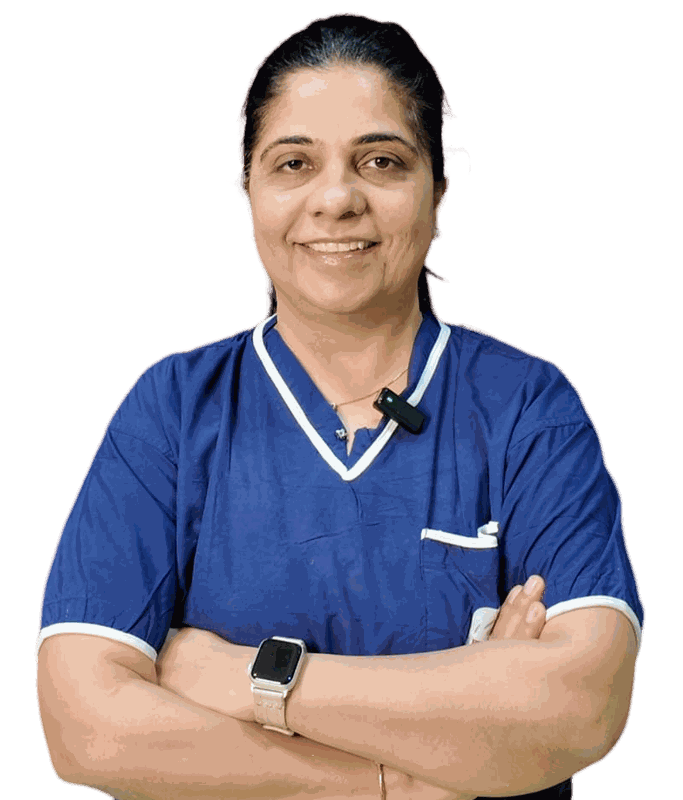
Dr. Monica Sachdev
Dr. Monica Sachdev is a leading IVF specialist in Delhi with over 18 years of experience in reproductive medicine. She is dedicated to providing evidence-based fertility care and has helped thousands of families achieve parenthood.
Ready to Start Your Fertility Journey?
Our friendly team at Pravi IVF is here to stand by you, listen to your story, and help you through every single step.