

When exploring fertility treatment options, you might encounter various approaches, each tailored to different needs. One such option is the natural cycle IVF process, a gentler alternative focusing on your body's innate rhythm.
This article will delve into what natural cycle IVF entails, outlining its steps, timeline, and what to expect during recovery.
Key Takeaways
- Natural cycle IVF uses minimal or no ovarian stimulation, focusing on the single follicle your body naturally produces.
- It involves fewer medications and injections compared to conventional IVF, leading to a potentially gentler experience.
- The process includes careful monitoring, egg retrieval, fertilization, and embryo transfer, similar to conventional IVF but with fewer eggs.
- Suitable for women who respond well to minimal stimulation, those with concerns about medication side effects, or certain medical conditions.
- Recovery is generally quicker and less intensive due to the reduced medication use.
Understanding Natural Cycle IVF
Natural cycle IVF is a fertility treatment that differs significantly from conventional IVF. Instead of stimulating the ovaries to produce multiple eggs, it focuses on retrieving the single, high-quality egg that your body naturally matures during your menstrual cycle.
This approach minimizes the use of fertility drugs. For many, this makes the natural cycle IVF process feel less invasive and more aligned with their body's natural functions.
Why Consider Natural Cycle IVF?
- Reduced Medication: Fewer or no hormone injections mean fewer side effects like bloating, mood swings, or OHSS (Ovarian Hyperstimulation Syndrome).
- Lower Cost Per Cycle: With less medication, the overall cost of a single cycle can be lower, though multiple cycles might be needed.
- Gentler on the Body: It can be a preferred option for women who want to avoid extensive medication or have certain health conditions where strong ovarian stimulation is not advisable.
- For Specific Cases: It's often recommended for women with low ovarian reserve, those who have failed to produce multiple eggs in conventional IVF, or older women.
The Natural Cycle IVF Process: A Step-by-Step Guide
The core steps of natural cycle IVF mirror those of conventional IVF, but with key distinctions in ovarian stimulation and monitoring.
Step 1: Initial Consultation and Assessment
Your journey begins with a thorough medical evaluation. This includes reviewing your medical history, performing blood tests, and conducting ultrasound scans to assess your ovarian reserve and overall reproductive health.
This initial assessment helps your fertility specialist determine if the natural cycle IVF process is suitable for you. We will discuss your individual circumstances and answer any questions you may have about fertility treatments.
Step 2: Cycle Monitoring
Unlike conventional IVF, where monitoring starts after medication, natural cycle IVF begins with tracking your natural menstrual cycle. Starting from around day 2 or 3 of your period, you will have regular blood tests and ultrasound scans.
These tests monitor the growth of your dominant follicle and track your hormone levels, specifically estrogen and LH (Luteinizing Hormone). The goal is to pinpoint the exact timing of your natural ovulation and retrieve the egg before it releases.
Step 3: Egg Retrieval
Once the dominant follicle reaches an optimal size and hormone levels indicate impending ovulation, the egg retrieval procedure is scheduled. This is a minimally invasive procedure performed under light sedation.
Using ultrasound guidance, a thin needle is inserted through the vaginal wall to aspirate the fluid from the follicle and retrieve the mature egg. Because only one or very few eggs are expected, the procedure is usually quicker and less complex than in conventional IVF.
Step 4: Fertilization and Embryo Culture
Immediately after retrieval, the egg is taken to the laboratory. It is then fertilized with your partner's or a donor's sperm. This can be done through conventional IVF (where sperm are placed around the egg) or ICSI (Intracytoplasmic Sperm Injection), where a single sperm is injected directly into the egg.
The fertilized egg, now an embryo, is cultured in the lab for 2-5 days. During this time, embryologists monitor its development to ensure it's healthy and viable for transfer.
Step 5: Embryo Transfer
If a healthy embryo develops, it is transferred into your uterus. This procedure is similar to a routine gynecological exam and typically doesn't require anesthesia.
A thin, flexible catheter is used to gently place the embryo into the uterine cavity. After the transfer, you may be advised to rest briefly before resuming light activities.
Step 6: Luteal Phase Support and Pregnancy Test
Following the embryo transfer, you may be prescribed progesterone supplements. Progesterone helps prepare the uterine lining for implantation and supports early pregnancy. About 10-14 days after the embryo transfer, you will take a pregnancy test to determine the outcome of the cycle.
Natural Cycle IVF Timeline
The timeline for a natural cycle IVF process aligns closely with your natural menstrual cycle, making it variable from person to person. Here's a general overview:
| Stage | Typical Timing | Key Activities |
|---|---|---|
| Initial Assessment | Pre-cycle | Consultation, blood tests, ultrasounds |
| Cycle Monitoring | Days 2-12 of menstrual cycle | Regular blood tests & ultrasounds to track follicle growth and hormone levels |
| Egg Retrieval | Around Day 12-16 | Scheduled just before natural ovulation; single egg retrieved |
| Fertilization & Culture | Day of retrieval to Day 5 post-retrieval | Lab fertilization, embryo development monitoring |
| Embryo Transfer | Day 3 or Day 5 post-retrieval | Healthy embryo transferred into uterus |
| Luteal Phase Support | Post-transfer for ~2 weeks | Progesterone supplementation |
| Pregnancy Test | 10-14 days post-transfer | Blood test to confirm pregnancy |
Each cycle typically lasts about two to three weeks from the start of monitoring to the pregnancy test, much like a regular menstrual cycle.
Recovery After Natural Cycle IVF
One of the significant advantages of the natural cycle IVF process is the relatively easier recovery. Because fewer medications are used, your body experiences less physiological stress.
- After Egg Retrieval: You might experience mild cramping or spotting for a day or two. Most women can resume normal, light activities within 24 hours. Avoiding strenuous exercise and heavy lifting is generally recommended.
- After Embryo Transfer: There are usually no immediate side effects. You might be advised to take it easy for a day, but bed rest is rarely necessary.
Compared to conventional IVF, the risk of ovarian hyperstimulation syndrome (OHSS) is virtually eliminated, as there is no aggressive ovarian stimulation. This contributes to a smoother and less demanding recovery period.
Who Is Natural Cycle IVF For?
Natural cycle IVF may be an appropriate option for several groups of individuals:
- Women with Regular Ovulatory Cycles: Those who naturally produce one good quality egg each month.
- Women with Low Ovarian Reserve: For whom conventional IVF might not yield many eggs anyway.
- Patients Seeking a Gentler Approach: Those who wish to avoid strong hormonal medications due to personal preference or medical reasons.
- Individuals with Prior Failed IVF Cycles: Especially if poor egg quality was suspected despite high stimulation.
- Those with Medical Conditions: Where ovarian stimulation could be risky, such as a history of hormone-sensitive cancers.
It's crucial to have a detailed discussion with a fertility specialist to determine if this approach aligns with your specific situation and fertility goals. Learn more about your options for IVF treatment in Lajpat Nagar, Delhi, or even explore alternatives like IUI treatment.
The Emotional Aspect of Natural Cycle IVF
While physically less demanding, the emotional journey of any fertility treatment can be intense. The waiting periods, the hope, and the potential for disappointment are real.
Natural cycle IVF, focusing on a single egg, can sometimes carry unique emotional weight. It emphasizes quality over quantity, and managing expectations is key.
- Support Systems: Leaning on your partner, friends, family, or support groups can make a significant difference.
- Open Communication: Maintaining open dialogue with your fertility team helps address anxieties and ensures you feel informed and supported throughout the natural cycle IVF process.
- Self-Care: Prioritizing mental and physical well-being through practices like mindfulness, light exercise, and adequate rest is essential.
Frequently Asked Questions
Can natural cycle IVF be successful?
Yes, natural cycle IVF can be successful. While it typically yields fewer eggs than conventional IVF, the focus is on retrieving a high-quality, naturally selected egg, which can lead to a healthy pregnancy. Success rates vary based on individual factors.
How many eggs are retrieved in natural cycle IVF?
In a natural cycle IVF process, typically only one egg is retrieved. The goal is to capture the single dominant follicle that your body naturally produces during your menstrual cycle.
Is natural cycle IVF less expensive than traditional IVF?
Generally, a single cycle of natural cycle IVF can be less expensive than a single cycle of traditional IVF, primarily due to the significantly reduced cost of fertility medications. However, some patients might require multiple cycles to achieve pregnancy, which can accumulate costs.
What are the risks of natural cycle IVF?
The risks associated with natural cycle IVF are generally lower than conventional IVF. The main risks include the possibility of cycle cancellation if the egg doesn't mature or ovulates prematurely, and the small risks associated with any medical procedure like egg retrieval (e.g., minor bleeding or infection). The risk of OHSS is virtually eliminated.
How do I know if natural cycle IVF is right for me?
Determining if natural cycle IVF is suitable for you requires a comprehensive consultation with a fertility specialist. Factors such as your age, ovarian reserve, hormone levels, previous fertility treatment history, and personal preferences will be considered. Schedule an appointment to discuss your options or contact us directly.
For a personal consultation regarding the natural cycle IVF process and other fertility treatments, please call Pravi Global IVF at +91 80091 50040.
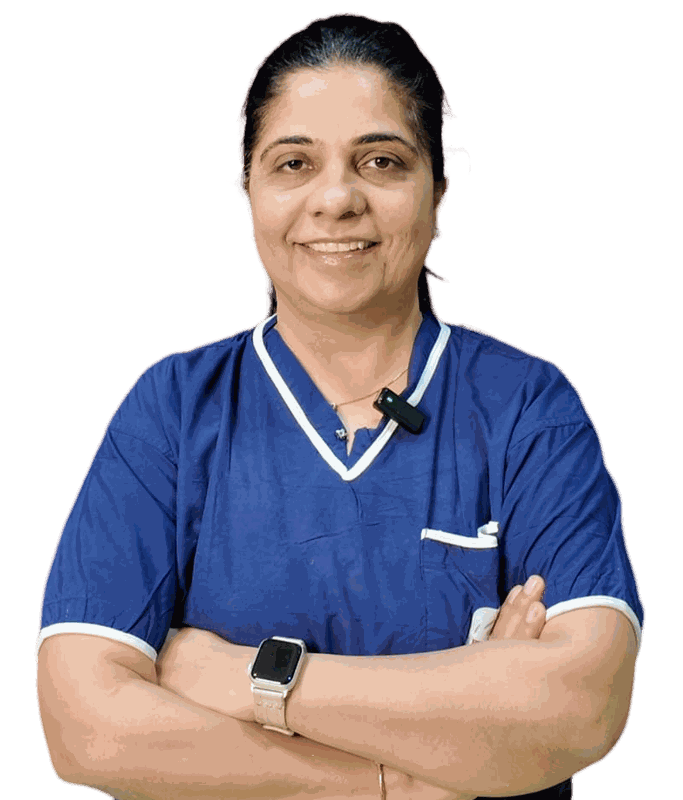
Medical Reviewer
Dr. Monica Sachdev
Dr. Monica Sachdev is a leading IVF specialist in Delhi with over 18 years of experience in reproductive medicine. She is dedicated to providing evidence-based fertility care and has helped thousands of families achieve parenthood.
Ready to Start Your Fertility Journey?
Our friendly team at Pravi IVF is here to stand by you, listen to your story, and help you through every single step.