

When facing fertility challenges or pelvic health issues, understanding your diagnostic and treatment options is key. This article will explain everything you need to know about laparoscopy in Delhi, including who might benefit from it, how to prepare, and crucial questions to ask your doctor.
Key Takeaways
- Laparoscopy is a minimally invasive surgical procedure used for both diagnosis and treatment of various gynecological conditions.
- It's often recommended for diagnosing infertility causes, endometriosis, fibroids, or chronic pelvic pain.
- Preparation involves medical evaluation, understanding the procedure, and following pre-operative guidelines.
- Choosing an experienced specialist and asking detailed questions is important for a positive outcome.
Understanding Laparoscopy: A Minimally Invasive Approach
Laparoscopy is a surgical technique that allows doctors to look inside the abdomen and pelvis without making large incisions. It's often called 'keyhole surgery' because it uses small cuts, typically less than half an inch long. A thin, lighted tube with a camera, called a laparoscope, is inserted through one incision, allowing the surgeon to view internal organs on a monitor.
Additional small incisions might be made to insert specialized surgical instruments. This approach reduces recovery time, minimizes scarring, and often results in less post-operative pain compared to traditional open surgery.
Who Needs Laparoscopy for Fertility or Gynecological Health?
Laparoscopy is a valuable tool for diagnosing and treating a range of conditions affecting reproductive health. If you are experiencing unexplained infertility, chronic pelvic pain, or have certain gynecological concerns, your doctor might recommend this procedure. It helps identify issues that might not be visible through other imaging methods.
Diagnosing Infertility Causes
For couples struggling to conceive, laparoscopy can reveal underlying issues. It can help identify problems like blocked fallopian tubes, pelvic adhesions, or endometriosis, which can all hinder fertility. Understanding these issues is the first step towards effective treatment, such as IVF treatment in Lajpat Nagar, Delhi, or other assisted reproductive technologies.
Treating Endometriosis and Fibroids
Endometriosis, a condition where tissue similar to the lining of the uterus grows outside the uterus, is a common reason for pelvic pain and infertility. Laparoscopy allows for the precise removal of endometrial implants. Similarly, uterine fibroids, non-cancerous growths, can be removed through a laparoscopic myomectomy, preserving the uterus.
Addressing Ectopic Pregnancy and Pelvic Pain
In cases of ectopic pregnancy (where a fertilized egg implants outside the uterus), laparoscopy can be used to remove the pregnancy safely. For women experiencing chronic pelvic pain, this procedure can help diagnose conditions like adhesions, ovarian cysts, or other structural abnormalities that contribute to discomfort.
The Laparoscopy Procedure: What to Expect
Undergoing any surgical procedure can be daunting, but knowing what to expect can help ease concerns. Laparoscopy is typically performed under general anesthesia, meaning you'll be asleep during the entire procedure. The duration varies depending on whether it's for diagnosis or treatment.
Before the Procedure
- Medical Evaluation: You will undergo a thorough check-up, including blood tests, urine tests, and possibly an ECG.
- Medication Review: Discuss all current medications, including supplements, with your doctor. You might need to stop certain medications before surgery.
- Fasting: You'll be instructed not to eat or drink anything for several hours before the surgery.
- Arrangements: Plan for someone to drive you home after the procedure, as you'll be recovering from anesthesia.
During the Procedure
Once under general anesthesia, a small incision is made, usually near the belly button. Carbon dioxide gas is gently introduced into your abdomen to create space and allow for better visibility. The laparoscope is then inserted, and the surgeon performs the necessary diagnostic evaluation or surgical intervention. If required, additional small incisions are made for other surgical instruments. After the procedure, the gas is released, and the incisions are closed with a few stitches.
After the Procedure: Recovery and Care
Most patients can go home the same day. You might experience some discomfort, gas pain, or shoulder pain (due to the gas irritating the diaphragm), which usually subsides within a few days. Follow your surgeon's instructions for pain management, wound care, and activity restrictions. Avoid heavy lifting and strenuous activities for a few weeks.
Comparing Laparoscopy with Other Fertility Treatments
Laparoscopy serves a unique role in the spectrum of fertility and gynecological care. It's often used when non-invasive methods don't provide answers or when direct surgical intervention is needed. Here's a brief comparison:
| Feature | Laparoscopy | IUI (Intrauterine Insemination) | IVF (In Vitro Fertilization) |
|---|---|---|---|
| Purpose | Diagnose/treat structural issues (e.g., endometriosis, blocked tubes) | Assist sperm in reaching the egg inside the uterus | Fertilize egg outside body, transfer embryo to uterus |
| Invasiveness | Minimally invasive surgery | Minimally invasive (catheter insertion) | Moderately invasive (egg retrieval is surgical) |
| Anesthesia | General anesthesia | Not usually required | Sedation for egg retrieval |
| Recovery Time | Days to a few weeks | Immediate | Days |
| Best for | Specific surgical conditions, unexplained infertility diagnosis | Mild male factor infertility, unexplained infertility | Severe male factor, blocked tubes, ovarian reserve issues |
While IUI and IVF are primarily fertility treatments that may not require surgery (though egg retrieval for IVF is a procedure), laparoscopy focuses on identifying and correcting physical problems. Sometimes, a successful laparoscopy can improve natural conception rates or enhance the success of subsequent treatments like ICSI treatment in Lajpat Nagar, Delhi, or IUI treatment in Lajpat Nagar, Delhi.
Choosing a Specialist for Laparoscopy in Delhi
Selecting the right surgeon is paramount for a successful outcome. Look for a specialist with extensive experience in gynecological laparoscopy, particularly in fertility-related procedures. A good doctor will take the time to explain the procedure thoroughly, answer all your questions, and discuss potential risks and benefits. Don't hesitate to seek a second opinion if you feel it's necessary.
Questions to Ask Your Doctor
- Why is laparoscopy recommended for my condition?
- What are the specific risks and potential complications for me?
- How many similar procedures have you performed, and what are your success rates for this condition?
- What type of anesthesia will be used?
- What is the expected recovery time, and when can I resume normal activities?
- What is the cost involved, and what does it include?
- What is the next step if the laparoscopy reveals a specific issue?
Frequently Asked Questions
What is the main advantage of laparoscopy over open surgery?
The main advantages include smaller incisions, less pain, reduced blood loss, a lower risk of infection, and a faster recovery time compared to traditional open surgery.
How long does it take to recover from laparoscopy?
Most patients can return to light activities within a few days, but full recovery, especially from more extensive procedures, can take 2-4 weeks. Your doctor will provide specific guidelines based on your individual surgery.
Is laparoscopy painful?
The procedure itself is performed under general anesthesia, so you won't feel anything. Afterward, you might experience mild to moderate pain at the incision sites and shoulder pain from the gas, which can be managed with prescribed pain medication.
Can laparoscopy improve my chances of getting pregnant?
Yes, if your infertility is caused by conditions such as endometriosis, pelvic adhesions, or blocked fallopian tubes that can be corrected surgically via laparoscopy, it can significantly improve your chances of natural conception or the success of subsequent fertility treatments.
What are the risks associated with laparoscopy?
While generally safe, risks include infection, bleeding, damage to internal organs, and complications from anesthesia. Your surgeon will discuss these risks with you in detail before the procedure.
If you're considering laparoscopy or have further questions, please feel free to contact us or book an appointment with our specialists. You can also call us directly at +91 80091 50040.
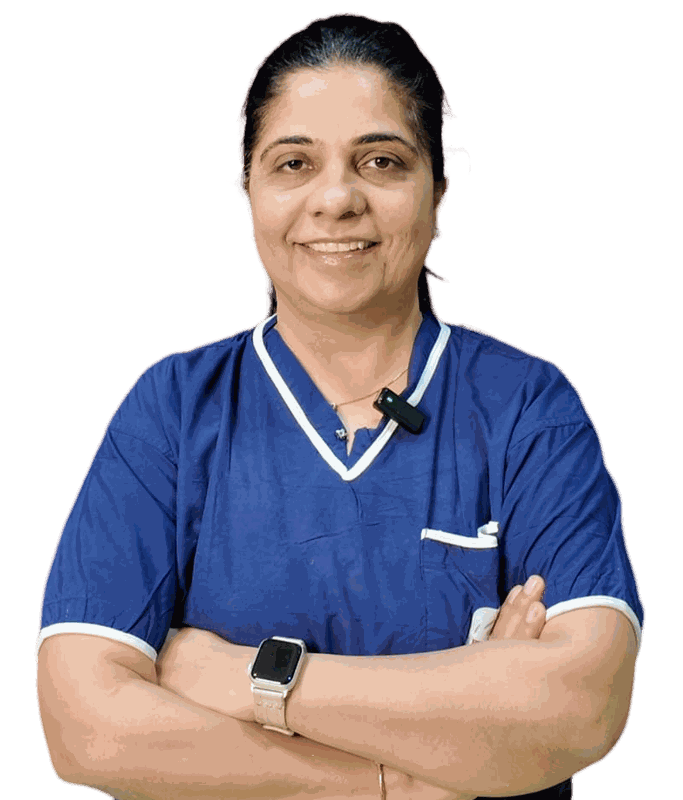
Medical Reviewer
Dr. Monica Sachdev
Dr. Monica Sachdev is a leading IVF specialist in Delhi with over 18 years of experience in reproductive medicine. She is dedicated to providing evidence-based fertility care and has helped thousands of families achieve parenthood.
Ready to Start Your Fertility Journey?
Our friendly team at Pravi IVF is here to stand by you, listen to your story, and help you through every single step.