
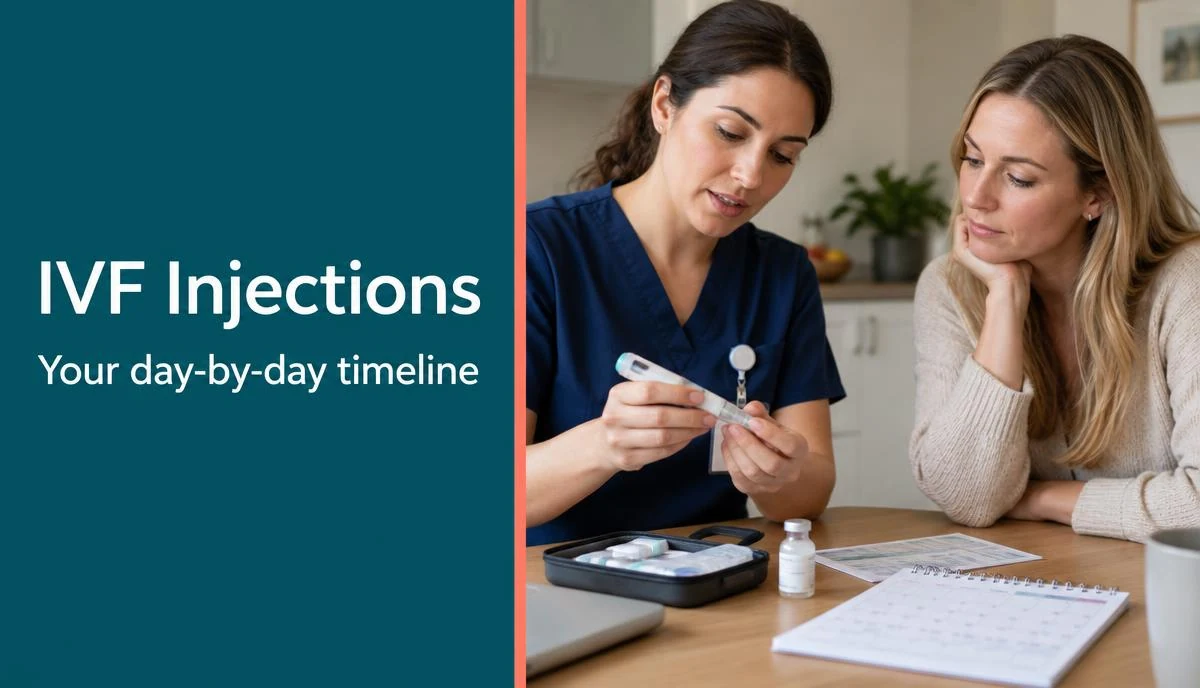
IVF Injection Process: Types, Timeline and What to Expect
For many couples starting fertility treatment, one of the most concerning parts is the IVF injection process. The idea of taking daily injections can feel overwhelming, especially for those new to IVF.
However, these injections play a crucial role in preparing the body for successful fertilization and pregnancy.
Understanding the purpose, types, and timeline of IVF injections can help reduce anxiety and make the treatment journey more manageable.
What Is the IVF Injection Process?
The IVF injection process involves administering hormonal medications to stimulate the ovaries and support different stages of the IVF cycle.
These injections help:
- Stimulate the ovaries to produce multiple eggs
- Prevent early ovulation
- Support egg maturation
- Prepare the uterus for embryo transfer
Each injection has a specific role in the IVF treatment plan.
Types of IVF Injections
Different types of injections are used during IVF treatment.
1. Ovarian Stimulation Injections
These injections stimulate the ovaries to produce multiple eggs instead of one.
They are usually taken for several days under medical supervision.
2. Suppression Injections
These medications prevent premature ovulation and help control the timing of the cycle.
3. Trigger Injection
The trigger injection is given when the eggs are mature.
It helps prepare the eggs for retrieval and ensures proper timing of the procedure.
4. Progesterone Support Injections
After egg retrieval and embryo transfer, progesterone injections may be given to support implantation and early pregnancy.
IVF Injection Timeline
The IVF injection process follows a specific timeline.
- Day 1–2: Start of ovarian stimulation
- Day 5–10: Monitoring with ultrasound and blood tests
- Mid-cycle: Trigger injection administered
- Post-retrieval: Progesterone support begins
The exact timeline may vary depending on individual response.
How Are IVF Injections Given?
IVF injections are usually:
- Administered under the skin (subcutaneous)
- Given in the abdomen or thigh
- Taken daily at a fixed time
Doctors or nurses guide patients on how to take injections safely at home.
Common Side Effects of IVF Injections
Some women may experience mild side effects during the IVF injection process, such as:
- Bloating
- Mild pain at injection site
- Mood changes
- Headache
- Fatigue
These symptoms are usually temporary and manageable.
Tips to Manage IVF Injections
Managing injections becomes easier with proper guidance.
- Follow the prescribed schedule strictly
- Rotate injection sites
- Stay calm and relaxed
- Seek help from medical staff if needed
Proper technique and consistency are important.
Fertility Treatment in Delhi
Delhi offers advanced IVF treatment with experienced specialists and modern facilities.
Clinics like PRAVI Global IVF Polyclinic provide:
- Complete IVF cycle management
- Patient guidance for injections
- Monitoring and support
- Personalized treatment plans
These services make the IVF injection process easier and more structured.
Understanding the IVF Journey
The IVF injection process is an essential part of fertility treatment.
Although it may seem challenging at first, proper understanding and medical support can make it manageable.
With the right approach, many couples successfully complete IVF treatment and move closer to achieving pregnancy.
Contact Details
PRAVI Global IVF Polyclinic — Lajpat Nagar, Delhi
41, First Floor, Ring Road
Block Q, Lajpat Nagar IV, New Delhi – 110024
Phone: +91 80091 50040
Email: info@praviglobalivf.in

Medical Reviewer
Dr. Monica Sachdev
Dr. Monica Sachdev is a leading IVF specialist in Delhi with over 18 years of experience in reproductive medicine. She is dedicated to providing evidence-based fertility care and has helped thousands of families achieve parenthood.
Ready to Start Your Fertility Journey?
Our friendly team at Pravi IVF is here to stand by you, listen to your story, and help you through every single step.