
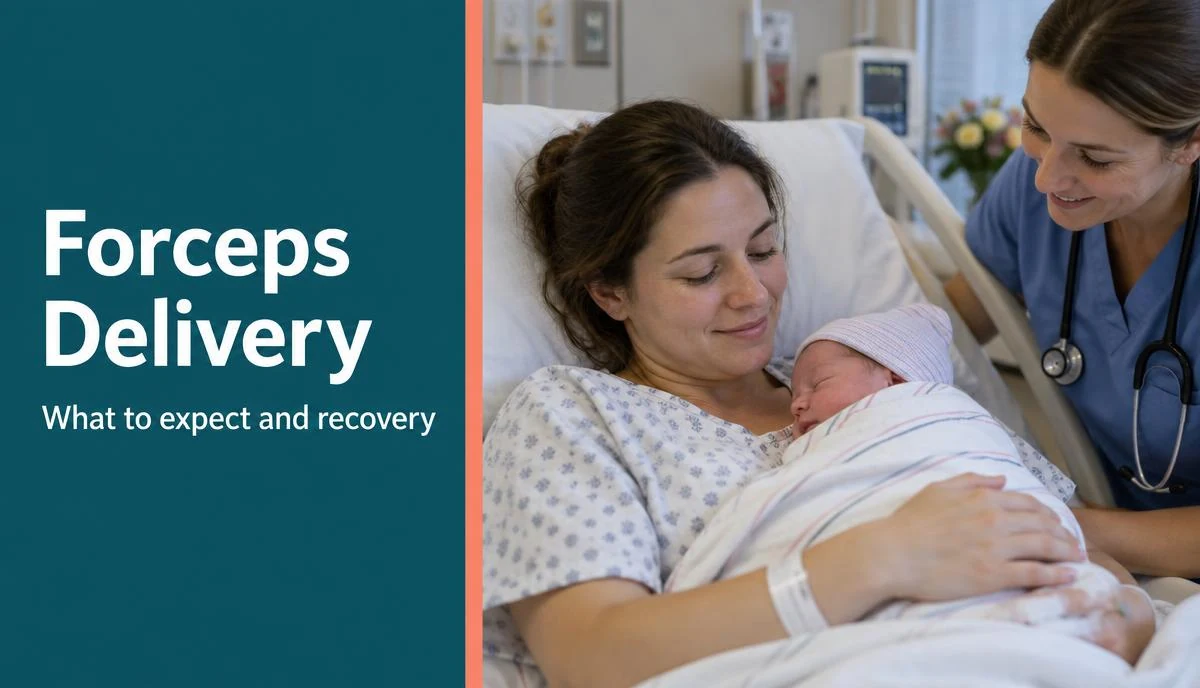
Childbirth is a dynamic process. While many births progress naturally, there are times when labor slows down, or the baby requires assistance to enter the world safely. In these situations, an obstetrician may recommend an assisted vaginal delivery, most commonly using forceps.
A forceps delivery procedure is a medical intervention that can safely prevent the need for an emergency Cesarean section (C-section) when specific complications arise. Understanding why this procedure is recommended, what happens during the delivery, and how to recover can help you prepare for a safe birth experience.
What Is a Forceps Delivery?
A forceps delivery is a type of assisted vaginal birth. Forceps are surgical instruments designed to look like a pair of large, curved metal spoons or tongs. They are contoured to fit gently around the baby’s head.
During the final stages of labor, when the mother is pushing, the obstetrician carefully slides the forceps into the birth canal, positions them around the baby’s head, and applies gentle traction to guide the baby out while the mother continues to push during contractions.
When Is a Forceps Delivery Recommended?
An assisted delivery is only considered when the mother’s cervix is fully dilated, the membranes have ruptured, and the baby’s head has descended into the lower part of the pelvis.
The World Health Organization (WHO) emphasizes that assisted vaginal birth should only be performed by trained professionals when clear medical indications are present:
- Prolonged Second Stage of Labor: If the cervix is fully dilated but the baby is not moving down the birth canal despite hours of active pushing, labor is considered stalled.
- Fetal Distress (Changes in Fetal Heart Rate): During labor, the baby's heart rate is monitored continuously. If the heart rate drops suddenly or shows patterns indicating the baby is not getting enough oxygen, the obstetrician must deliver the baby quickly.
- Maternal Exhaustion or Medical Conditions: Labor is physically demanding. If the mother becomes too exhausted to push effectively, or if she has an underlying health condition (such as high blood pressure or a heart condition) that makes prolonged straining dangerous, forceps help expedite the birth.
Preconception and Prenatal Planning
Preparing for childbirth begins with comprehensive maternal health evaluations. If you are planning a pregnancy or seeking advanced prenatal guidance, you can book a consultation with the specialists at Pravi Global IVF.
The Forceps Delivery Procedure: Step-by-Step
Understanding the steps involved in an instrumental delivery can demystify the process and reduce anxiety.
- Preparation and Pain Relief: Before the procedure begins, the medical team ensures you have adequate pain relief. If you already have an epidural, it will be topped up. If not, a local anesthetic block (pudendal block) will be administered. The doctor will also insert a thin tube (catheter) to empty your bladder.
- Positioning and Inserting the Instrument: You will be asked to place your legs in stirrups (lithotomy position) to give the obstetrician clear access. The doctor will perform a vaginal exam to confirm the baby's exact position. They will then slide the two branches of the forceps into the vagina, positioning them gently on either side of the baby's head. Handle locks are then secured.
- Applying Traction During Contractions: The delivery is a collaborative effort. The obstetrician will wait for your next contraction. When you push, the doctor will apply steady, downward traction on the forceps, guiding the baby along the curve of the birth canal. The forceps are typically unlocked and removed as soon as the baby's head passes the vaginal opening.
Benefits of an Assisted Forceps Delivery
The primary benefit of a forceps delivery is the prevention of a major abdominal surgery. When labor stalls or the baby shows signs of distress near the end of labor, a C-section can be more complex and carry higher surgical risks because the baby’s head is already wedged deep in the pelvis. A forceps delivery allows for a rapid, safe delivery directly through the birth canal.
Risks and Potential Complications
While forceps births are generally safe, like any medical intervention, they carry some risks of injury to both the mother and the baby.
Risks to the Mother
- Perineal Tears: Forceps deliveries increase the risk of tears in the vaginal tissue and perineum.
- Episiotomy: An episiotomy (a planned surgical cut) is often performed to facilitate the use of forceps and prevent jagged tears.
- Temporary Urination Issues: Some swelling in the pelvic area can make urinating difficult for a few days after birth.
Risks to the Baby
- Temporary Marks or Bruises: It is common for babies born via forceps to have temporary red marks or slight bruising on their cheeks where the metal blades rested. These typically fade within 48 hours.
- Caput Succedaneum or Cephalohematoma: Minor, temporary swelling under the baby's scalp can occur. This is harmless and resolves on its own.
- Neonatal Jaundice: If the baby has minor bruising, the breakdown of red blood cells can slightly increase the risk of newborn jaundice, which is easily treatable with phototherapy.
Recovery After a Forceps Delivery
Recovery after an assisted birth requires patience and proper self-care. Because tears or an episiotomy are common, your healing will focus on perineal care.
- Managing Perineal Soreness: Rinse the perineal area with warm water using a squeeze bottle after using the toilet. Gently pat dry with clean tissue; do not wipe. Apply a clean, fabric-wrapped ice pack to the perineum for 10 to 15 minutes at a time to reduce swelling.
- Pelvic Floor Recovery (Kegel Exercises): Pregnancy and assisted delivery put strain on the pelvic floor muscles. Once your stitches have healed and your doctor approves, begin gentle Kegel exercises.
- Emotional Recovery: Discussing your birth experience with your doctor, partner, or a counselor can help you process your emotions. If you are planning a future pregnancy and have concerns about previous birth trauma, read our overview on about fertility treatment in Delhi to understand how our clinical team approaches patient support.
Frequently Asked Questions
1. Does a forceps delivery affect the baby’s brain development?
No. Properly performed forceps deliveries do not affect a baby's brain development. The forceps rest on the baby’s facial bones, not on the soft areas of the skull or brain.
2. What is the difference between a forceps delivery and a vacuum delivery?
In a forceps delivery, curved metal blades are placed on either side of the baby's head. In a vacuum delivery, a soft cup is attached to the top of the baby's head using suction. Both methods are safe; the choice depends on the baby's position and the doctor's training.
3. How long do forceps marks stay on a baby?
Forceps marks or minor bruises on the baby's cheeks are temporary. They usually fade completely within 24 to 48 hours after birth.
4. How long does it take for episiotomy stitches to heal after a forceps birth?
Episiotomy stitches are dissolvable and do not need to be removed. The vaginal tissue heals quickly; most soreness decreases significantly within 2 to 3 weeks, though complete healing of the deeper tissues may take 6 weeks.
5. Can I have a normal vaginal delivery after a forceps birth?
Yes. Having a forceps delivery does not mean you will need forceps or a C-section in future births. Most women who have a forceps delivery go on to have normal vaginal deliveries with subsequent pregnancies.
Conclusion
A forceps delivery procedure is a valuable, time-tested medical tool designed to protect the health of both mother and child during difficult deliveries. While it carries specific risks, proper preparation, a skilled medical team, and structured postpartum care ensure a safe recovery.
If you are planning your reproductive journey, having access to accurate information and supportive healthcare is key. Contact Pravi Global IVF today to schedule a consultation with our reproductive health specialists.
Medical Reviewer
Dr. Monica Sachdev
Dr. Monica Sachdev is a leading IVF specialist in Delhi with over 18 years of experience in reproductive medicine. She is dedicated to providing evidence-based fertility care and has helped thousands of families achieve parenthood.
Ready to Start Your Fertility Journey?
Our friendly team at Pravi IVF is here to stand by you, listen to your story, and help you through every single step.