

Key Takeaways
- Many people conceive after 35, but age affects egg number, egg quality and the time available for treatment.
- If you are 35 or older, seek a fertility evaluation after six months of trying without pregnancy.
- Get advice sooner if you have irregular periods, known reproductive conditions or are over 40.
- Healthy habits support reproductive health, but they cannot reverse age-related changes in eggs.
Thinking about fertility after 35 can bring a mix of hope, urgency and questions. Whether you are ready to try or still planning, understanding what changes with age helps you make informed decisions without unnecessary pressure.
Turning 35 does not mean pregnancy suddenly becomes unlikely or that IVF is automatically necessary. It is a useful point to review your health, your timeline and when professional guidance could help.
Understanding Fertility After 35
Female fertility declines gradually, with the decline generally becoming more pronounced through the later thirties. The main reasons are a decreasing supply of eggs and an increasing proportion of eggs with chromosomal abnormalities.
These changes can make conception harder and increase the likelihood of miscarriage. Regular periods often suggest ovulation, but they do not confirm egg quality or guarantee pregnancy.
Age matters, but it is not the whole picture
Ovulation, fallopian tube health, uterine conditions and sperm quality all influence conception. Conditions such as endometriosis or a history of pelvic infection can also matter, regardless of age.
This is why a fertility assessment should consider both partners, where relevant. Focusing only on the person who will carry the pregnancy can overlook treatable factors.
When Should You Seek Fertility Advice?
For people aged 35 or older, an evaluation is generally recommended after six months of regular unprotected intercourse without pregnancy. Over 40, discussing fertility promptly is usually advisable rather than waiting six months.
You do not need to wait for that deadline if something already suggests a problem. Earlier advice can help prevent avoidable delays.
- Periods are absent, very irregular or unusually painful.
- You have known endometriosis, previous pelvic infection or suspected tubal problems.
- You have had repeated miscarriages or an ectopic pregnancy.
- Either partner has received chemotherapy or other potentially fertility-affecting treatment.
- There are known sperm concerns, ejaculation difficulties or pain during intercourse.
A consultation is not a commitment to treatment. It can simply clarify whether trying naturally for longer is reasonable or whether testing should begin now.
What Does a Fertility Evaluation Involve?
An assessment of fertility after 35 starts with your menstrual pattern, pregnancy history, medical conditions, medicines and how long you have been trying. Tests should be selected for your circumstances, not ordered as a fixed package for everyone.
| Assessment | What it may show | Important limitation |
|---|---|---|
| AMH blood test and antral follicle count | Information about ovarian reserve and likely response to stimulation | They do not directly measure egg quality or reliably predict natural conception alone. |
| Ovulation assessment | Whether eggs are likely being released | Regular ovulation does not rule out other fertility factors. |
| Pelvic ultrasound | Ovarian and uterine features, including some fibroids or cysts | A routine scan does not establish whether the fallopian tubes are open. |
| Tubal patency testing | Whether fallopian tubes appear open | The appropriate test depends on your history and clinical advice. |
| Semen analysis | Sperm count, movement and shape | Results can vary, and repeat testing may be needed. |
A low AMH result does not mean pregnancy is impossible. Equally, a reassuring result does not cancel out age-related changes or mean it is safe to postpone pregnancy indefinitely.
Practical Ways to Support Natural Conception
If you are trying naturally, intercourse every two to three days throughout the cycle is a practical starting point. Alternatively, having intercourse every one to two days during the fertile window can help.
The fertile window includes the five days before ovulation and the day of ovulation. Ovulation is not always on day 14; it usually occurs roughly two weeks before the next period.
Use tracking as a tool, not a source of pressure
Urine ovulation kits can help identify a hormonal surge before ovulation, although they may be less straightforward with irregular cycles or PCOS. Apps provide estimates and cannot confirm that ovulation has occurred.
- Start folic acid, usually 400 micrograms daily, before conception unless your clinician recommends a different dose.
- Avoid smoking, tobacco and recreational drugs; ask for support if stopping is difficult.
- Avoid alcohol while trying to conceive and keep caffeine within pregnancy guidance, generally no more than 200 mg daily.
- Choose balanced meals, regular moderate activity and consistent sleep rather than restrictive diets.
- Review prescription medicines, supplements, vaccinations and long-term conditions with your clinician.
These steps support overall and pregnancy health, but no diet, supplement or exercise programme can restore younger egg quality. Do not stop prescribed medicines without medical advice.
When Might IUI, IVF or ICSI Help?
Treatment for fertility after 35 depends on your age, test results, duration of trying and preferences. Some people need help with ovulation, while others may benefit from assisted reproduction.
IUI: appropriate for selected situations
Intrauterine insemination, or IUI, places prepared sperm into the uterus around ovulation. It may be considered when at least one fallopian tube is open and sperm findings are suitable.
IUI is not appropriate for every diagnosis. Ask how many attempts are reasonable before reassessing, especially when time is an important concern.
IVF and the role of ICSI
IVF treatment involves stimulating the ovaries, collecting eggs, fertilising them in a laboratory and transferring an embryo. It may be discussed for blocked tubes, certain sperm problems or when other approaches are unlikely to help.
ICSI treatment involves injecting a single sperm into an egg during IVF. It is commonly considered for significant male-factor infertility or previous fertilisation problems, rather than automatically because someone is over 35.
IVF does not reverse egg ageing or guarantee a baby. Ask for an individual explanation of likely outcomes, treatment risks and alternatives.
Planning Your Consultation in Lajpat Nagar
Bring previous reports, a list of medicines and notes about your cycle. At Pravi Global IVF in Lajpat Nagar, New Delhi, you can request a consultation to discuss your history and possible next steps.
- Which tests would change the treatment plan?
- Is trying naturally for longer reasonable for me?
- What are the benefits, risks and alternatives to the proposed treatment?
- How will monitoring visits fit around work and travel?
- What costs are included, and which may be additional?
Ask the clinic directly about appointment availability, laboratory arrangements and available support. You can use the contact page to request practical information before visiting.
Frequently Asked Questions
Can I get pregnant naturally after 35?
Yes, many people do. Your chances depend on age and other reproductive factors; seek an evaluation after six months of trying if you are 35 or older.
Does a normal AMH level mean I can wait?
No. AMH helps assess ovarian reserve, not egg quality or how many fertile years remain. Discuss your intended timeline rather than relying on one result.
Can supplements improve fertility after 35?
No supplement has been proven to reverse egg ageing. Folic acid helps prevent neural tube defects; other supplements should address a specific need under clinical guidance.
Is pregnancy after 35 always high-risk?
Certain risks, including gestational diabetes and chromosomal conditions, increase with age, but many pregnancies are healthy. Preconception care and personalised antenatal screening help guide appropriate monitoring.
Should I consider egg freezing if I am not ready?
It may be worth discussing, but it does not guarantee a future baby. Outcomes depend partly on age at freezing and the number of mature eggs stored.
For personalised guidance, call Pravi Global IVF on +91 80091 50040 or book an appointment to discuss your next steps.
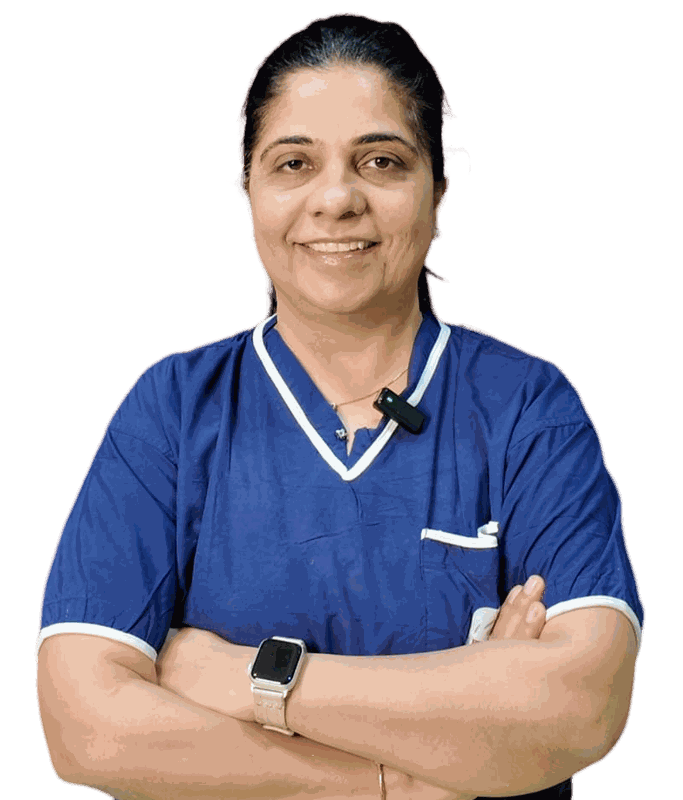
Medical Reviewer
Dr. Monica Sachdev
Dr. Monica Sachdev is a leading IVF specialist in Delhi with over 18 years of experience in reproductive medicine. She is dedicated to providing evidence-based fertility care and has helped thousands of families achieve parenthood.
Ready to Start Your Fertility Journey?
Our friendly team at Pravi IVF is here to stand by you, listen to your story, and help you through every single step.