

Asherman syndrome treatment in Delhi starts with checking whether scar tissue inside your uterus is affecting your periods or fertility. If your periods became unusually light after a uterine procedure, or you are struggling to conceive, a careful assessment can help identify the cause without assuming you need IVF.
Key takeaways
- Asherman syndrome involves scar tissue joining surfaces inside the uterine cavity.
- Light or absent periods after uterine surgery deserve assessment.
- Hysteroscopy can confirm adhesions and may allow treatment.
- Treatment aims to restore the cavity, but scarring can return.
- Your fertility plan depends on more than the adhesions alone.
Understand how uterine scarring can affect fertility
What happens inside the uterus?
The uterine cavity is lined with endometrium, which normally thickens each cycle to support pregnancy. After an injury, scar tissue may form bands between opposing walls, reducing the space available and sometimes damaging the functional lining.
Intrauterine adhesions associated with symptoms such as menstrual changes, infertility or pregnancy loss are commonly called Asherman syndrome. Adhesions can be thin and limited or dense and extensive; their location also matters.
Why conception or pregnancy may be affected
Adhesions may interfere with sperm passage or embryo implantation. Damage to the lining can also make it harder to sustain a pregnancy, although finding adhesions does not prove they are the only reason for infertility or miscarriage.
Recognise symptoms that deserve a closer look
A noticeable change from your usual menstrual pattern can be a useful clue. However, some people have adhesions without obvious period changes, so normal bleeding does not completely exclude them.
- Periods becoming much lighter after a uterine procedure.
- Periods stopping when pregnancy has been excluded.
- Cyclical cramps with little or no bleeding.
- Difficulty conceiving despite regular attempts.
- Repeated pregnancy losses requiring investigation.
When to arrange an assessment
Tell your gynaecologist if these changes followed miscarriage treatment, delivery or surgery inside the uterus. You do not need to wait the usual infertility assessment interval when there is a clear menstrual change or a known uterine concern.
When symptoms need urgent care
Severe pelvic pain, fever, foul-smelling discharge or heavy bleeding after a procedure need prompt medical attention. These symptoms may indicate infection or another complication rather than adhesions alone.
Identify possible causes without blaming yourself
Adhesions most often follow damage to the uterine lining, particularly after procedures related to pregnancy. They are not caused by stress, ordinary exercise, sexual activity or something you ate.
- Dilatation and curettage, especially following miscarriage or delivery.
- Procedures to remove retained pregnancy tissue.
- Surgery within the uterine cavity, such as some fibroid operations.
- Uterine infection, including genital tuberculosis in selected cases.
Most people who have these procedures do not develop Asherman syndrome. Your clinician should review what happened and why the procedure was needed, rather than treating a previous D&C as proof of adhesions.
In India, genital tuberculosis may be considered when your history or findings suggest it. Testing should be targeted; neither this diagnosis nor anti-tuberculosis treatment should be based on suspicion alone.
Get a clear diagnosis before choosing treatment
Start with your history and earlier records
Bring procedure notes, discharge summaries and previous scans if available. Write down how your periods changed, when the change began, and whether you have pain, previous pregnancies or pregnancy losses.
Understand what each test can show
A routine pelvic ultrasound may identify other problems but can miss adhesions. A saline infusion scan or an HSG may suggest a cavity abnormality; hysteroscopy provides direct inspection and is the most definitive way to assess suspected adhesions.
| Assessment | Main purpose |
|---|---|
| Pelvic ultrasound | Checks the uterus, ovaries and lining; may miss scar bands. |
| Saline infusion scan or HSG | Outlines the cavity and may suggest adhesions. |
| Hysteroscopy | Directly shows adhesions and helps plan or perform treatment. |
Your doctor may also check for hormonal causes of absent periods. If pregnancy is your goal, ovulation, ovarian reserve, fallopian tubes and semen factors may need assessment so that another contributor is not overlooked.
Asherman Syndrome Treatment in Delhi: what to expect
Hysteroscopic treatment under direct vision
The main treatment for symptomatic adhesions is hysteroscopic adhesiolysis: carefully dividing scar bands using a small camera passed through the cervix. The aim is to restore the cavity while protecting the remaining healthy lining.
Dense or extensive adhesions may require staged treatment or ultrasound guidance. Ask about the clinician’s experience with complex adhesions and the risks, including bleeding, infection, uterine perforation and further scarring.
A plan to reduce repeat scarring
After surgery, your clinician may recommend a temporary intrauterine balloon or another barrier, and sometimes hormonal treatment to support lining recovery. These measures are individualised, and none can guarantee that adhesions will not recur.
Follow-up before trying to conceive
A repeat cavity assessment, sometimes with a second-look hysteroscopy, may be advised to check healing and detect returning adhesions. Ask when intercourse, exercise and pregnancy attempts can safely resume; timing depends on the procedure and your recovery.
- Who will perform the procedure, and where?
- Will treatment require anaesthesia or more than one sitting?
- What is the proposed plan to prevent recurrence?
- When will the cavity be checked again?
- Which procedure, medicine and follow-up costs are included?
Choose fertility care based on your recovery
Some people conceive without assisted reproduction after treatment. Your outlook depends on adhesion severity, the remaining healthy endometrium, recurrence, age and other fertility factors; improved periods alone do not guarantee pregnancy.
When IUI or IVF may help
If the cavity has recovered and your tubes and semen assessment are suitable, IUI treatment may be considered for a separate fertility indication. IUI does not remove adhesions or repair the lining.
IVF treatment in Lajpat Nagar may be appropriate for blocked tubes or other indications. IVF cannot bypass a scarred uterine cavity, so cavity assessment and treatment usually come before embryo transfer.
ICSI treatment helps fertilisation in selected situations, particularly certain sperm-related problems. It does not treat Asherman syndrome itself.
Planning care after a positive pregnancy test
Tell your obstetrician about your adhesions and treatment. Pregnancies after Asherman syndrome may have increased risks, including abnormal placental attachment and preterm birth, so individualised monitoring is needed.
Frequently Asked Questions
Can Asherman syndrome be cured permanently?
Treatment can restore the cavity in many cases, but adhesions may recur, especially when scarring is severe. Follow-up helps assess recovery and whether further treatment is needed.
Does a normal ultrasound rule it out?
No. Routine ultrasound can miss intrauterine adhesions. If your history strongly suggests scarring, your doctor may recommend a cavity-focused test or hysteroscopy.
Will I definitely need IVF?
No. Some people conceive naturally after treatment. IVF decisions depend on your age, tubal health, semen findings and other factors, as well as uterine recovery.
Can medicines alone remove adhesions?
Medicines do not reliably remove established scar bands. Hormones may support recovery after surgery in selected cases, but they are not a substitute for dividing significant adhesions.
How much does treatment cost in Delhi?
Costs vary with the investigations, adhesion severity, anaesthesia, facility and follow-up required. Request an itemised estimate, including whether repeat hysteroscopy would be charged separately.
Discuss your next step with Pravi Global IVF
Bring your reports and questions to Pravi Global IVF in Lajpat Nagar, New Delhi, to discuss assessment and fertility planning. For location details, visit our contact page.
Call +91 80091 50040 or book an appointment. You can start with a consultation before deciding on any procedure.
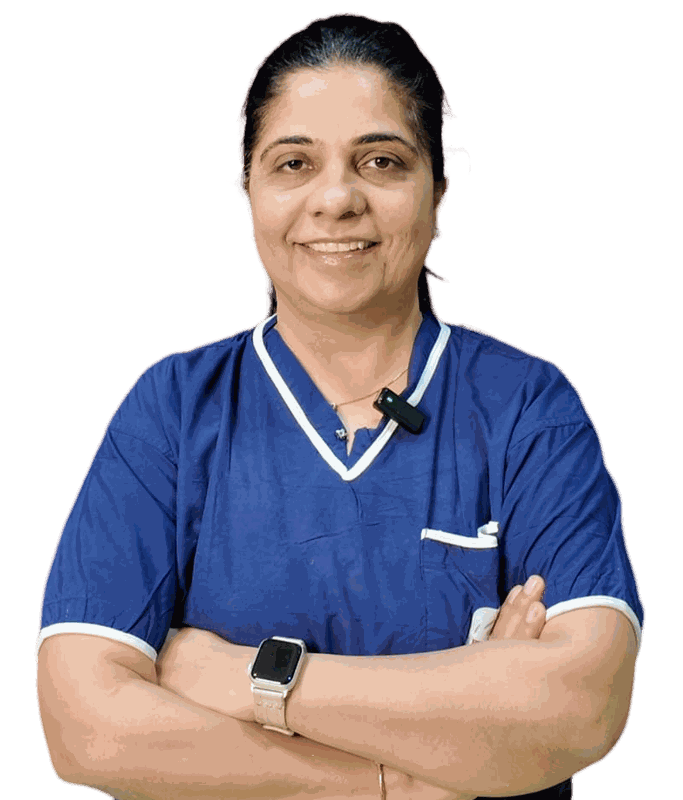
Medical Reviewer
Dr. Monica Sachdev
Dr. Monica Sachdev is a leading IVF specialist in Delhi with over 18 years of experience in reproductive medicine. She is dedicated to providing evidence-based fertility care and has helped thousands of families achieve parenthood.
Ready to Start Your Fertility Journey?
Our friendly team at Pravi IVF is here to stand by you, listen to your story, and help you through every single step.