
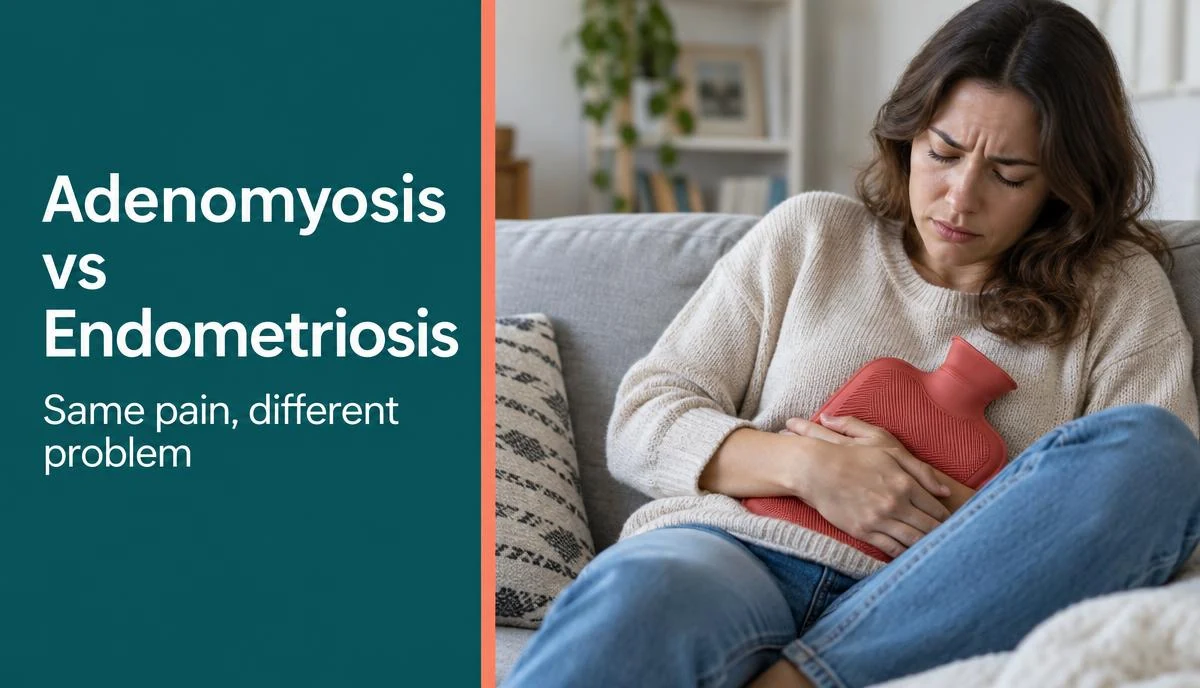
For women experiencing chronic pelvic pain, painful periods, or fertility struggles, navigating the diagnostic process can be challenging. Two common conditions that share similar symptoms—and are frequently confused or diagnosed together—are Endometriosis and Adenomyosis.
While both conditions involve tissue similar to the lining of the uterus (the endometrium), they grow in entirely different areas of the reproductive tract. Understanding the differences between adenomyosis vs endometriosis is essential to getting the correct diagnosis and starting the right treatment plan.
The Core Difference: Where is the Tissue Growing?
- Endometriosis: In endometriosis, endometrial-like tissue grows outside the uterus. These implants can attach to the ovaries, fallopian tubes, outer surface of the uterus, and other pelvic organs.
- Adenomyosis: In adenomyosis, the endometrial-like tissue grows inside the muscular wall of the uterus (the myometrium). This causes the muscular wall to thicken, causing the uterus to become enlarged, swollen, and twice or three times its normal size.
Comparing Symptoms: Adenomyosis vs. Endometriosis
| Symptom / Feature | Endometriosis | Adenomyosis |
|---|---|---|
| Primary Pain Type | Sharp, localized pelvic pain; pain during intercourse. | Deep, dull pelvic aching; severe cramping in the lower back. |
| Menstrual Bleeding | Normal to slightly heavy periods; spotting between cycles. | Exceptionally heavy periods (menorrhagia) with large blood clots. |
| Uterine Size | Normal uterine size and shape. | Enlarged, swollen, tender uterus (globular shape). |
| Age of Onset | Often diagnosed in teens, 20s, and 30s. | More commonly diagnosed in women in their 40s. |
Specialized Diagnostic Evaluation
Reaching an accurate diagnosis for pelvic pain requires advanced imaging and expert clinical assessment. If you are experiencing heavy bleeding or pain, you can schedule a diagnostic consultation at Pravi Global IVF.
How Each Condition Affects Fertility
Fertility Impact of Endometriosis
Scar tissue and adhesions can block or damage the fallopian tubes, preventing the sperm and egg from meeting. Additionally, chronic pelvic inflammation can affect egg quality and interfere with fertilization.
Fertility Impact of Adenomyosis
The thickening and swelling of the uterine wall can alter uterine contractions and blood flow, making it difficult for an embryo to implant. Adenomyosis is also linked to an increased risk of early pregnancy loss.
Frequently Asked Questions
1. Can you have both Adenomyosis and Endometriosis?
Yes. It is estimated that up to 40% of women diagnosed with endometriosis also have adenomyosis, leading to more severe pain and heavy bleeding.
2. How are these conditions diagnosed?
Endometriosis is diagnosed through laparoscopic surgery, which allows a surgeon to view lesions. Adenomyosis is identified through high-resolution transvaginal ultrasound or pelvic MRI showing myometrial thickening.
Conclusion
Comparing adenomyosis vs endometriosis shows that while they share symptoms like severe pelvic pain, their location and impact on the uterus are distinct. Identifying whether your pain is caused by tissue growing outside the uterus or within the uterine wall is the key to choosing the right treatment.
Our medical team is dedicated to providing advanced diagnostics and personalized care pathways. Contact Pravi Global IVF today to schedule your evaluation.

Medical Reviewer
Dr. Monica Sachdev
Dr. Monica Sachdev is a leading IVF specialist in Delhi with over 18 years of experience in reproductive medicine. She is dedicated to providing evidence-based fertility care and has helped thousands of families achieve parenthood.
Ready to Start Your Fertility Journey?
Our friendly team at Pravi IVF is here to stand by you, listen to your story, and help you through every single step.